
Coming and Going

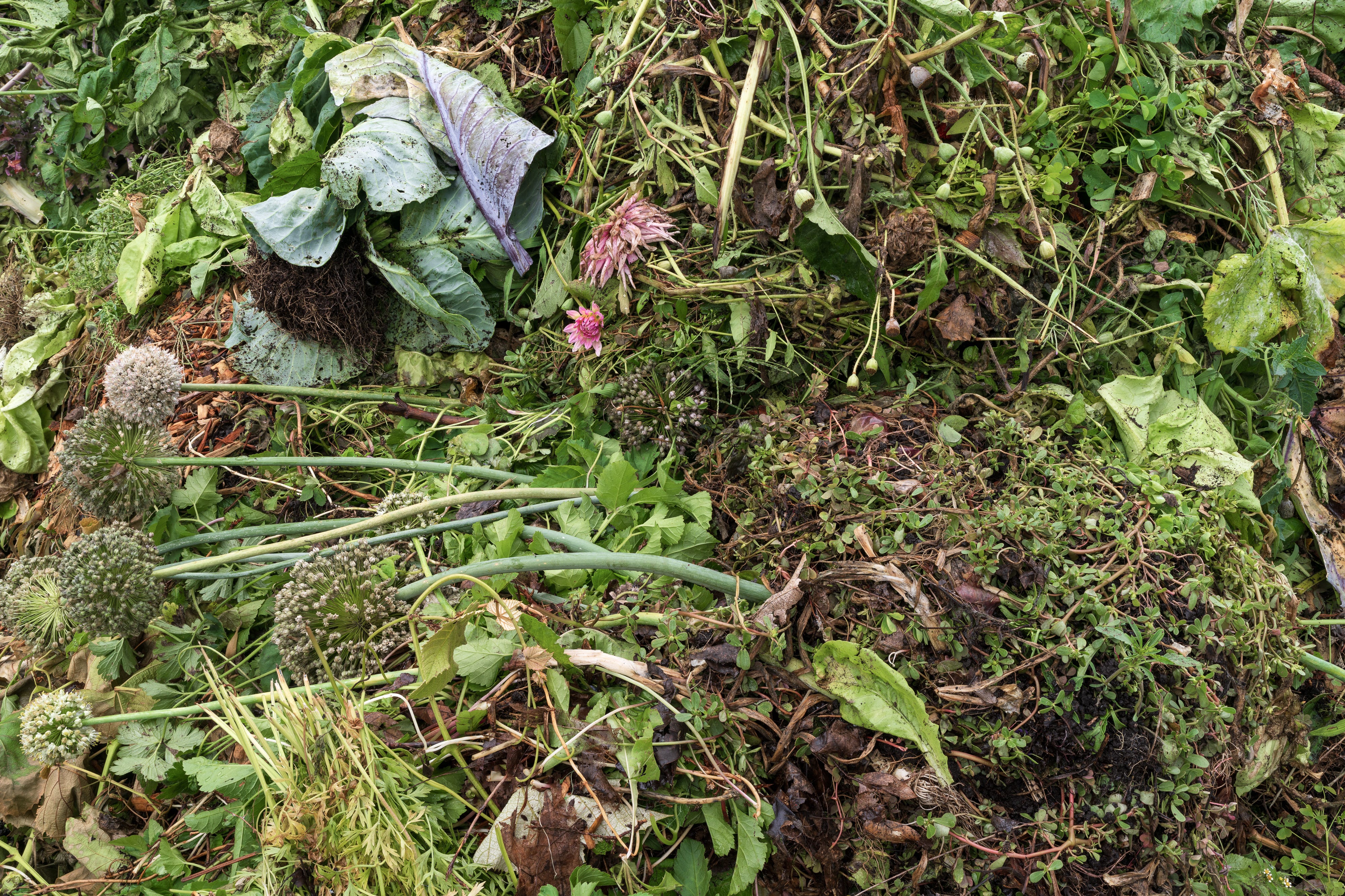
All photos are by Jim Roche, taken in 2026. These images are part of a large project of 50 selected images from the compost pile throughout the year. Different seasons look very different. A second set of 50 images is of the gardens themselves.
Here are five, maybe six, frames from this rainy week. Between heavy rains, when it was still safe to go out with my camera, I drove to the nearby gardens and took images of the compost piles, afterwards walking through the empty gardens. On the compost pile there’s was a cabbage pulled whole from the ground, its root ball still dark with dirt in one corner, two dahlia heads already drying pink beside it, a scatter of allium seed heads gone grey and papery on stalks still green underneath. A marigold, here and there, hard orange-red; one small flower landed on a leaf gone silver-white, grape leaf by the shape of it, and near it a dandelion has gone entirely to white seed, still whole, not yet blown apart by wind or a hand. Chard shows up twice, maybe more times, its ribs that magenta so saturated it looks dyed rather than grown, next to another blue-grey cabbage leaf already sprouting somebody else’s seedlings on its surface, feeding on it before it’s finished rotting.
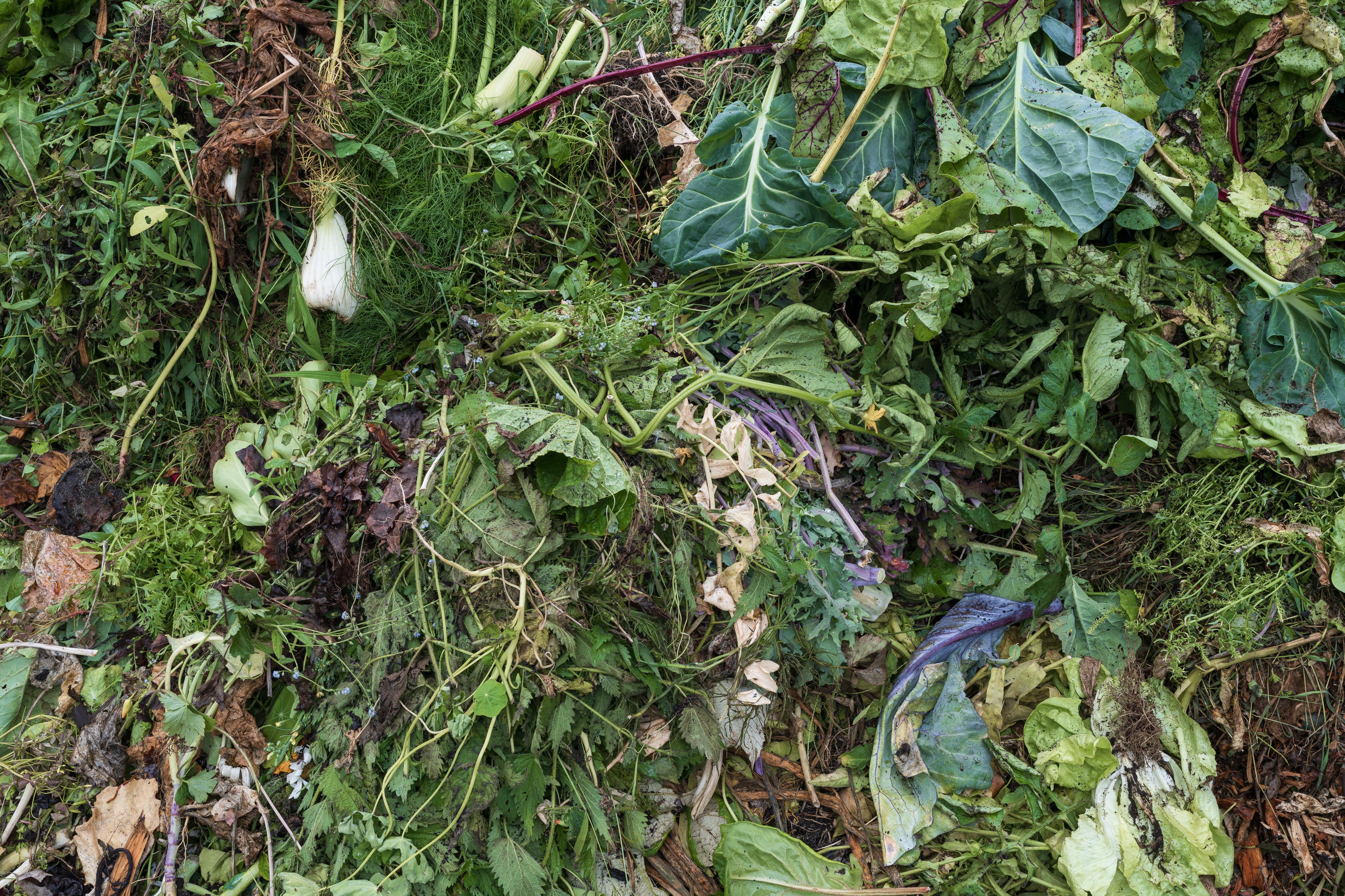
Fennel bulbs, white and dirt-clung, roots still attached. Corn husked down to pale silk. One allium head has gone lavender instead of grey. Some slugs were there, underneath the leaves. The day I tried climbing to see the top of the pile, there were lots of slugs, but, despite their trails in the green slime and algae on plastic walls and windows throughout the garden, only once or twice have I seen snails.
Birds don’t seem to land on the compost, but on occasion a mouse or rat might come by to grab something. The birds, usually hunting seeds, find better pickings in the gardens themselves. So far this year I don’t remember any sunflowers; they were part of the pile other years. Maybe later in the fall. Some gardeners leave them up for birds.
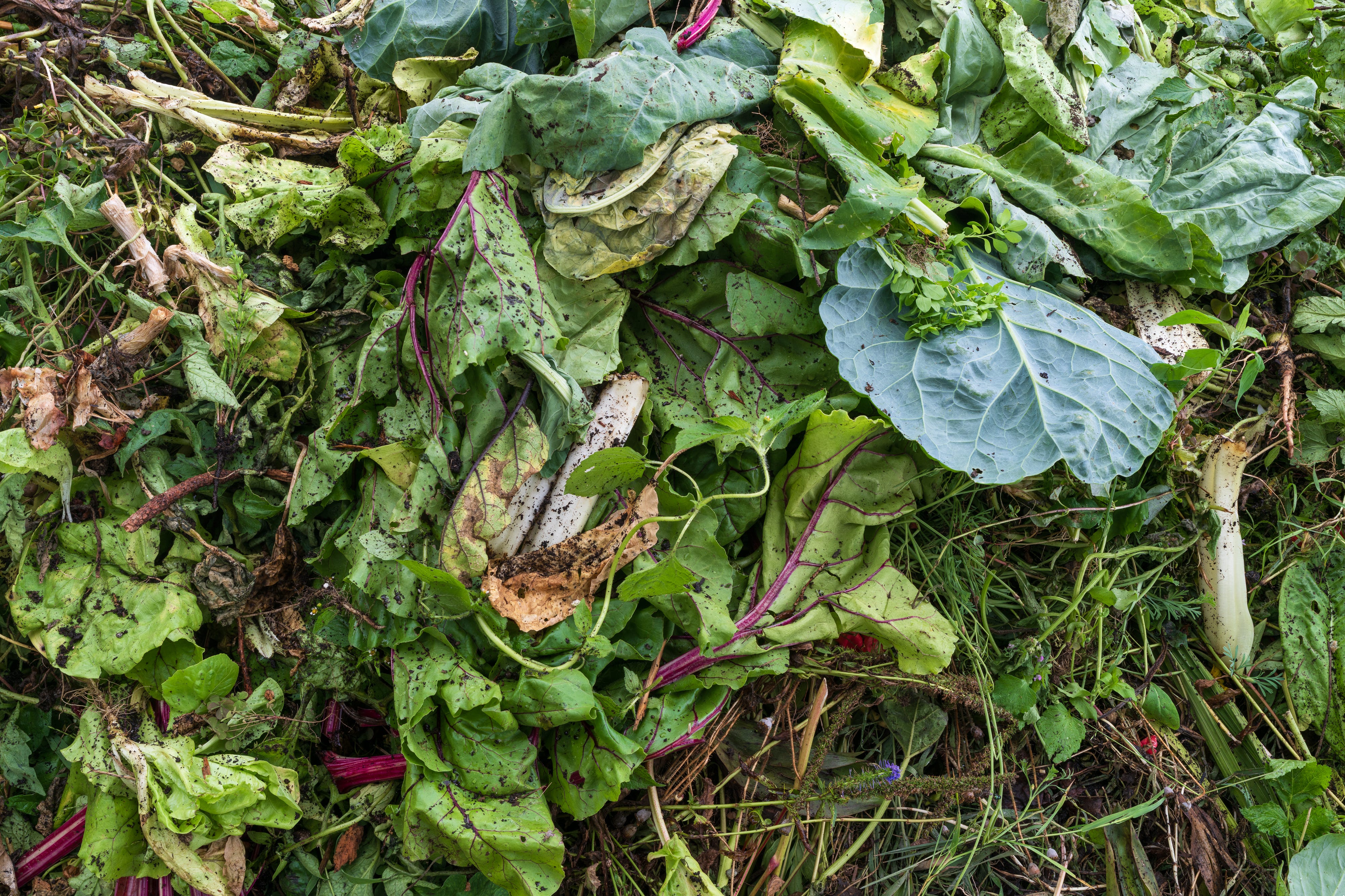
That’s the inventory. What I keep doing, standing over it, is finding shapes that aren’t there. Two allium stems cross, and I read an X. Three pale leaves fall into a rough triangle and for a second I believe the pile arranged itself on purpose. It didn’t. The wheelbarrow tipped where it tipped, the fennel landed where it landed, and the shape is mine, not the pile’s. It’s the same reflex that puts a face on a wall socket; or an elephant in the sky, apophenia is the word for it, the mind refusing to leave a random arrangement alone. This is close to what makes the Joan Mitchell comparison hold up, I think. Her canvases get called relaxing by people who haven’t looked closely, when she said herself they were closer to a battle, a fight for some order in something that resisted it, and that’s exactly the give and take I’m having with this pile every time I stand over it with a camera. It wants nothing; I want it to want something; the photograph is what’s left of that disagreement.
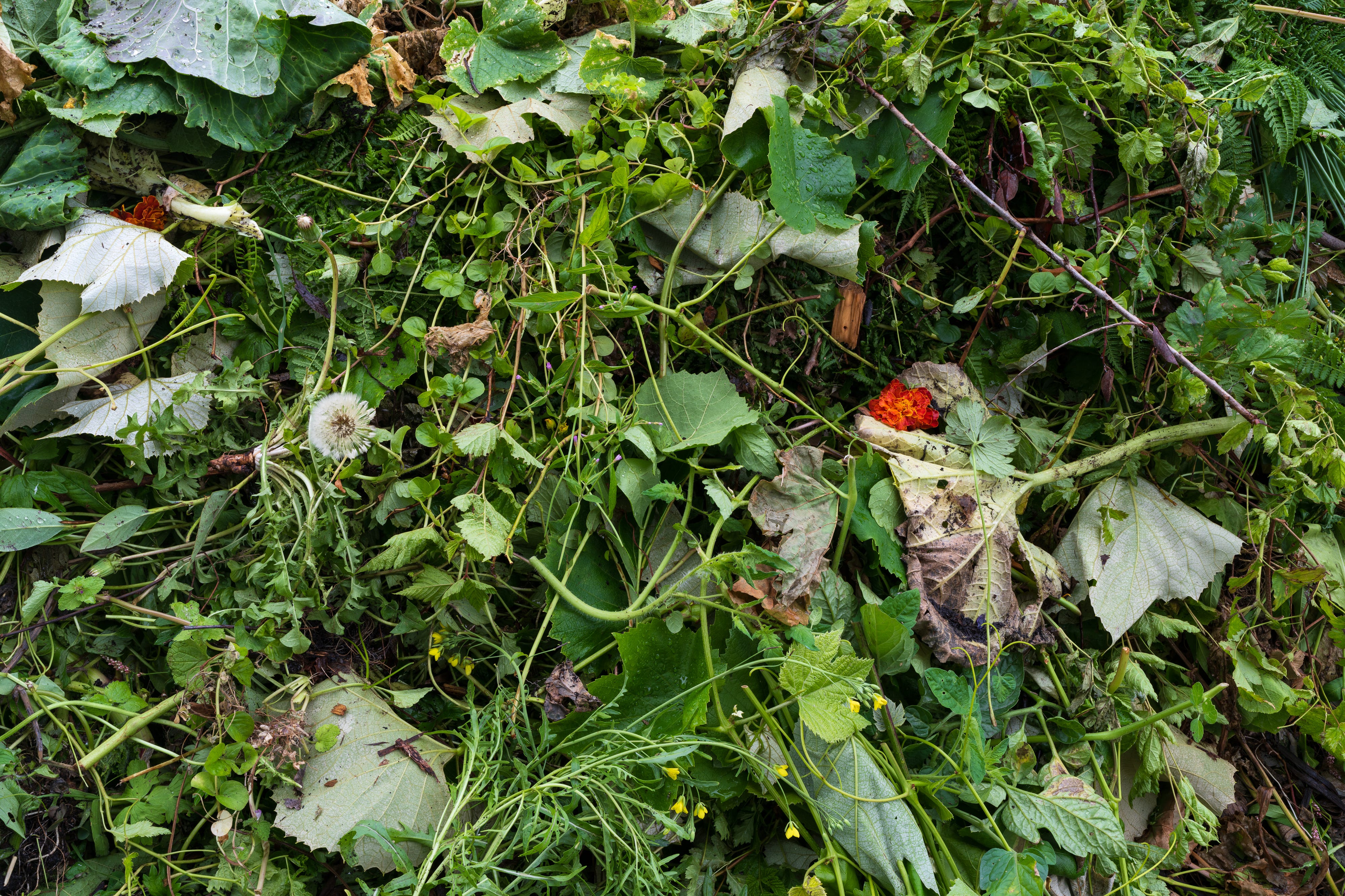
The wanting-to-catalogue is its own separate impulse. I try to make every image look related, of the same family. I make them as flat as I can, like a canvas. I might turn the camera on its axis a bit, to avoid traces of the distant landscape or sky peeking over the edge. I want the viewer to stand here with me, almost close enough to smell the process happening in front of us. I don’t want any real signs of a completed composition; it’s something in progress. Folding in on itself over a few weeks. I try to think of the project as if it were a catalogue or typology. A catalogue exists to let you compare one instance against the next; that’s the whole use of building one. Bernd and Hilla Becher spent decades photographing water towers and blast furnaces the same way every time: flat light, frontal, same distance, then hung the prints in grids so a viewer could set one tower beside the next and see the type and the variation both. Their subject held still for that kind of measuring, steel and concrete built to outlast the people who poured it. Mine won’t hold still; the pile grows one day and shrinks the next. What seems like one pile is really three or four piles that all grew, were covered, decomposed, and started anew over the span of a year. What gets catalogued here isn’t the object; it’s the event, the same twelve by twelve feet of ground, the same rough gesture of a pitchfork lifted and a load thrown, from April till November, five years running.
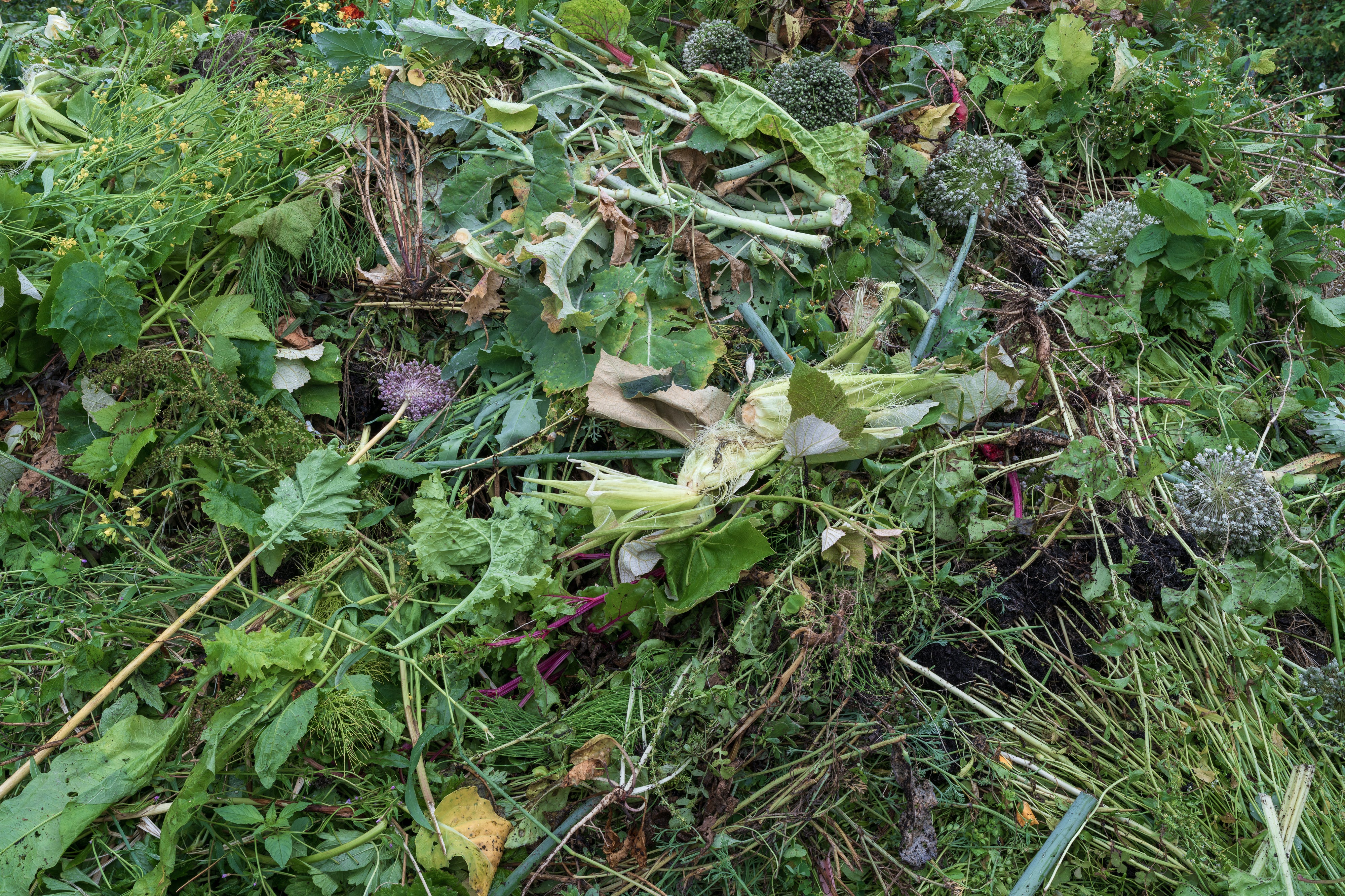
And the pile does move, even though none of these five or six frames can show it moving. Fennel stands up out of a cut stem for two or three days before it is folded into the body of the pile. A dandelion holds every seed in place for about as long as it takes the next rain to find it. Chard keeps its pink rib color after the leaf around it has already gone grey-brown, so you get these fragments where the vein is the last part of the plant still insisting anything is alive. If I photographed daily instead of every few days, what I’d actually have isn’t five different piles; it’s one pile caught mid-reach and then caught mid-collapse, over and over, the same motion at different points along it.
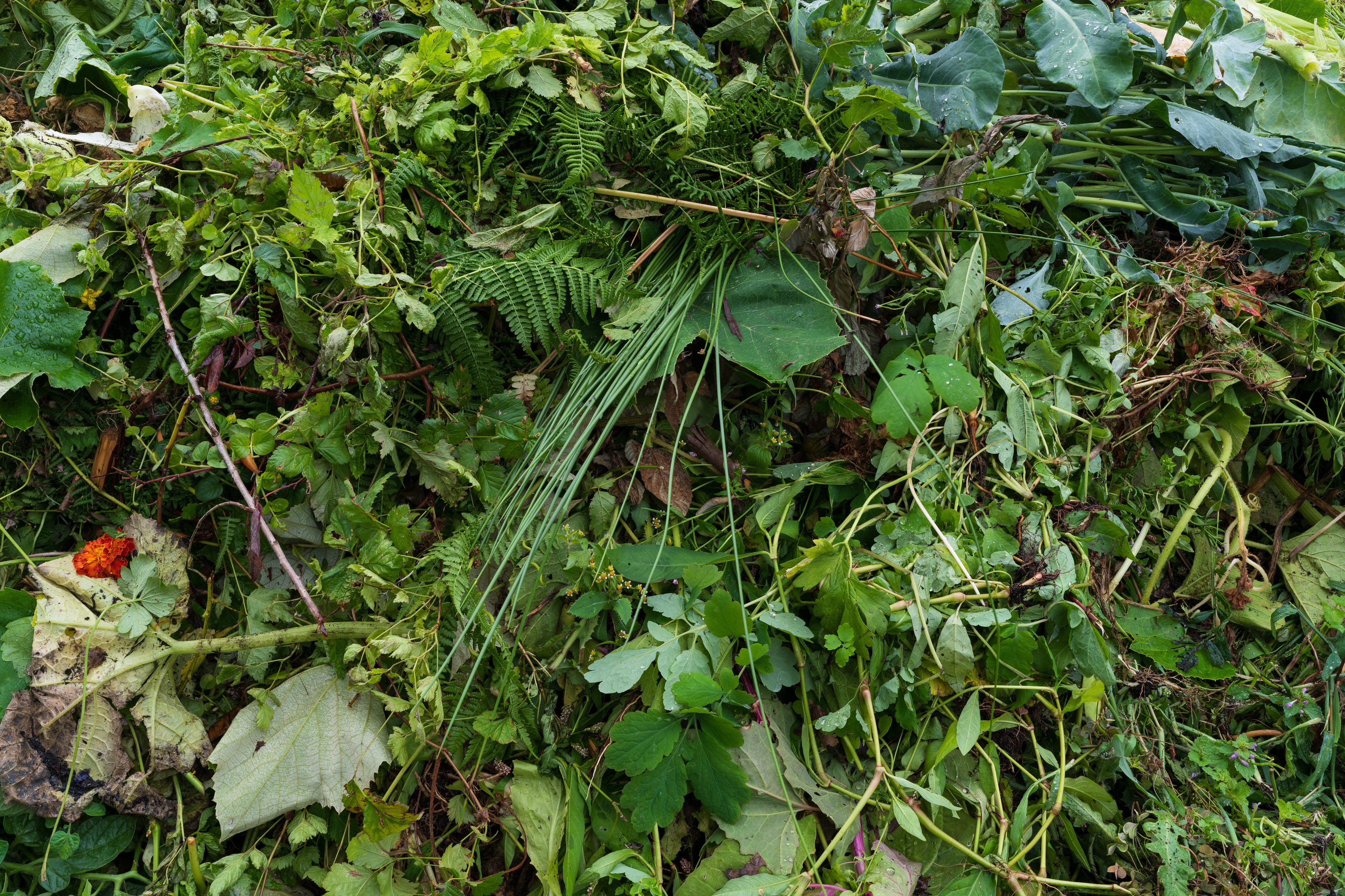
This process I witness mostly when I am alone. Early in the morning, the gardeners are seldom here; maybe two or three arrive before I leave. Usually, all I know of them is their empty cars in the parking lot. Some days there is such a quiet, and later in the season I am literally surrounded by death. On my trips to Japan, I have learned the best term for this, “mono no aware.” It means the pathos of things, the particular feeling of being moved by something precisely because it’s already going. A cherry blossom is beautiful for the same reason the marigold on the rotting leaf is beautiful; both of them are lit by the fact of their own ending, and if you could stop either one from fading you’d have killed the thing that made it worth looking at. In Japan, where often in February crowds gather with cameras around an early blossoming cherry tree, word spreads, people come to see it from all over. I’ve seen entire streets blocked by the crowds surrounding one tree. Drivers patiently waiting to pass don’t honk. They understand this is a moment to be cherished. Yet even in the blooming moment, that feeling of pathos is there. Deep inside, you understand this moment is only what it is because of the approaching loss of the blossoms falling onto the sidewalk, streets, and washing down gutters. For me, back in Canada, autumn is the season everyone agrees to hold both halves of that feeling at once, sad and welcome, without needing to pick one. Others are lucky; this experience is always fresh for them. They see it everywhere.
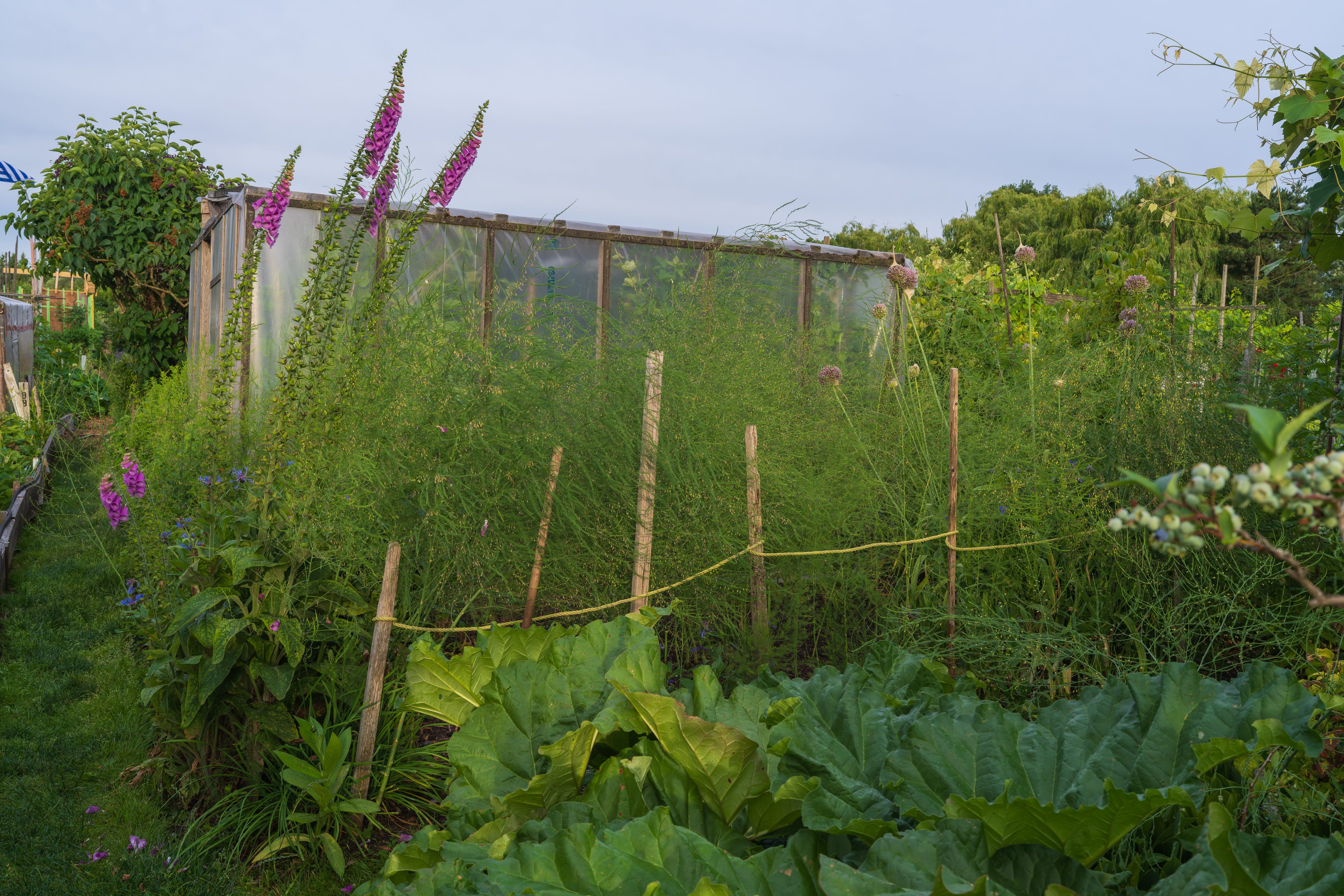
The garden is so wonderfully overgrown. You can barely walk through the pathways. In a few weeks or so it will be clear away, prepared for spring.
References
Lucas Foglia, A Natural Order (Nazraeli Press, 2012).
Bernd and Hilla Becher, Typologies of Industrial Buildings (MIT Press, 2004).
Sarah Roberts and Katy Siegel, eds., Joan Mitchell (Yale University Press / SFMOMA, 2020).
Donald Keene, “Japanese Aesthetics,” Philosophy East and West (1969), on mono no aware and its roots in Motoori Norinaga’s commentary on the Genji Monogatari.
You can help me wout by doing a few things. First, making a comment and joining the conversation. And then, by subscribing and restacking my Substack. Thanks for your support.
Jim R
This is so beautiful written. The reference to mono no aware is new to me but it reminded me of the Japanese concept of ma, the spaces in between. I lived in Canada for 23 years but now live on a sailboat…your sad and welcome comment almost made me fee nostalgic for that time of year I tried to escape for so long. I also wonder if, as we age, we are invited to tune into this often indescribable beauty of decay.
Its winter in Australia on the Central Coast. Love gardening. Dislike weeding! But if I don't keep on top of those subtropical weeds, they quickly run riot and we lose all control of our vegetable patch. At least the heat works well for the compost!