
A Limited View
A selection from "Our Animal Friends"

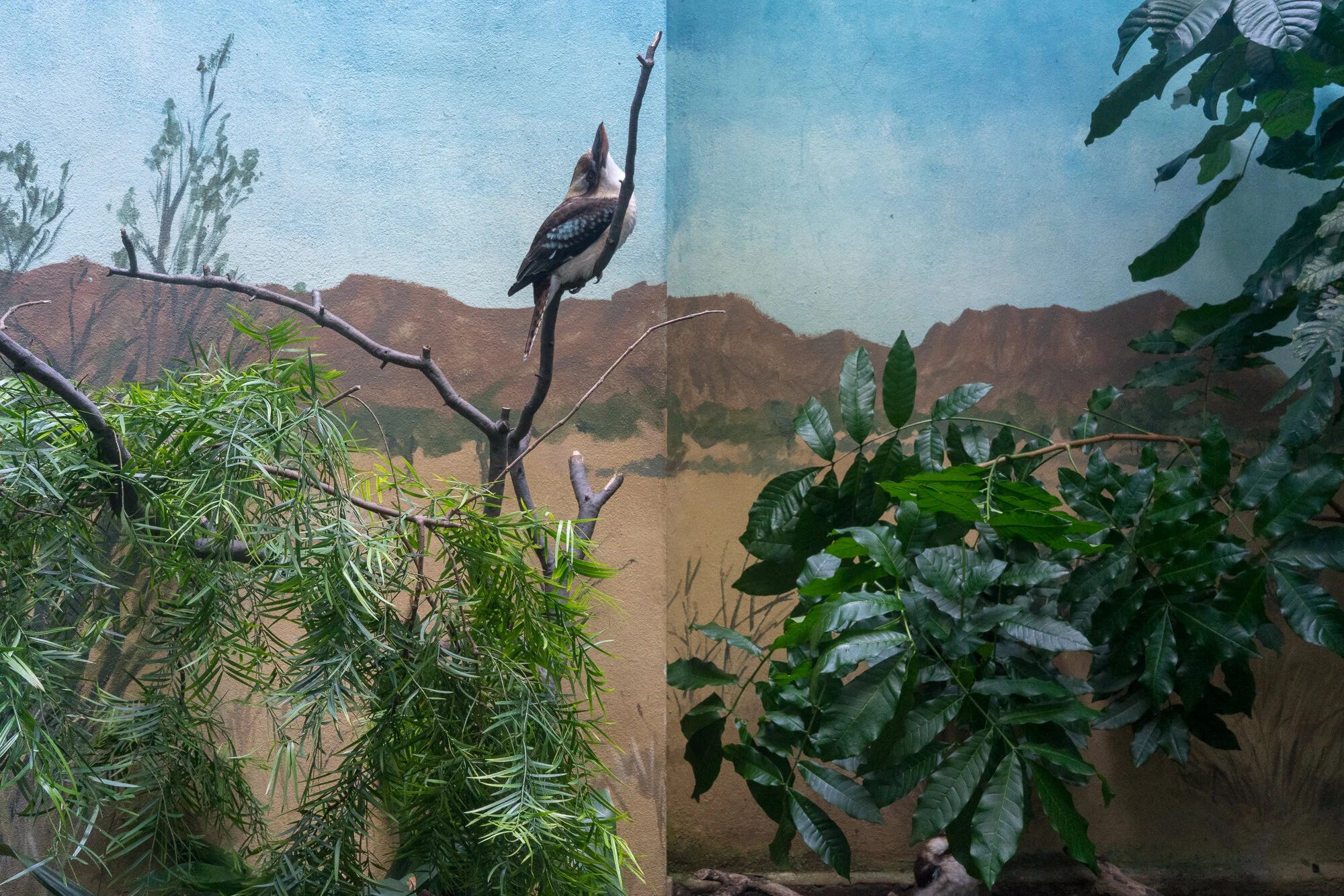
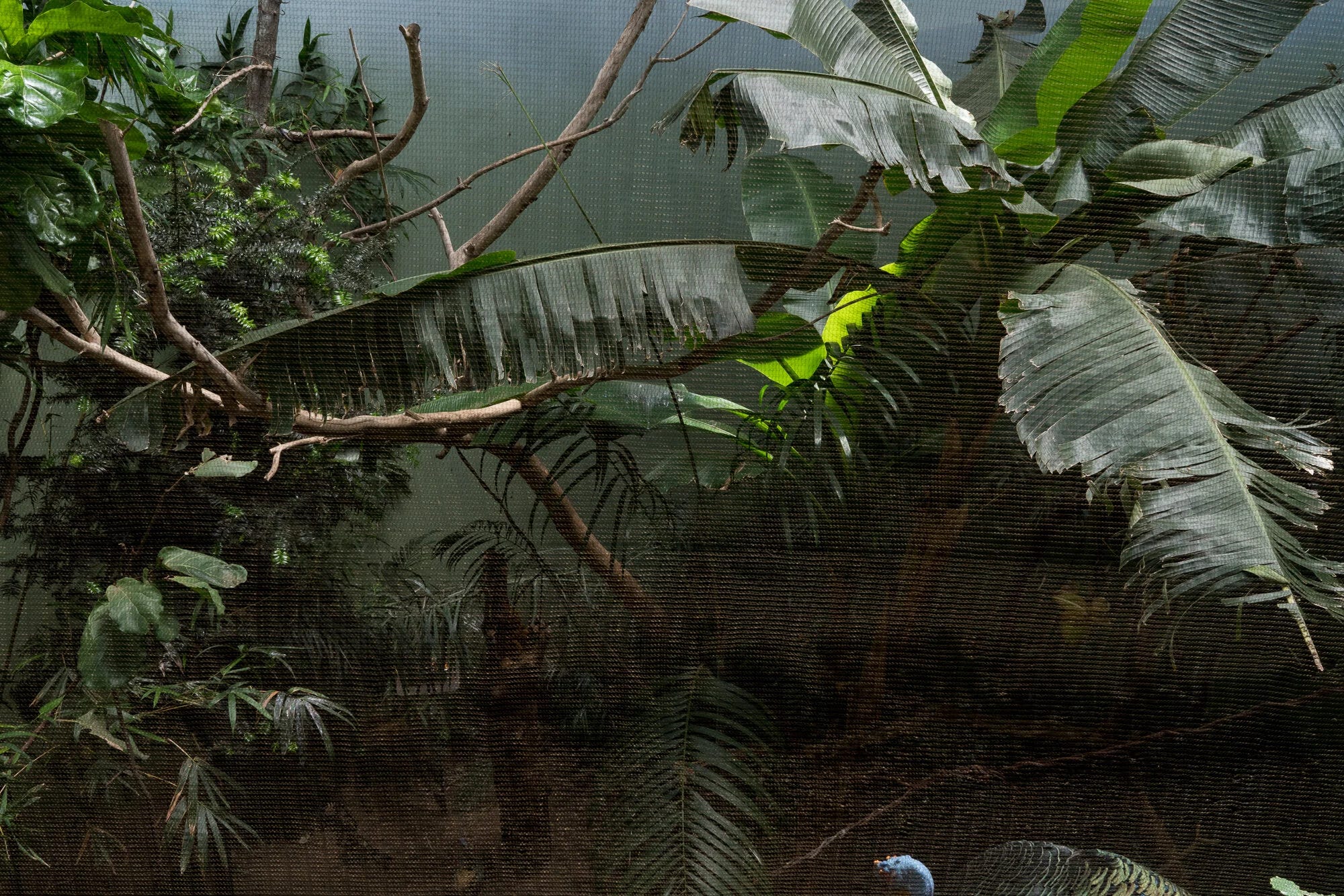
These are not photographs from a place of obvious cruelty; there’s no drama here, no visible suffering, nothing that would make you look away. These are places where they often sell popcorn. Where you can pet the goats. Where children press their faces against the glass and reach out.
Some of these enclosures, or really dioramas, are simple, although large. Someone thought about them, researched the habitats, ordered plants, painted backdrops. In one enclosure, a large bird perches on a real branch in front of a painted Australian landscape, reddish hills, a pale sky, trees that do not move because they are not trees, and there is no breeze. Some branches are just parts, fragments, attached to make sure, now and again, a bird might be clearly visible. The vegetation in the foreground is often real. The world behind it is not. Running down the centre of the painted backdrop is something that looks like a fold, a seam, it’s hiding a door zoo keepers use to enter and leave. The birds don’t see the door, nor do we. The bird sees us or the horizon, which has always been painted, which has always had that fold in it, which they have learned to accept as the shape of the world. But even we are fooled, what looks like a fold is just two parts of the painted wall that do not meet. And I think we believe in the distant horizon more than the birds.
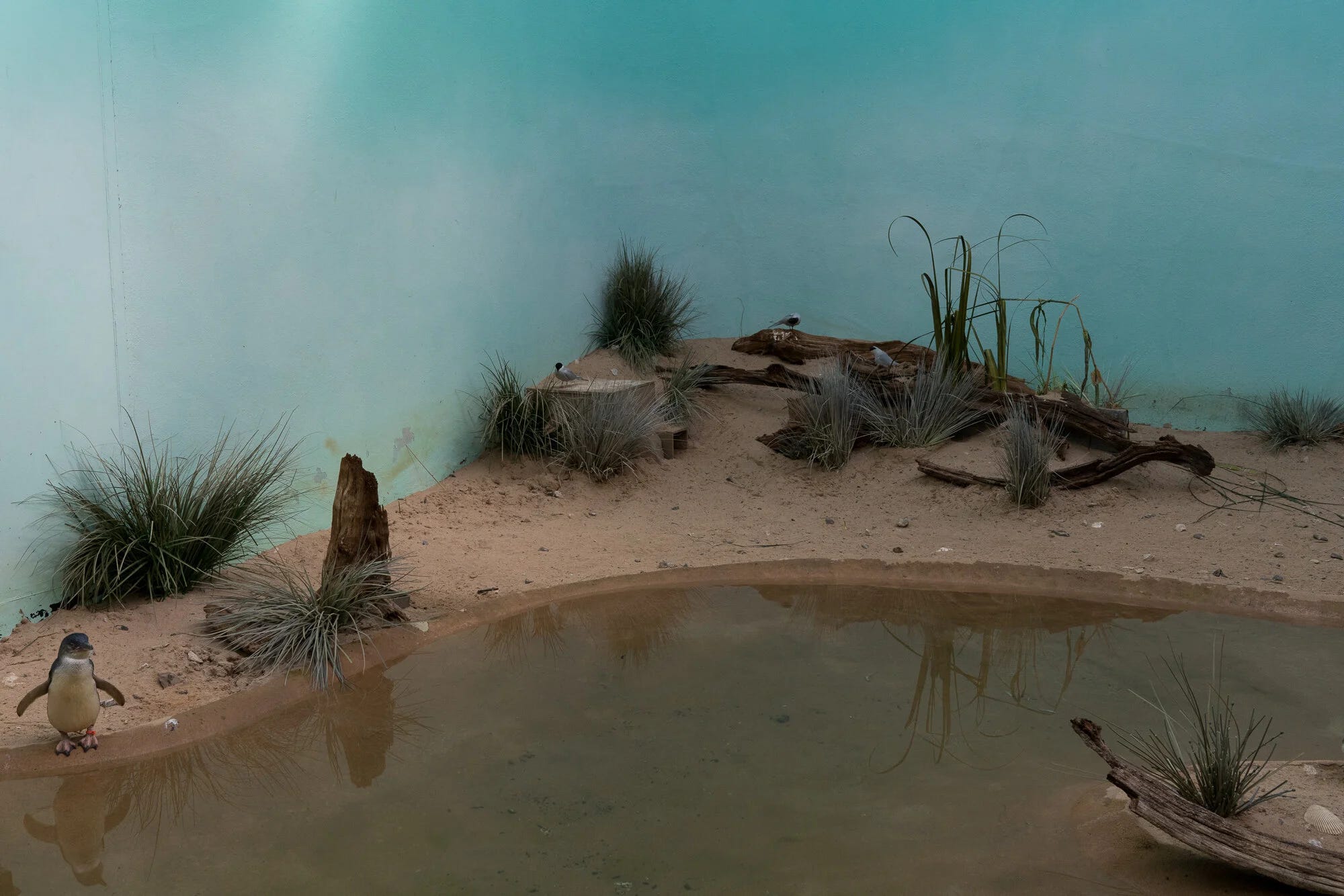
These photos are part of a large project. Today I’m mostly sticking to these enclosures for birds. There are other enclosures for turtles, snakes, and frogs, but their enclosures are less elaborate. In one a large and brilliantly coloured frog floats in dark water in a Japanese zoo, motionless, its colours almost theatrical against the dim surroundings. Elsewhere, you see just parts of some animals.
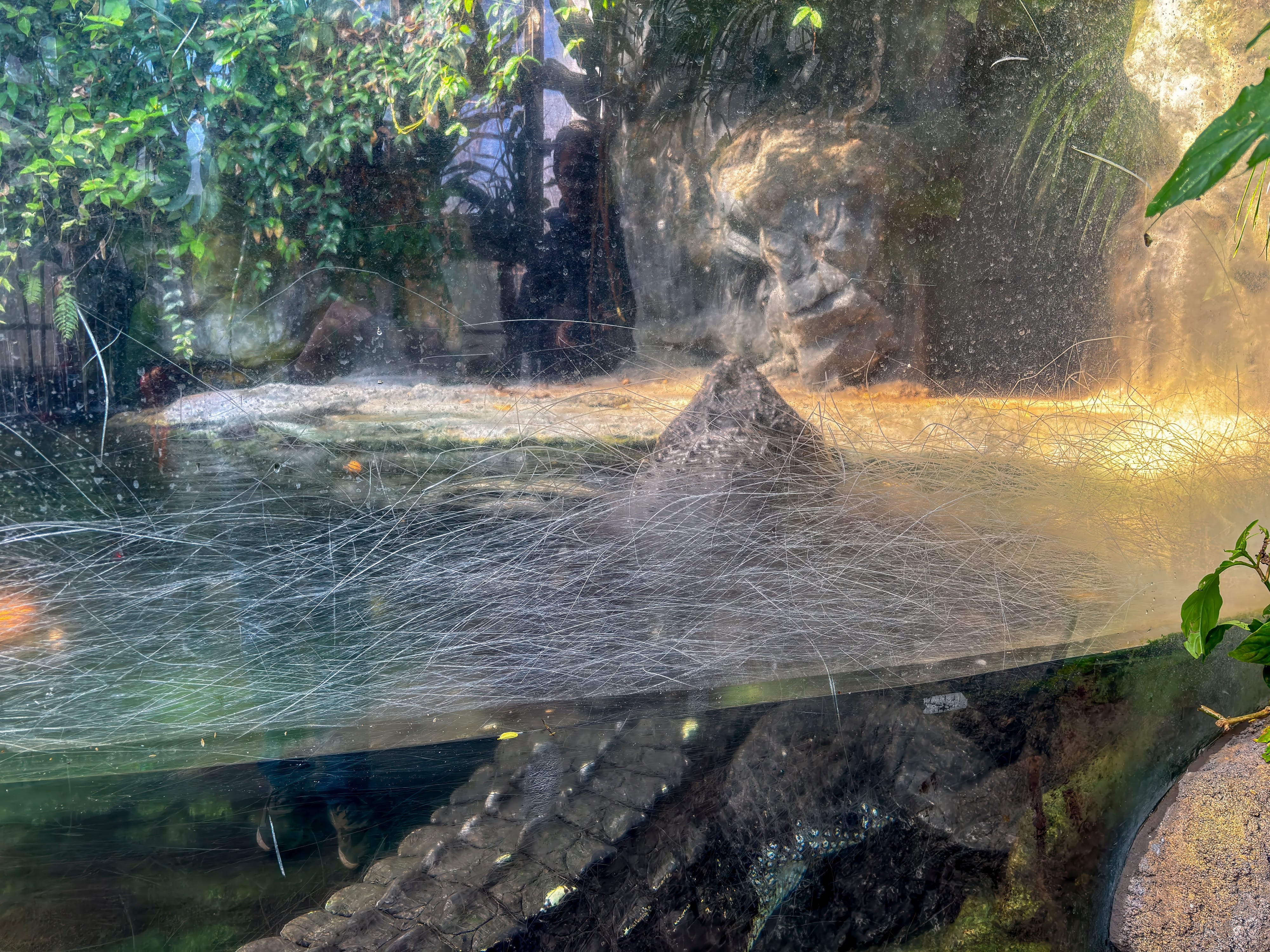
In another, the animals scratch at the glass or plastic. Some pace. Some, like the birds in bright enclosures, have learned to stay near the light because the darkness beyond the enclosure’s edge frightens them. The keepers did not intend this, but they know it and take advantage of this fear. They built a space that was meant to feel safe and made sure it looked out on a scary world. The birds learned the wrong lesson, and now fear enforces what the walls alone could not. There are no bars visible. No fences, or usually no screens. There is only the bird, and the light it will not leave, and the darkness it has decided is danger.
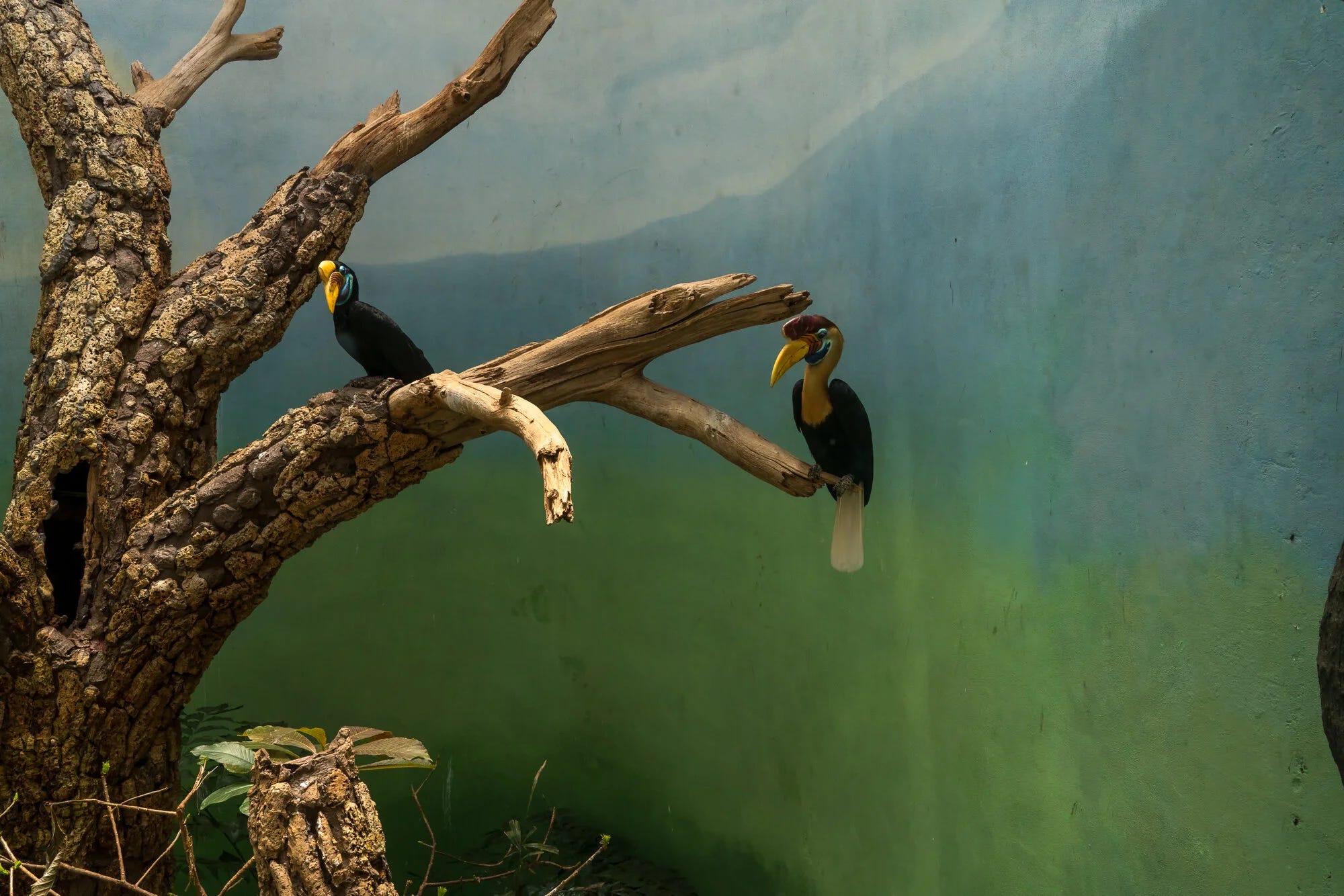
The photograph I find hardest to look at is the simplest. It’s not of birds, but a small tank in a local aquarium store. The water is very clear. The lights are bright, harsh, the kind of light that leaves nothing softened or ambiguous. Inside the tank are two or three fish and a small concrete block with a hole in it. There is no retence here. They are very alone. There is no painted backdrop or researched habitat, no plastic coral designed to suggest elsewhere. Just the concrete block, the fish behind it, and the light. It is the most honest enclosure in the larger series, and the most disturbing. At least the painted hills make an attempt
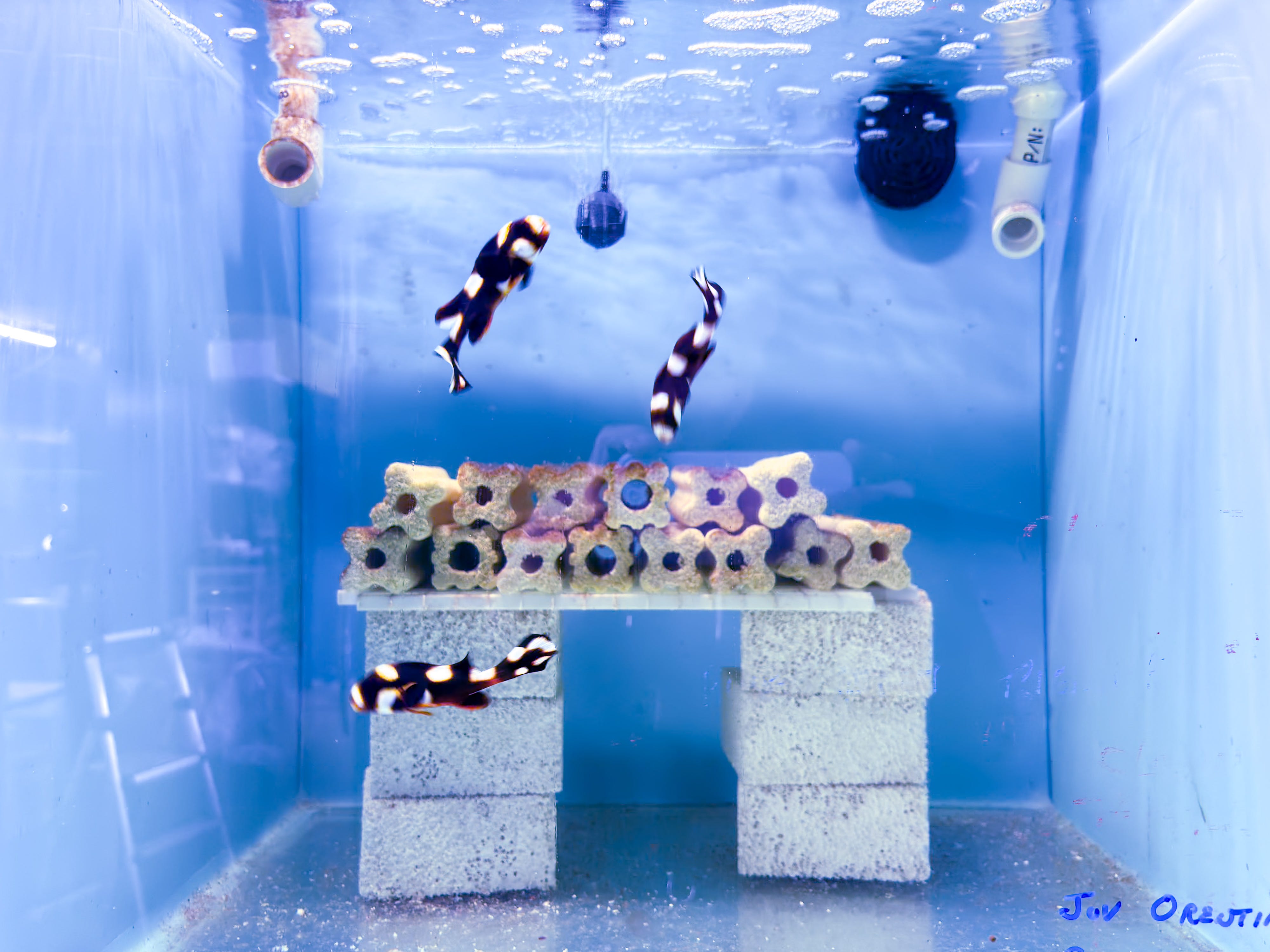
I was not allowed to use a tripod in most of these places. Not even a monopod. Setting up a camera properly is not permitted. So I work handheld, in available light, which in many of these spaces is very difficult light, the wrong light, light designed for the animals and not for a camera trying to be honest about what it sees. The photographs carry that difficulty. The slight imprecision, the way the light behaves badly in a painted enclosure or a bright aquarium tank. I was working under constraints. So do the animals. We both had a limited view.
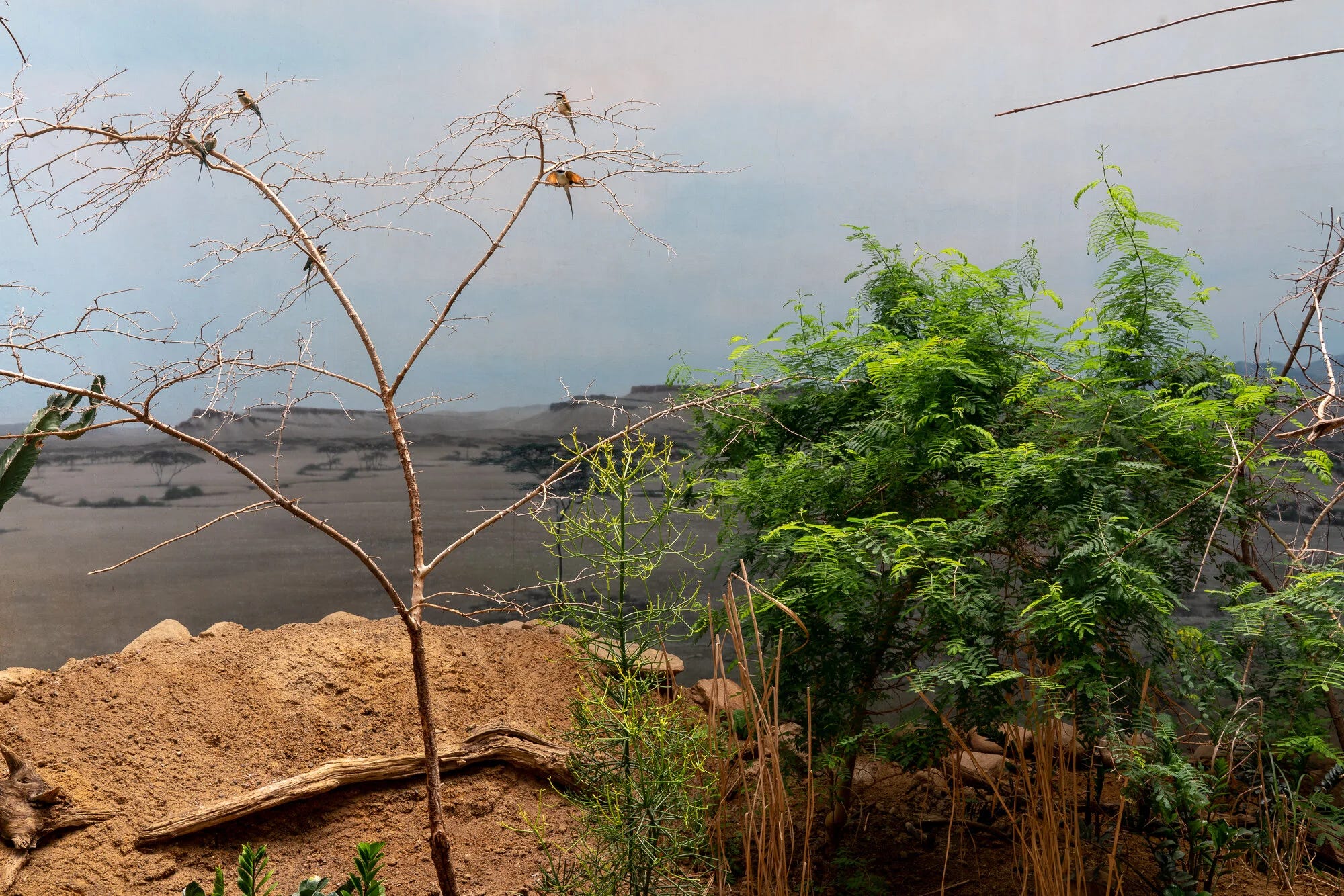
A “limited view,” that phrase works in two ways, which is why the series is called what it is. It’s meant to be ambiguous. There is the limited view we have looking into, through glass or wire or the invisible boundary of the enclosure, into a world constructed to represent somewhere else. The world is framed. And there is the limited view looking out. The bird at its painted horizon. The fish behind the concrete block. The frog in its dark water. What do they see on the other side of the frame? A family with a pushchair or carriage. Someone eating popcorn. Someone raising a camera and being told, “No flash.” Their view of us is a limited view. We arrive, we look, we leave. We do not explain ourselves to them as much as we are told the animals explain themselves to us.
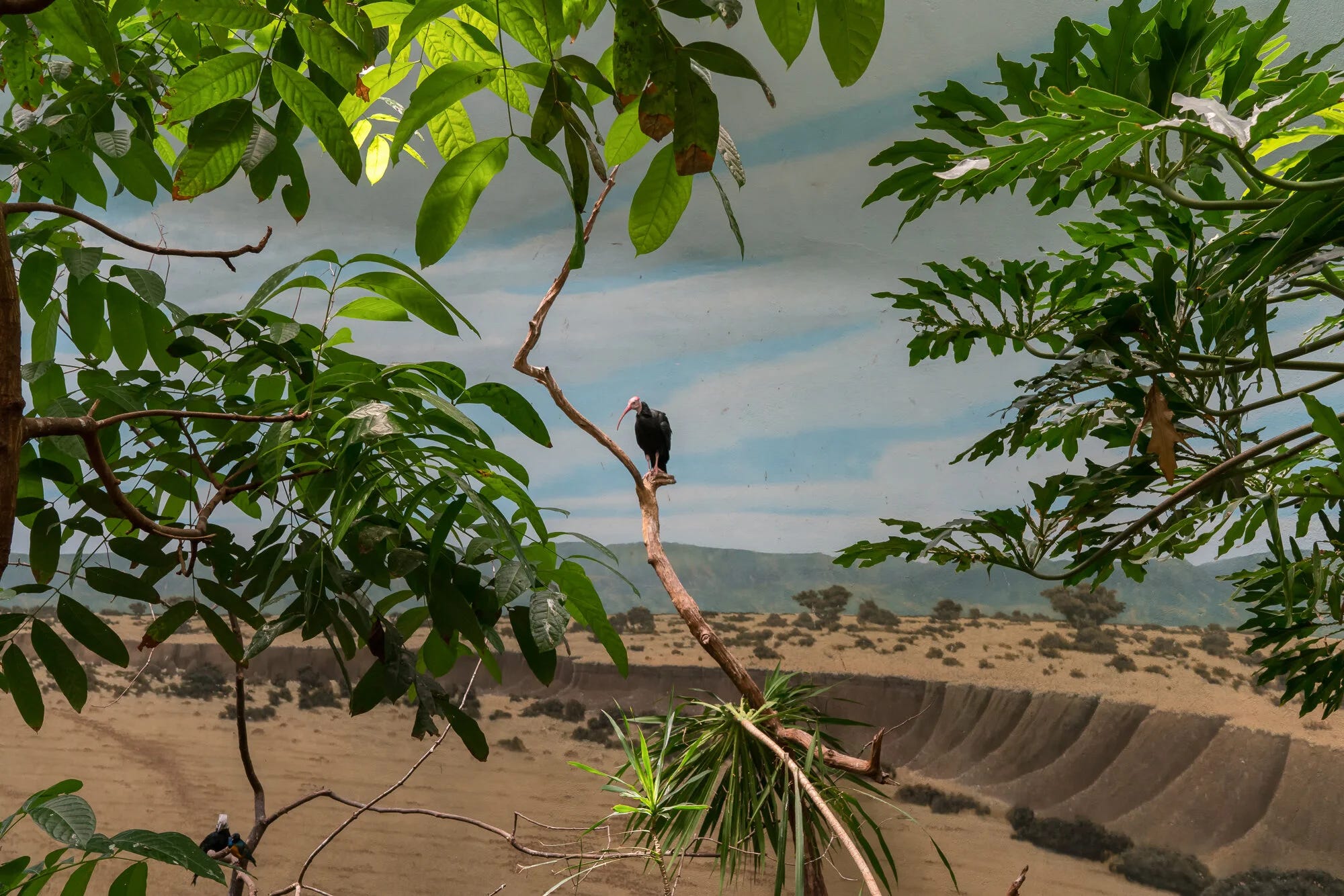
There are animals in one enclosure sitting in nests they have built, some with eggs, some with young. Life continuing inside the enclosure, generation after generation, shaped entirely by the dimensions of the constructed world. I do not know what to make of that. I am not sure it is tragedy exactly. But it is something. It is life proceeding inside a frame. That’s when my project started to give me a feeling of unease, when I say entire lives being lived in this limited world.
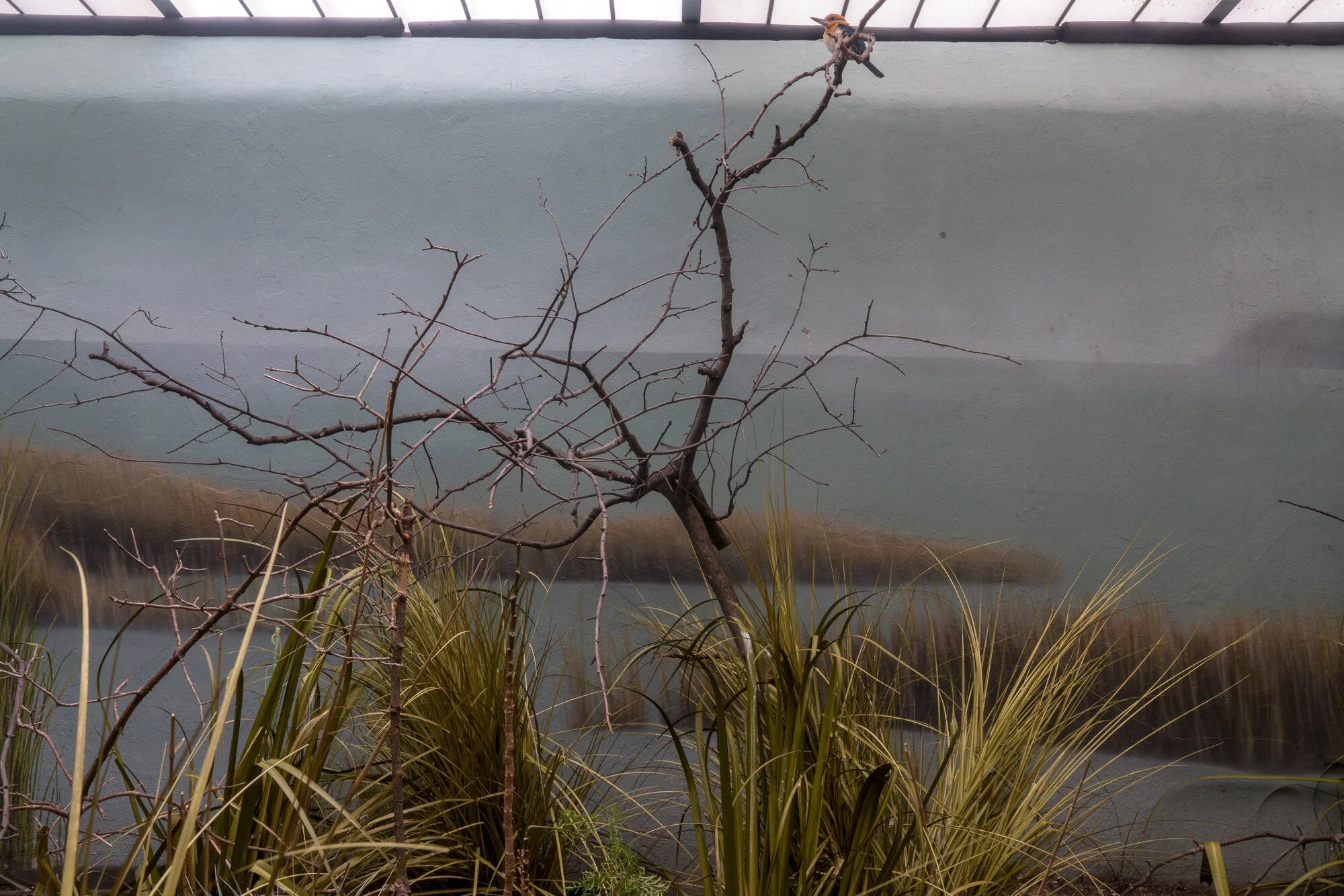
The question of what it means to photograph these places is one I kept returning to. A photograph of a real landscape is a representation of something real. A photograph of a fake landscape is a representation of a representation. But the camera does not know the difference. It records the light in a diorama even when everything it falls on is not real. What the camera can do, if you let it, is leave the evidence in. The painted seam. The concrete block. The air vent. The plastic vegetation at the edge of the frame. I don’t try to make these places look like what they are pretending to be. I try to show them as what they are. Whether photography is the right instrument for that, I’m not sure. But I am not sure what instrument would be better
At some point, I declared the series finished. Not because I had run out of places, but because I had reached the edge of what I could do there without becoming something I did not want to be. I just started to feel uneasy. Unease is a warning, and I had looked as close as I was willing to go. These are the places we build and maintain. We sell tickets to see them. They are not secret. They are not hidden. The animals, the birds and fish and snakes and bears are waiting, every Saturday, for someone to look at them. Some of the animals seem to wait for their entertainment. We oddly tell people these are places for learning, learning about the animals. But we learn about ourselves as well. They are limited views, but always something looks back.
You can help me out by restacking my essays and photos, making Recommendations on Substack, and sharing individual essays. This Substack takes several hours a week, and your support is deeply appreciated. You can find my professional site at:
www.jimroche.ca
Your observations are deeply felt and resonant. I remember reluctantly accompanying my son on a visit to the aquarium in Camden. My son could sense my unease throughout the visit. He eventually asked, "Do they get to go to a bigger space at night?" I answered him honestly. "This is where they live." He was 7 years old and told me he never wanted to visit again. Thank you for this body of work, Jim.
I feel everything you said. Sadly. But it's better to know and share than to keep these feelings to ourselves, I think.