
Where the Light Is
A long note on the problem with all photo feeds

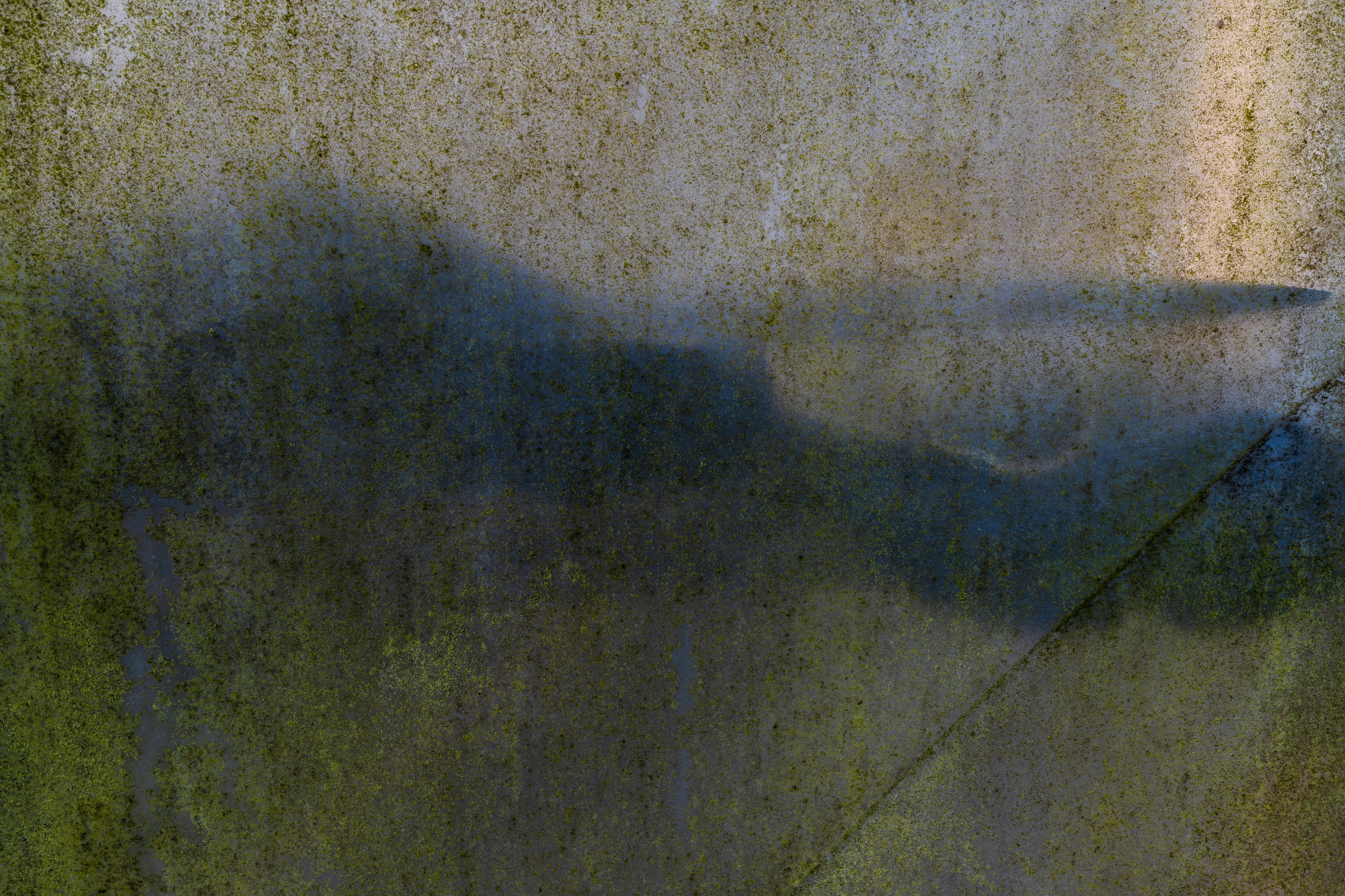
An image from my very early morning visits to the gardens.
I doubt there is an algorithm that would push this towards you, or anyone else.
While once upon a time I made art that people went to a gallery to see and sometimes buy, I am unsure how to get myself organized for another “old college try” at this point. I feel old. I just reread the poet Donald Hall’s book, Essays at Eighty, and I’m unsure if it was meant to cheer me up or push me over the edge. Even typing this has me anxious because most of my instructors, and quite a few friends from art school who I was close to, have “moved to Buffalo,” as my family says. When I was younger, I thought, I’ve got all the time in the world. Actually, that’s not true; I just didn’t think about it. I need to reorganize myself…find some efficiencies. I think some efficiencies are less helpful than others, and I’ve made one clear decision I think everyone should take. Stop wasting time with photo apps that present random or not-so-random photos for you to “consider.” I put that in parentheses because my point is we don’t actually consider them anyway.
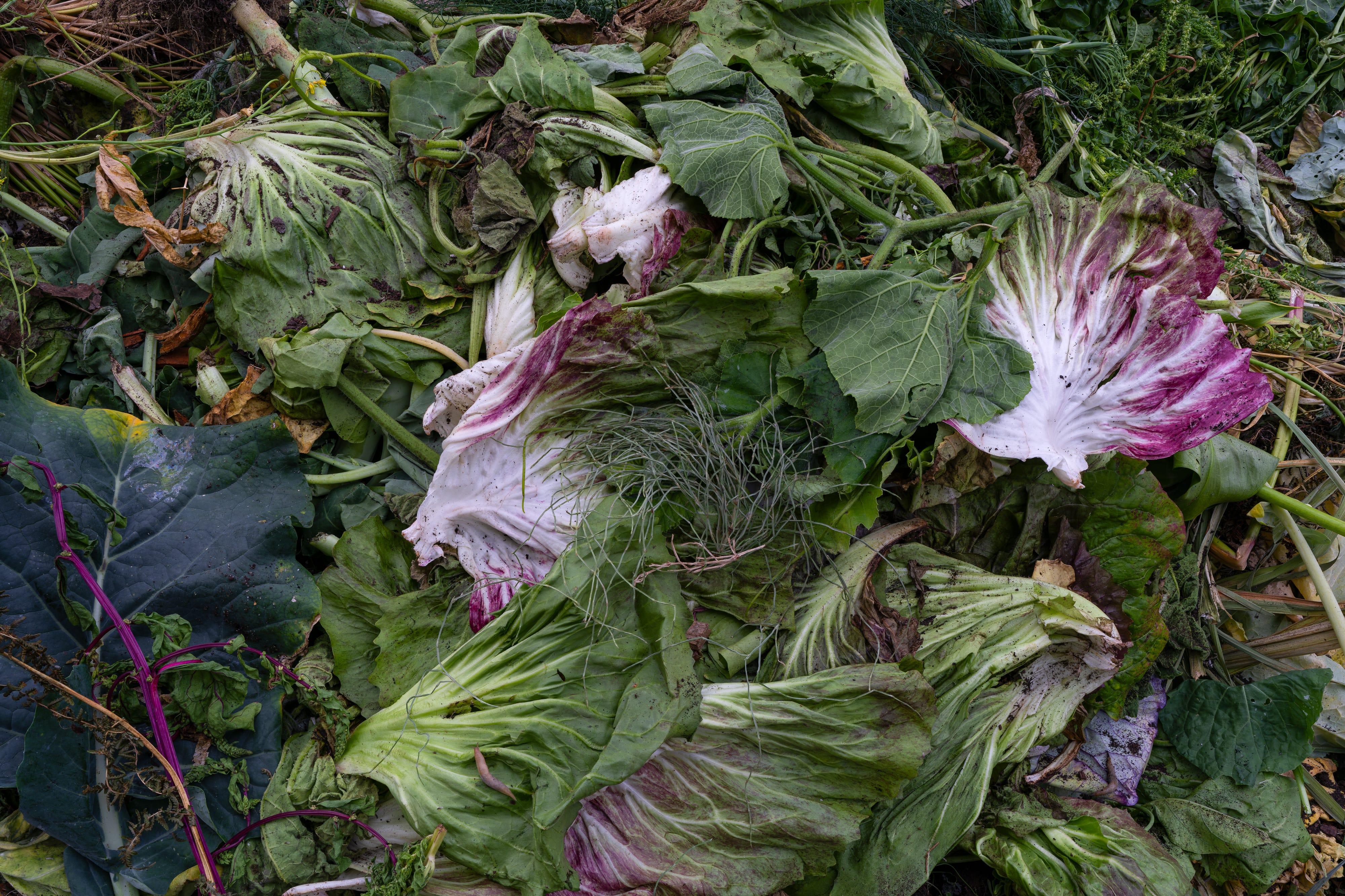
Right now I have several projects done, but I can’t figure out what to do with them. How to get anyone to look at them. This brings up my last project, a series of photos taken of a local compost pile. And yes, even the gardeners think I’m a bit nutty with my camera taking what appears to be the same photo day after day, week after week, month after month, rain or shine. This past week I decided that to get closure, my plan was that I would visit the compost pile every day for a week or so, and document the minor changes happening. Usually, for five years, I would go once two or three times a month. My new plan turned into ten days of getting up at 5 am and driving North along the Fraser River to the gardens. I’m there for about an hour and gone. I think I did get a different point of view, seeing how the daily garden task changed and accumulated. I declared myself done. Now what? What do I do with this project? I thought I’d put it up on the newest Photo app, Foto.co
That, in turn, brings me to my experience trying to sign in to the new Foto.co desktop application. In a moment of total stupidity, I had thought, “Maybe if I spent three hours putting a selection of work on this app, things will be different.” Stop laughing! Yes, if I just changed where I post my photos….well, my life would miraculously change. I often have thoughts like this, thoughts best forgotten or ignored. Foto.co had been built up, in its own language, as a photographers’ site, uncontrolled by the evil of algorithms, no ads, no hidden commercial purpose. “Just pure photography.” The feed is historical, guided only by who posted what and when, with a few search words you could plug in if you wanted. I’m already a user; I’ve signed up and posted there before, successfully, so this time when I couldn’t get my images to upload, I ended up waiting for the site to cooperate. I sent an email to customer service. Yes, they were great. They answered me in about 15 minutes. But while waiting, I did the only thing there was to do. I watched the feed. One technically competent image after another. But somehow they all blended into each other. And I thought, is that all there is? Looking at streams of photos is a waste of time. It’s unhealthy. It’s a distraction. It reminds me of all those WWII films I watched as a kid. You’re standing at a crossroads; the camera is on the Nazi’s. They take a sign, full of directions to different towns, and they turn the arrows around. Such a nasty trick! And I’ve fallen for it. Again.
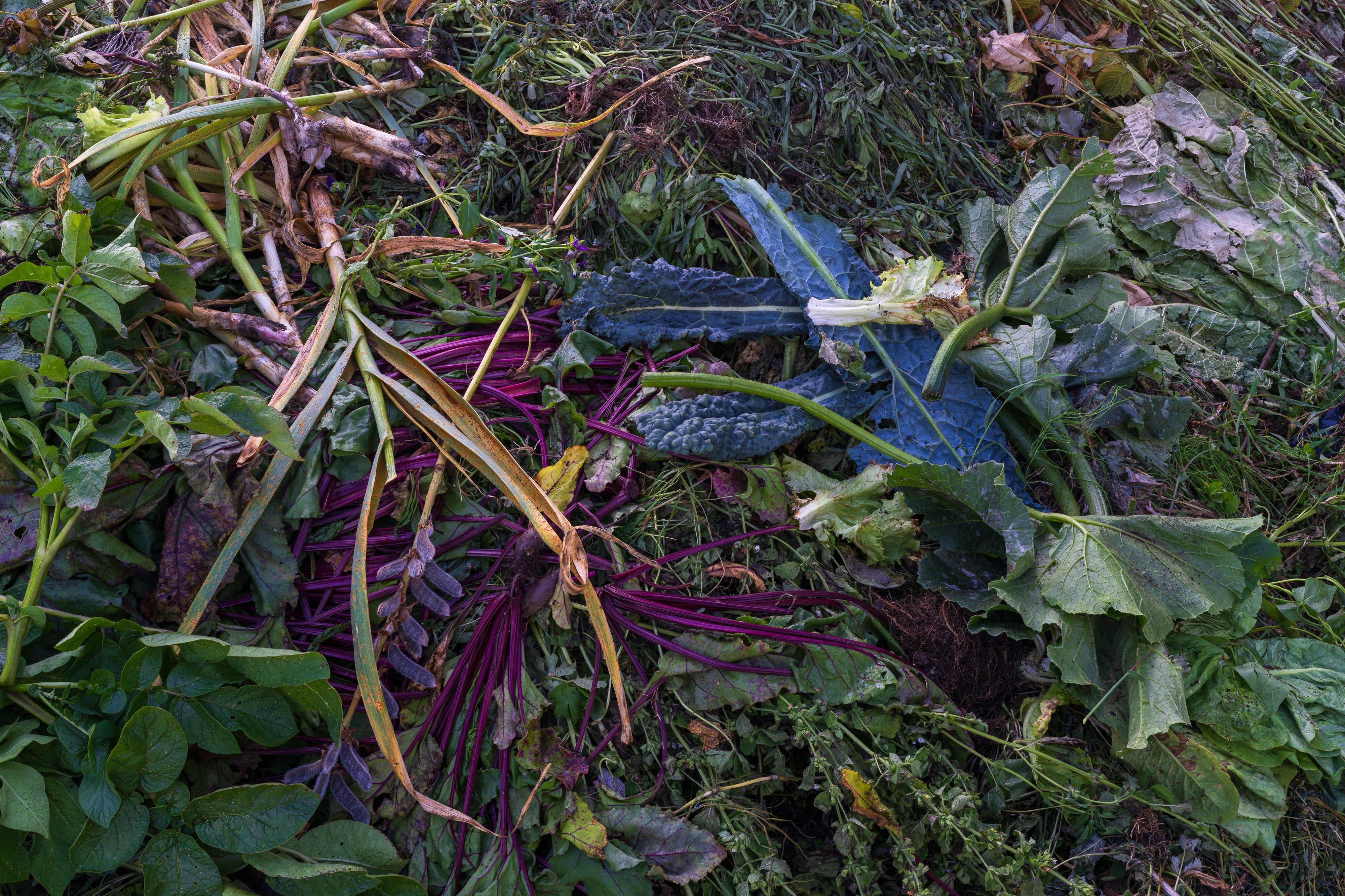
One of my many images of the compost pile taken over the last five years
Foto.co wasn’t the beginning of my getting lost. I used to use Tumblr, Pinterest, Flickr, and Instagram. Facebook Groups was useful for a while because at least somebody had selected the photos for one reason or another; there was a photo group built around the New Topographics movement, a minimalist photography group, and one called “Liminal Spaces.” In the groups you got likes, and occasionally a comment. But many people didn’t want to read comments. People would get snarky, and some people actually posted their written preference not to discuss their work. “If you don’t like it, just move along.” The less rewarding groups were built around locations like vacation spots, specific cameras, and editing software. Specificity mattered, for a while. Then it didn’t.
In the meantime, if somehow I did find a photo I liked, I looked up the photographer’s profile, and if they had a personal website, went to it. Then I’d write a longer message about their work. People seemed surprised to get an actual note that showed some knowledge about their work, and have written back, and we have some connections. People in Japan and other countries seem more interested in correspondence. But these experiences are few and far between.
There’s a story I think many of you know; you’ve probably already heard some version of it. Here’s one: “A policeman sees a drunk man searching for something under a streetlight and asks what he’s lost. The man says his keys, and the two of them look together, under the light. After a few minutes, the policeman asks the man if he’s sure this is where he lost his keys. The man says no, he lost them in the park. The policeman asks why he’s searching here then, and the man says, this is where the light is.”
It feels like I’m doing exactly that, looking for a “good photograph” where the light is better. Scrolling through whatever happened to be easy to find. The photos under the light.
Why not use that old algorithm? Well, I have rarely found a photograph, an idea, or a project worth following because of an algorithm. But yesterday, trying to avoid algorithms, I went looking for a good photo on the non-algorithm app and still found nothing. Zilch. I found myself sitting, passively, swiping through one image after another and then another….it’s just like the guy looking for his keys because the light is there, while he knows perfectly well he won’t find anything. I’m either being stupid or lazy.
Foto.co, like almost every other photo “search” site, turned out to be a disappointing scroll of photographs I found almost no use for. They were good photos, technically. Acceptable photos. They followed the rules of photography (few other art forms seem to have a similar focus on rules). Rule of thirds, all that stuff. I want to be clear Foto.co is no different from most of the other photo sites out there. I’m not picking on it. Let me say it even more directly: I just think randomly looking at images online is a total waste of my time. I was looking for a fast, easy way to find art, as though art served up on a platter, requiring nothing more than a click, could be interacted with meaningfully. There were no images that you couldn’t understand in two seconds or less; they all provided immediate resolve. They were designed, and picked out by the photographers because they were easily recognizable as “good” photos. Perfect photos for a “feed.” The process just showed me nothing about art or photography; it just showed me how lazy I’d become. I’d been pulled in by the promise of a site focused purely on photography. Yes, it’s all photography, but it’s random, scattered and nothing grows or relates. If something requires no effort from me, I should expect the quality of the results of our interaction will be, at best, generic. There is no soil for the roots.
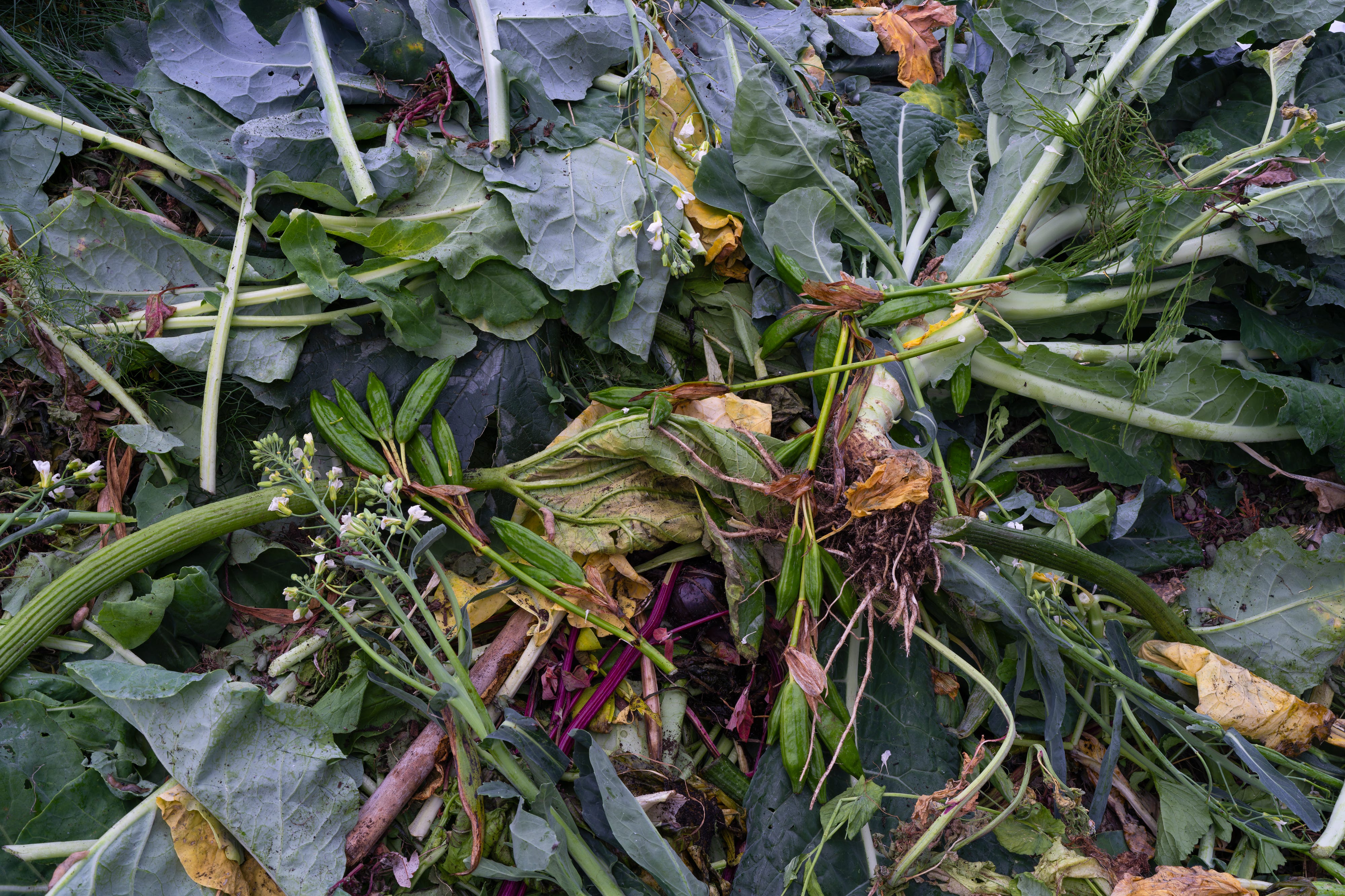
Foto.co represents a lot of what’s wrong with photography online right now, while the people who built it clearly believe it’s exactly what’s right. That’s an uncomfortable thing to sit with, because they put real effort, time, and money into trying to do something good. The app was built by a founder named Michael Howard; he ran it in beta for a year and a half with more than sixteen thousand testers before it ever opened to the public; he turned down venture capital entirely, funding it instead on its own community’s support, precisely so it would never owe anyone an algorithm or an ad. That’s not nothing. That’s a year and a half of somebody’s life spent trying to build the exact thing I said I wanted, and I don’t think contempt for them is fair or accurate. If you want to look at scrolling photos, lots of them, made by people skilled with a camera, and want a provider who’s responsive, this guy is it. Go to foto.co. But I think the site, like most photo sites that scroll images past your eyes, does two separate kinds of damage regardless of what they intended, two different things rather than one vague complaint.
The first is what I’d call increasing the bona fides of competent work. Every photograph on that feed arrives at the same size, with the same absence of caption, in the same chronological or algorithmic slot, and nothing on the screen tells you which ones represent a decade of serious practice and which are a lucky iPhone snapshot. When you scroll, you focus on both the photo from a project an artist has worked on for 8-12 years, and a lucky iPhone shot for the same amount of time. But I want to know more; I want to understand the problem the photographer is trying to solve. I want to know why the photographer took this picture. A photo on a gallery wall carries that information. Often so does one on the gallery’s website, and with more certainty that’s what you’ll see on the photographer’s website. So does a magazine’s editorial choice, or a photobook that costs money to make and takes up shelf space, which means somebody, an editor, a publisher, decided it was worth the effort and there is more to it than the cover photo. Sure, strip all of that away and you get pure visual parity, which looks like democracy but functions like erasure, because the viewer has lost every signal that used to help them tell the difference between what to take a look at, and what to walk by.
The second is different, and it’s really about attention rather than legitimacy. Call it the distance the feed puts between a person and quality. Every few seconds spent looking at a technically competent, forgettable photograph is a few seconds not spent finding the photographer whose work practice would have actually taught me something. This work isn’t just falsely credentialed by being technically competent so much as it’s being noise, and it crowds out the signal by sheer bulk alone. In other words, it’s not just what we end up with; it’s what we lose.
I don’t think Foto.co’s founders set out to build a homogenizing feed. By their own account, they set out to build the opposite: a true chronological feed, no algorithm choosing what anyone sees, no ads, no suggested posts pushed into the middle of it. I think, at this point, a website where people post photographs almost automatically means an infinite scroll; chronological or algorithmic hardly matters once you’re inside it, because that’s simply what the medium defaults to now, no matter anyone’s stated values. If that’s true, this isn’t really a story about their good intentions failing against my “good taste.” It’s a story about how completely the feed has become the only shape a photography platform seems able to take, even when the explicit, sincere goal, backed by sixteen thousand beta testers and a deliberate refusal of venture money, was to build something that wasn’t one.
The critic Kyle Chayka, whose book Filterworld came out in January of 2024, makes almost exactly this argument about algorithmic platforms generally: that whatever they promise about personalization, the net effect is a homogenizing of culture, feeding everyone content unlikely to ever surprise or challenge them, under a rule he sums up as “go viral or die.” Foto.co set out, by its own account, to escape exactly that logic, and landed inside it anyway. Have you been surprised by anything on a photo feed lately?
None of that tells you what I actually want, though, only what I don’t want. What I actually want is to find artist-photographers who surprise me, who have something to teach me about solving the problems I use art to examine. Most photography websites offer me less of that than visiting a friend or relative who keeps a family photo album. That comparison sounds sentimental until you look closely at what the album is actually doing that the feed doesn’t. Every image in it comes with a storyteller sitting right there next to you. You can ask a question. You can compare your own photographs, your own memory of an event, against theirs. You can find out how the photograph makes them feel, and say how it makes you feel back. The act becomes something you do together, something critic Dave Hickey writes is what makes good art, good art.
The exhaustion with images we are experiencing isn’t new to the internet, which is worth knowing before you assume the endless scroll invented this feeling. Susan Sontag was describing it in 1977, decades before anyone could scroll anything, writing that we shoot everything, not least ourselves, that industrial societies have turned their citizens into image junkies, that people saturated with photographs start finding real sunsets corny because they look, by then, too much like photographs. I disagree with Sontag about, well, mostly everything, but on this…she’s right.
My frustration, to a degree, comes down to the fact that photographs online arrive uncurated, one after another, at random, adding up to nothing. I know people object to the idea of curation, and I often do myself, calling it “being told what to think.” A few years ago you would go to the mall to buy a pair of pants and the clothing store would decorate the showroon with a carefully curated set of large coffee table sized artbooks. Most of us in art knew these books, the artists inside, and what they were about. But they were clearly chosen for their covers. Artists in work clothes, welding metal sculptures, abstract painters in paint stained pants, conceptual artists, land artists in particular. Oh, big books of William Wegman and his dogs. But the store provided you with a curated set of decorations to make you appear…well, cultured. Curation of art, paintings, photos, music, even food meant you did no exploring, no learning. You basically used these books of art as decoration, and for yourself, as a disguise.
But a feed has zero curation, which I think is a different and worse thing than too much. Go to an artist’s own website, and you’ll find curation. And the curation of their own work is part of their job as a photographer, as an artist. I want to feel that somebody, anybody, once in a while, has said, “No, not that one. It just doesn’t work.“ You know what I mean?
CODA
So I’m done with photo feeds. Done. I’m going to go back to the library, take the latest art journals off the shelf, find a table, make a pile and go through them, page by page. When something catches, an image inside an article, a review, a gallery advertisement, I’ll photograph it with my phone. That’s my personal graduate program in photography.
When I think over, this past year, every successful search required time and effort. Every successful search traced right back to a library table, a magazine, journal or book, a gallery site, something I went looking for on purpose, or an email or message from a friend, “Hey, are you familiar with this woman’s work? Here’s her website, followed by a link. Tell me what you think.” Never once was finding something that helped me move ahead as an artist come from a feed. Never did a good idea just appear without effort.
Notes on sources
Kyle Chayka’s Filterworld: How Algorithms Flattened Culture (Doubleday, January 2024) is the source for the “flattened culture” and “go viral or die” framing of algorithmic feeds generally.
Susan Sontag’s On Photography (1977) is the source for the “image junkies” and “photographed everything” material describing image saturation before the internet.
Sharing my essays is the most helpful thing you can do for me. They take a lot of work, and even after 10 or more edits, there’s always a new mistake that needs to be corrected. Donald Hall, who is discussed in the essay, often edited his essays as many as 40 or more times. And three recent essays, after a lot of work, went into the Trash can on my desktop. It takes a lot of effort, and I’d appreciate your support.
Thanks for saving me the trouble of writing this myself. I’ve been trying to get a better handle on why I’ve become increasingly disillusioned with photo feeds on social media, and you’ve nailed much of my discontent. There was a time before the algos when it was easy to discover photographers with interesting viewpoints doing interesting work. Now it’s photographers making photographs like the photos that are getting attention. And that’s when you can see photographs and not reels, because IG ‘s algorithms favor reels. I signed on to Foto.co in early Beta, but haven’t been on it much at all. When I signed on, the images were more interesting than those on IG, but for some reason the platform never moved me much. If you’re a photographer looking to sell prints, or market your services, I don’t think any of the social sites are likely to be helpful. (I was the photo editor of a local food mag for four years, and never went to any of the social sites to look for photographers to assign, although I did check the social feeds of photographers who had been otherwise suggested or recommended.) I’d be interested to know if any photo editors or art buyers are searching for talent on social sites. My IG followers, few though they are, are largely other photographers. It’s all very frustrating. Thanks, by the way, for recommending Chayka’s Filterworld. Just ordered it.
Your photographs often evoke for me the beloved masters of the form, Duane Michaels, Elliott Porter (the compost photos—so quietly spectacular!), Minor White and so many others. I love the subtlety and a quality I read as reverence in your work.