
What Held
New directions, and what stays the same

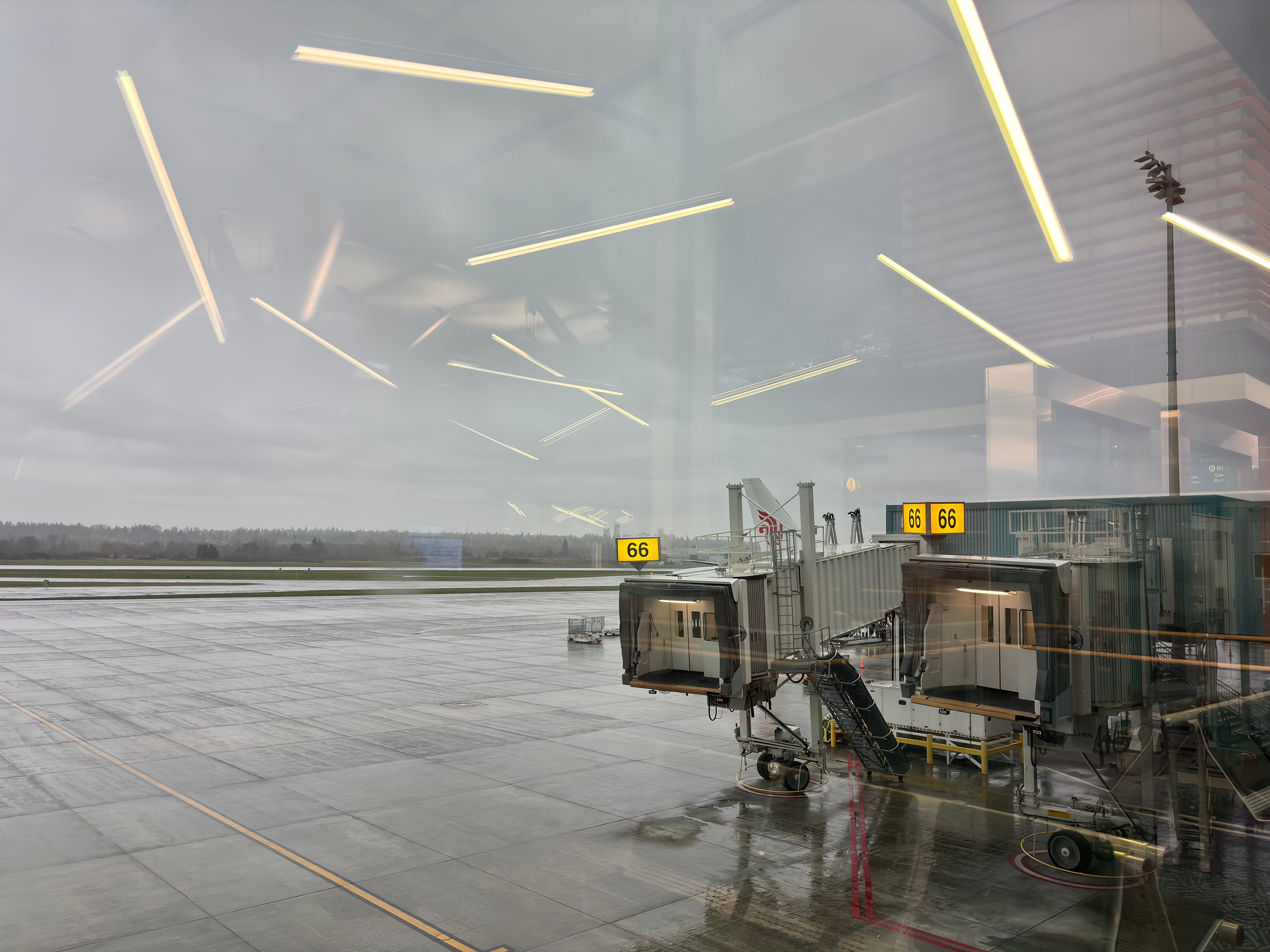
Waiting for my plane to somewhere else.
I have been rereading my own essays lately, the way you reread an old letter, curious about who wrote it. Some I am cutting entirely. Much of what is left needs rewriting. But going through them slowly, on paper, I noticed something I had not noticed while I was writing them. The parts that survived the edits were never the history. They were the personal parts.
In one essay about the garden I often visit, the paragraph that held was the one about how I got up at five in the morning for ten days straight and drove north along the river. Not the paragraph about who founded which magazine I was writing about, or which photographer shot which parking lot. In another essay, about dance and photography and how understanding contemporary dance, like photography, shows us what makes an ordinary thing worth looking at, the lines that stayed through every draft were the ones about square dancing in a sixth-grade gym on a rainy day, not the paragraph about John Cage and Merce Cunningham at Black Mountain College in 1952. In the same essay, a short passage about driving out before dawn, listening to a piece of music, and noticing that the tone of my own looking had changed, due to the music… that one stayed too, word for word, through every cut.
I titled this piece before I had written a word of it. Just the two words, What Held. I did not think about where they came from until later, while driving, when I realized the word was not mine. It’s Joan Didion’s, or she made it hers, the center was not holding, a line she borrowed from Yeats. I have had that sentence in my ear for years without noticing it was there. So when I went looking for a title, it came out of me the way an accent comes out, without asking my permission.
Everything else - the founders of modern dance, the different movements, the years, the names- kept needing to be trimmed. Every round of editing found the same fat to cut, and it was always the teaching part. The lecturing. Never the personal.
I think this is why people write to me, and why I write back. Not because I know when J.B. Jackson founded a magazine, or which year the Bechers started photographing water towers. Anyone can look that up. They write and comment because I told them what it was like to stand in that garden at five in the morning for ten days in a row, trying to figure out why I was doing it. That is not a fact I researched. That is a fact about me, and it turns out that is the fact people comment about, and tell me their stories about.
So I am changing direction in my writing. You’ll notice. Less lecture, less art history. Fewer dates and references. More of what I saw and what I felt while looking at it.
Yesterday I went back to reread Dave Hickey. I picked out his book “Air Guitar.” His essays are built out of what happened at a boxing match in Vegas, at a swap meet, or listening to a Hank Williams record. Like most essays I read and like, every one of them starts in one specific place, a bar, a gallery, a car, and moves its way outward from there. He never just tells you what he felt. He shows you the boxing match first. The quest for rigor does not go away when the subject turns personal. It just has less scaffolding, fewer evidentiary facts to hide behind, which means the writing has to hold up entirely on its own.
That is the discipline I am after now. Not fewer rules. The same rules, aimed at myself instead of at history. Let’s see if I accidentally drive this car off the side of the road.
Jim
I think you made the right decision. The same way many visitors are put off by too much lecture, art history and cultural references at the entrance of an exhibition, and won’t even step in to look at a single photograph, finding the right balance between being informative and personal is exactly what draws readers in.
I enjoyed reading this post. The ‘personal’ would seem to be a valuable thing to put into writing. I might try it.