
The Uncanny
When the Picture Assembles Itself

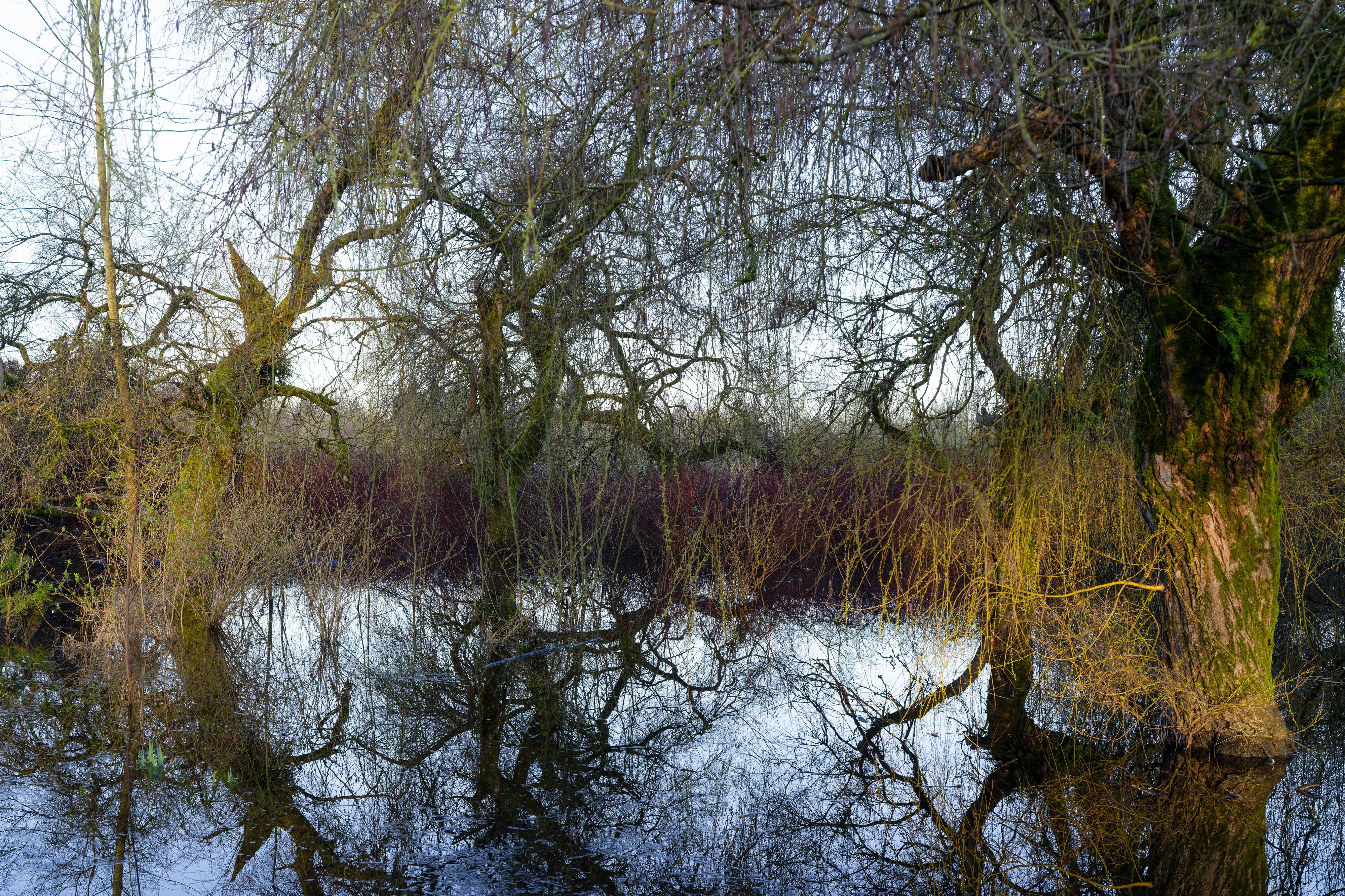
I went to Trout Lake Park in the morning, planning to photograph trees in the open fields. When I arrived, they didn’t amount to much. The light was flat; heavy clouds blocked the sun, and the trees were scattered in a way that never quite coalesced into a photo. I walked down toward the pond instead.
At the end of the pond, sometimes more of a bog, I came to a patch of flooded ground where several willows bent low over the water. Water was covered with the thinnest layer of ice. As I walked past, something about the scene caught my attention. A trunk curved across the view. Thin branches hung down into the water. Their reflections appeared beneath them. A strip of moss along the bank was catching. light breaking through a long, tiny slit in the cloud cover. It wasn’t anything dramatic, but the pieces lined up just for a moment.
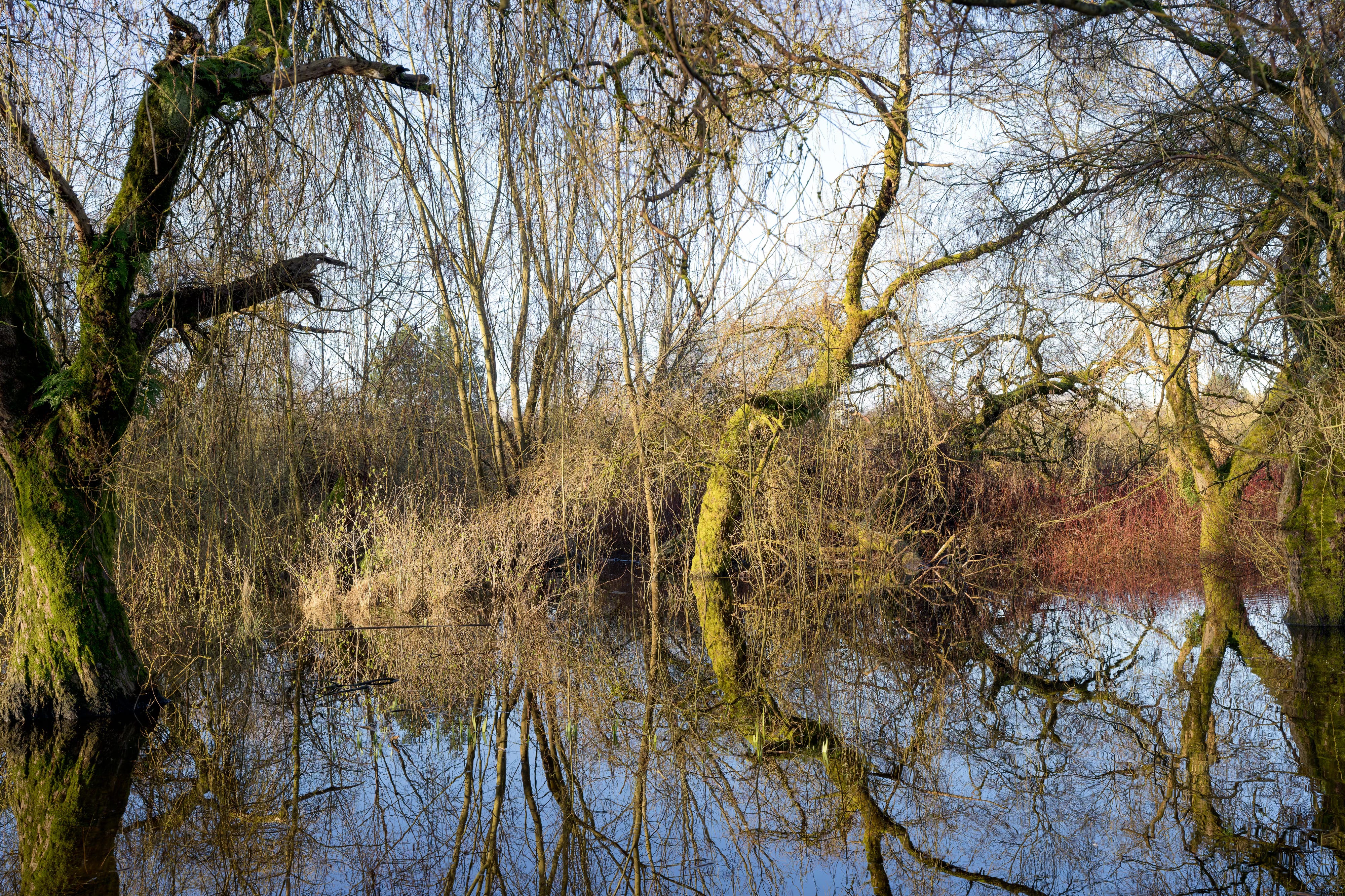
Then a cloud moved across the sun, and the whole thing went flat again. I kept walking, but after a minute or two, I noticed the light coming back, and it seemed to be falling in that same small area. So I turned around, went back, and quickly set up the tripod and camera. Because the branches were running in every direction and went from foreground to background, I switched to focus stacking so everything would stay sharp from front to back.
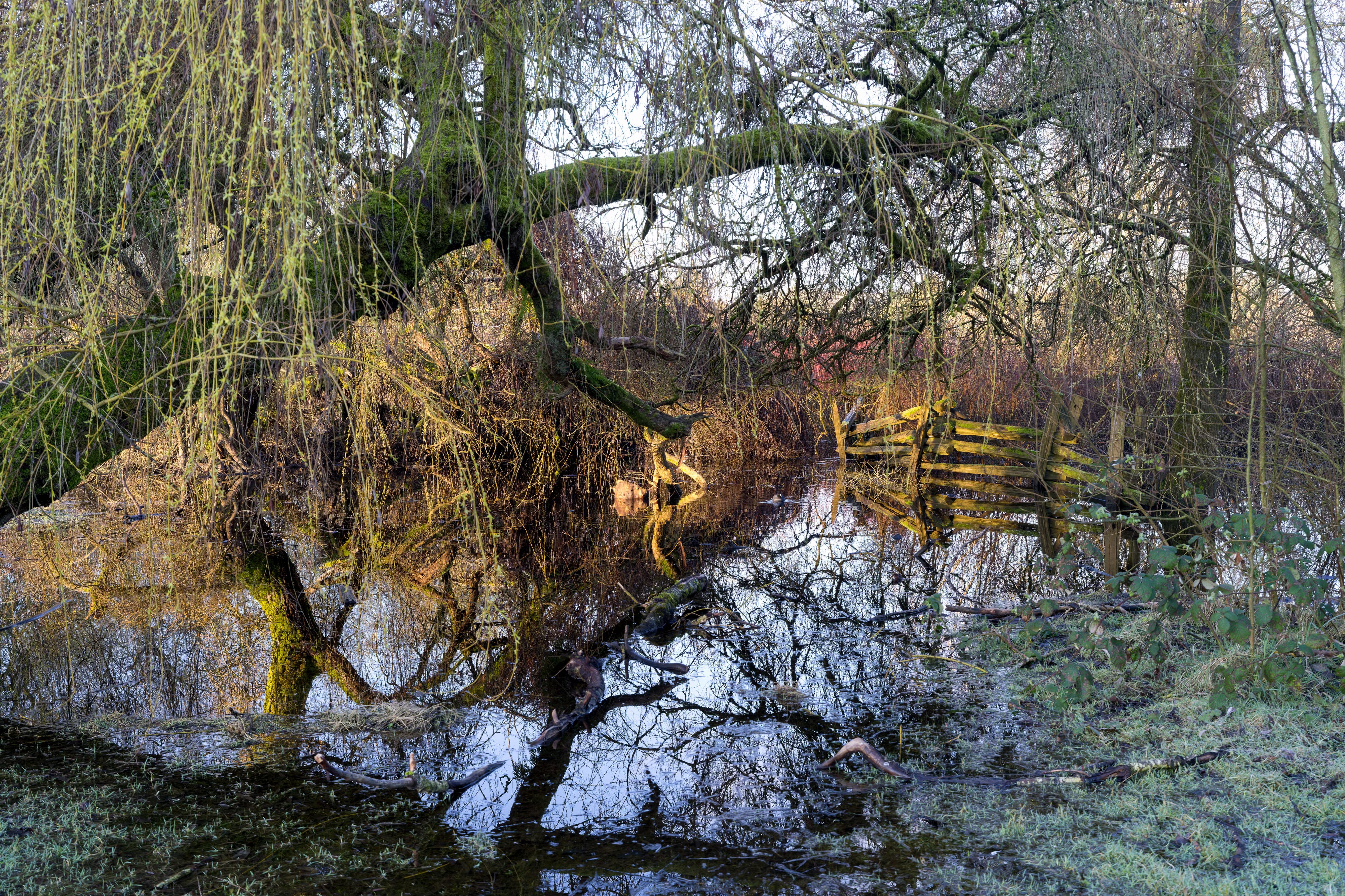
Then things started interfering. A duck landed and stirred up the water. No ice on this side. A few runners came along the path on the right. The clouds kept moving across the sun. I stood there waiting while small ripples moved slowly across the pond from the far side toward me. One after another, they faded out until the surface finally went still again. I stood away from the camera with my remote control. When the water settled down, I started the exposure. Several similar images appeared: wash, rinse, repeat.
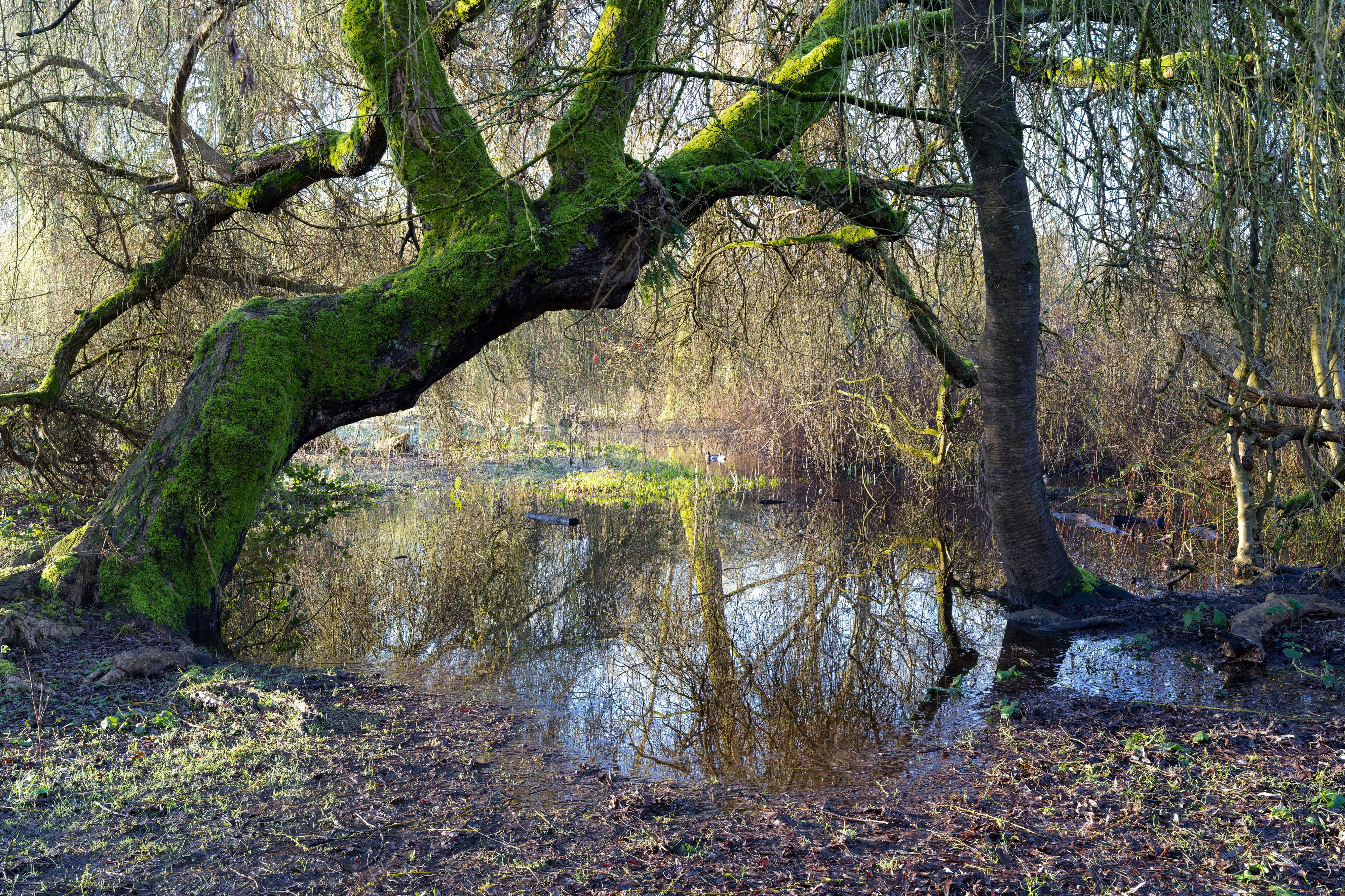
A day or two later, while editing the photographs, I began to notice a few things I hadn’t thought about while standing there. The pictures are clearly of trees and water, but the eye doesn’t stop in one place right away. The branches cross each other, the reflections repeat the trunks, and the water makes it hard to tell exactly where the ground ends. The eye keeps moving through the frame before finally settling somewhere.
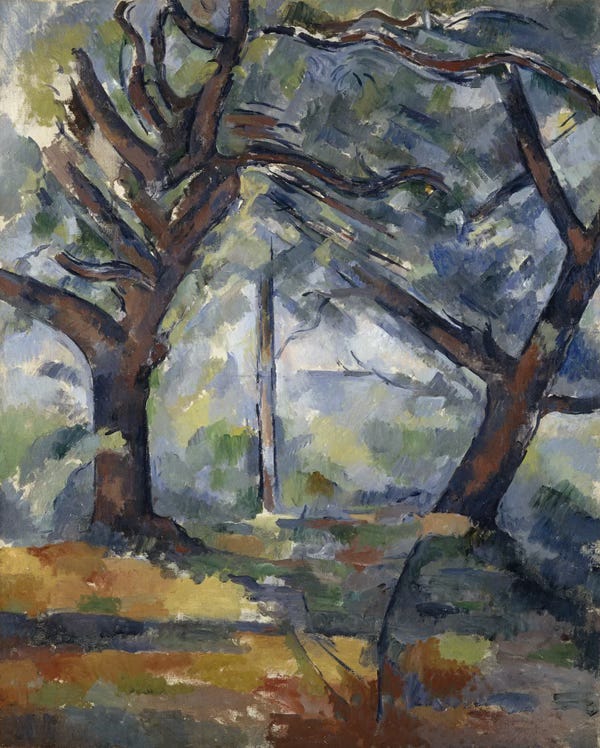
A painting by Paul Cézanne
While looking through the images over the next couple of days, I found myself thinking of certain landscapes by Paul Cézanne, where trees interrupt the view, and the eye wanders through the painting instead of stopping immediately. The feeling is not the same, of course, but the photographs behave a little that way.
That may also have something to do with the way the photographs were made. Each final image is built from several exposures combined. I use focus stacking so the whole scene would stay sharp, the branches close to the camera, and the reflections farther back in the water. Because of that, nothing in the picture immediately tells you where to look first. This is almost the opposite of how someone else would take the image, with a shallow depth of field and controlled composition guiding the eye to where the photographer thinks it should go.
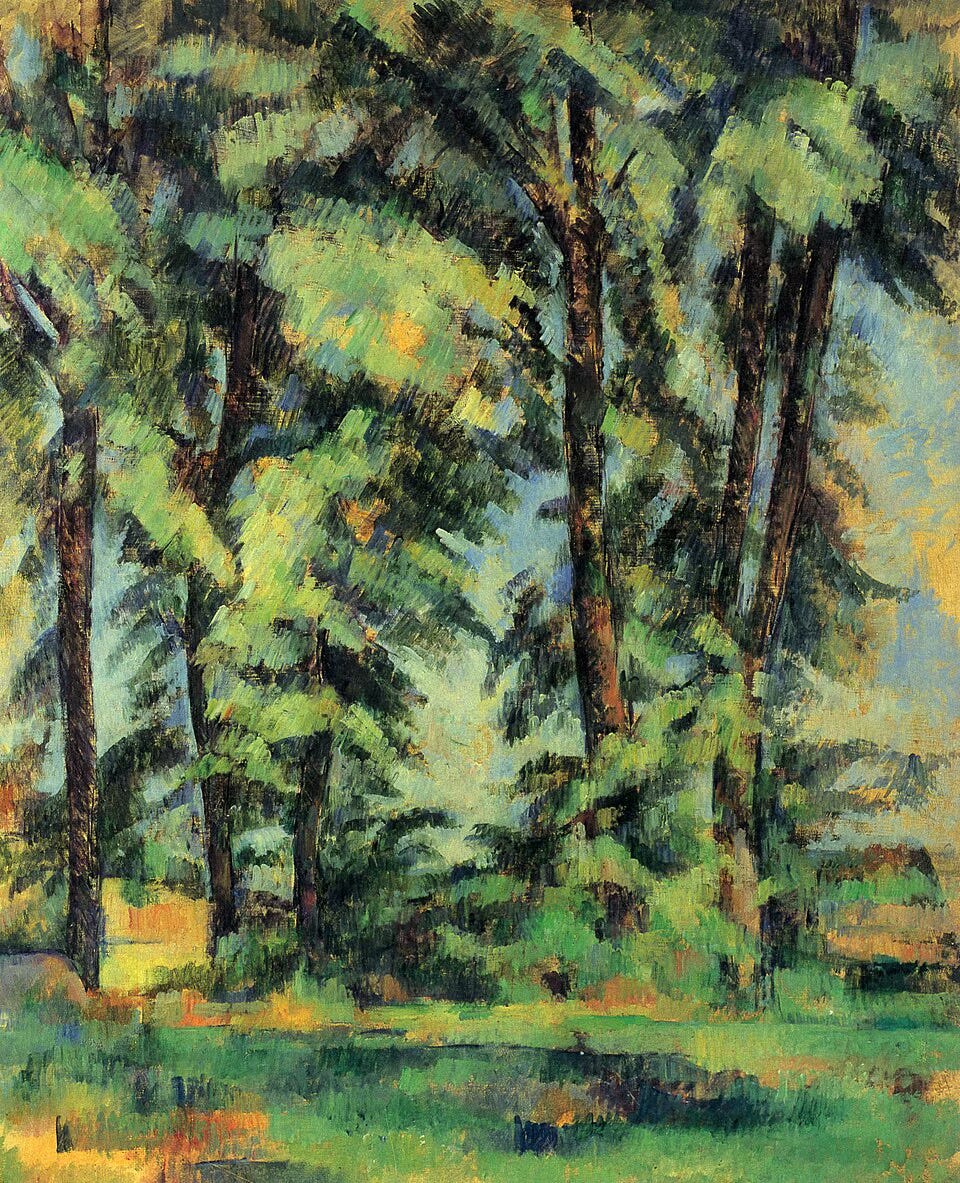
A painting by Paul Cézanne
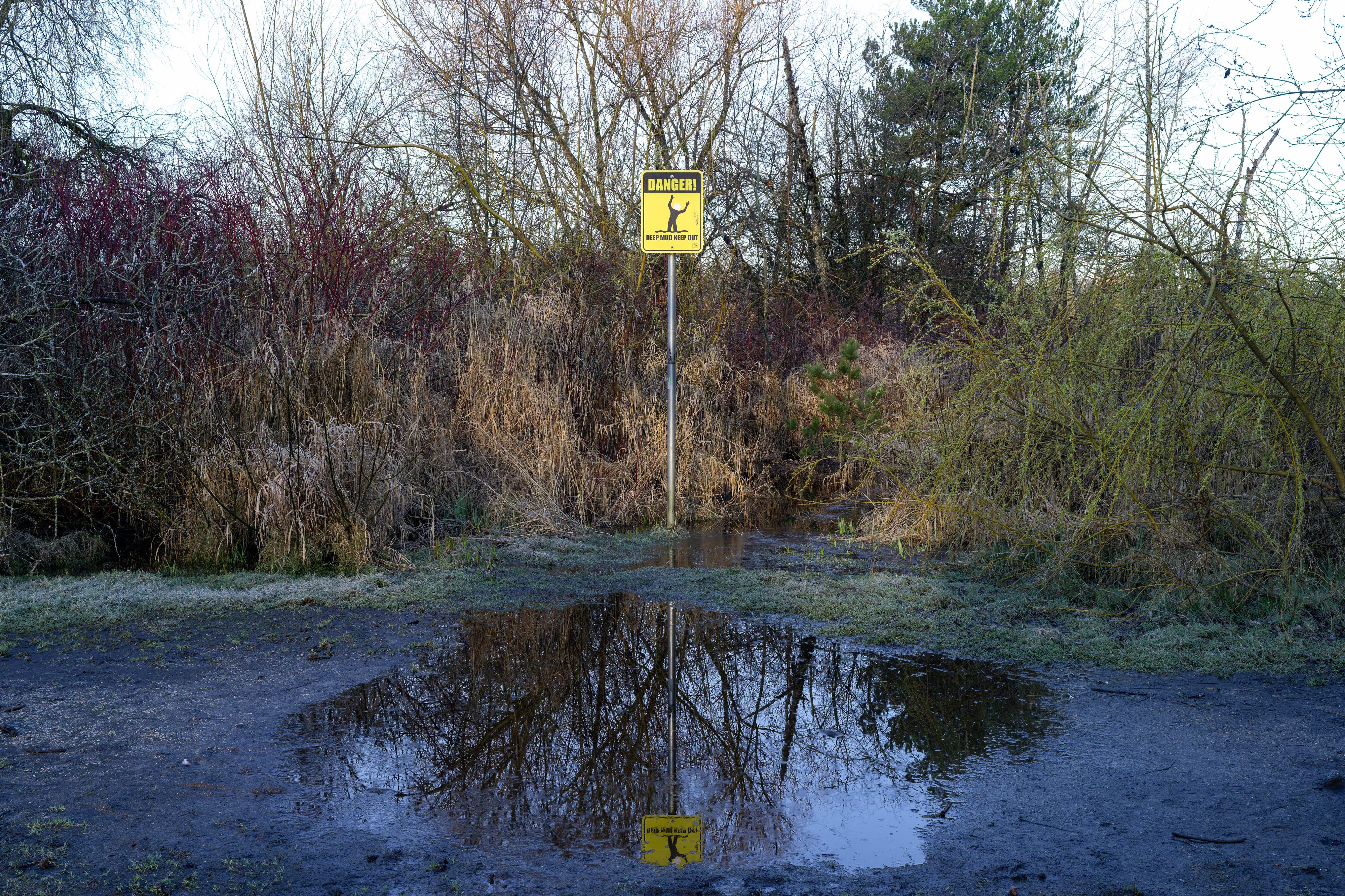
I noticed something else. The place looks slightly strange in the photographs, even though there is nothing strange about it. It is just wet ground in a park, with a few willows growing along the edge of a muddy pond. For a few minutes that morning, the branches, the water, and the light happened to fall together in a way that looks arranged, almost composed. It reminded me a little of a museum diorama, except this one was empty. Everything comes together inside the little rectangle, within the constructed box. And everything is so still. I remembered how walking down the path had cleared out the scene. Emptied it of activity.
And how the lack of activity gave the scene a strange feeling. Freud would use the word “uncanny.” The word is a perfect description. A few minutes later, a duck landed again, the reflections broke apart, and the surface of the pond filled with ripples. The wind came up, and more runners passed by.
The place went back to being what it normally is: a stretch of park that most people walk past without thinking about it.
.
Thanks for reading my Substack. I’d appreciate your help in keeping these conversations going. You can do that by subscribing, re-stacking, and recommenting. It only takes a minute.

I especially like the third image, where the moss covered tree provides the strong diagonal. It creates a sense of anticipation.
I like the curtains of nature as well as your comparisons to the paintings. Interesting!!