
The Compost Piles

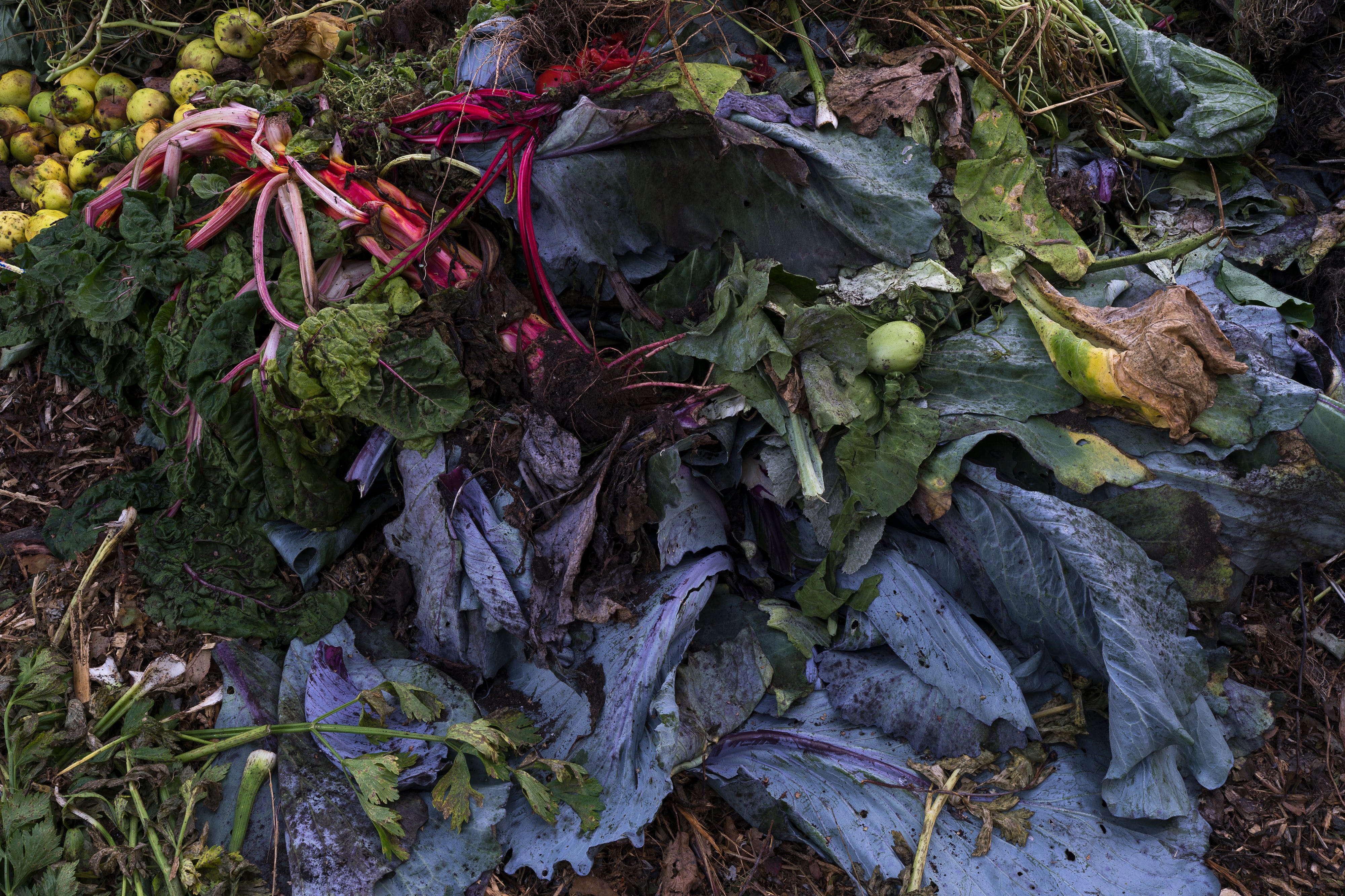
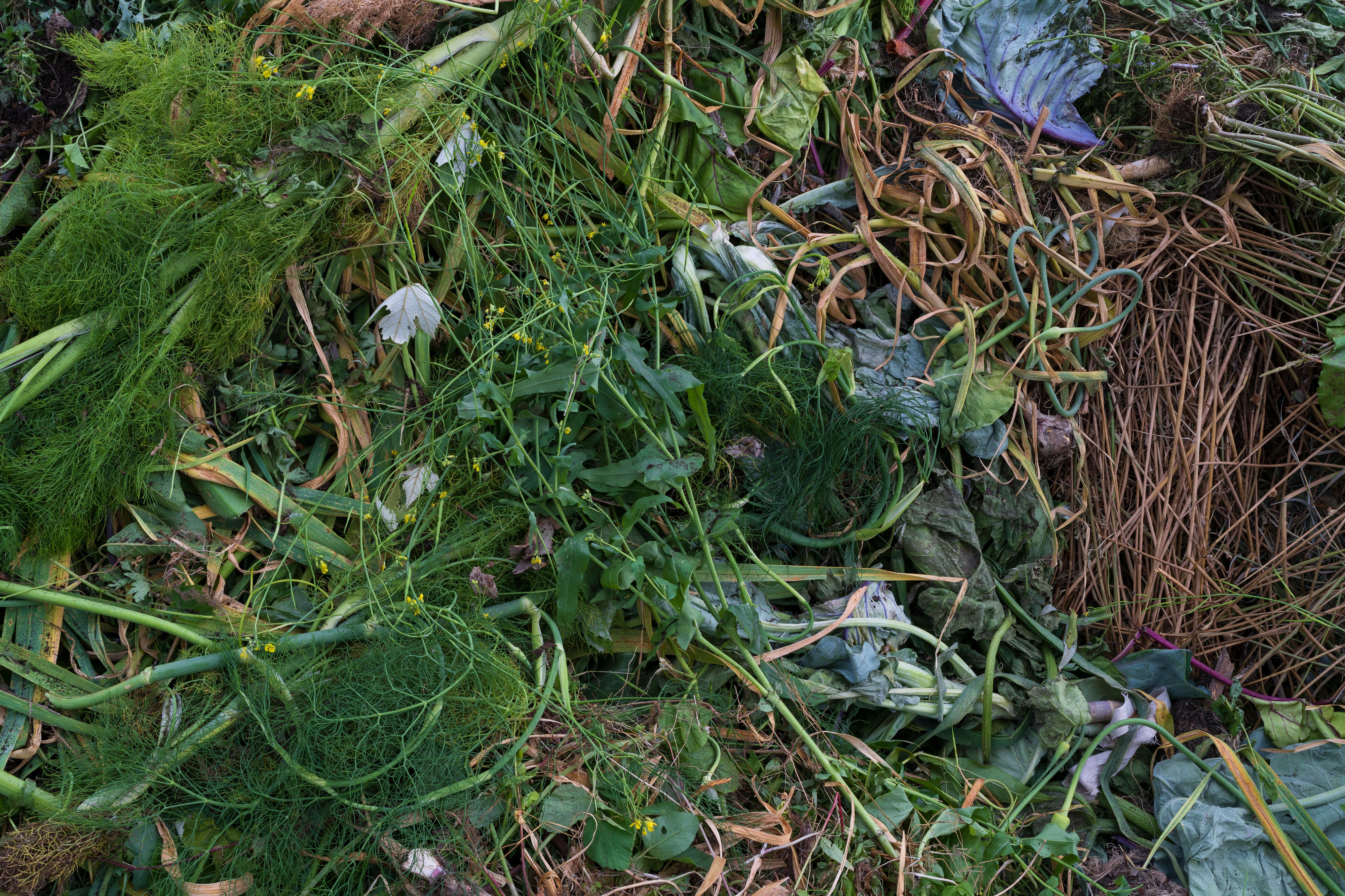
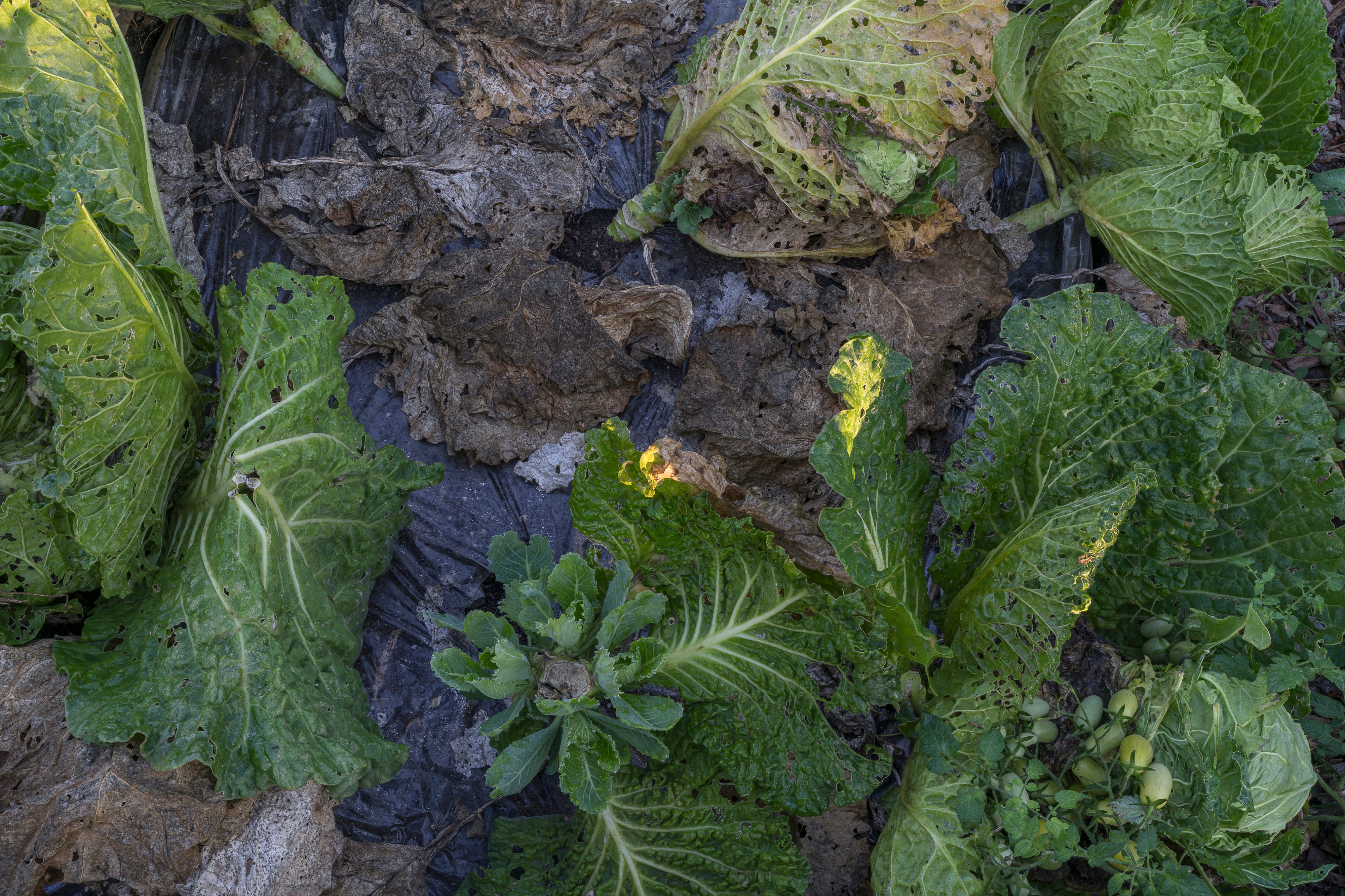
The images are all taken in a local community garden using a Sony A7R5, and focus stacking. Most, because they are taken so close are 20-30 image stacks.
I’ve been photographing compost piles in allotment gardens for five years. Small rented plots, tended by gardeners who have sometimes waited years for the chance. Many of these gardeners have their own sheds, their own tools in the sheds, chairs, picnic tables, flags, and their own ways of doing things. When they see me standing in the far corner of the garden, at the compost pile with a camera, they sometimes think I’m there because someone has violated a city code. So I see them talking, someone points at me, and then walks over. They ask me what I’m doing, if I work for the city, I tell them no, I’m just taking photos of compost piles, and I’ve got permission from the site manager. Sometimes I show them the photos. They look at the detail, the colours, the patterns, what I call the “composition of the decomposing material,” and they almost always say, “I never stopped and noticed that.”
I take these images of the compost, spring through the next winter. Look at them, arrange them. Separate the winners from the losers. And I notice what’s missing.
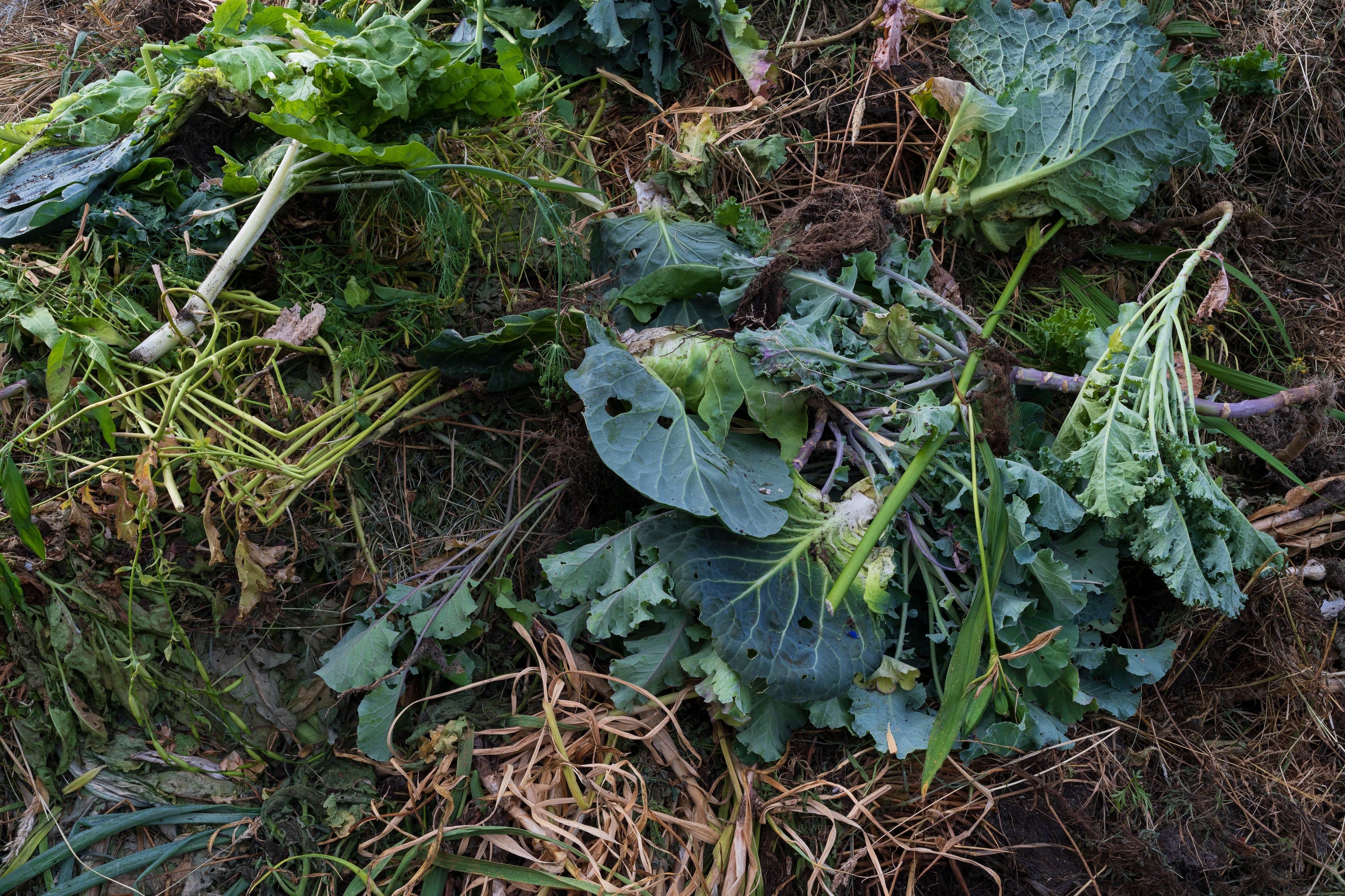
When I was a kid, I lived in the outer suburbs. Everyone had some sort of garden, usually flowers; roses were big in the 50s and 60s. A few families had a vegetable garden. Everyone tried a few stalks of corn, always eaten by crows, squirrels, or worms. And then the usual cucumbers, tomatoes, string beans, and watermelons. A few had a compost pile. The compost piles are what interested me. They were magical. By late summer, they had watermelons growing at the edges, even if they never planted watermelons, new squash, and more cucumbers than anyone knew what to do with. These grew out of the compost, plants that came from, it seemed, nowhere. They seemed to grow as well as their well-kept gardens with all their planning, trimming, fertilizers, and weeding. You threw the rinds and the seeds onto the pile, and the pile returned it tenfold. Not always. Not really predictably. Sometimes, things grew that you couldn’t remember ever planting, like zucchini from a salad someone brought by the house. But the surprise was part of it. A pumpkin would appear in early April, and someone would ask where it came from, and the answer was “the pileThe watermelon seeds are gone now. I told my grandson that we use to spit the seeds out and check a few weeks later if they were growing. He said, “What seeds?” How the world changes. Now, 90 percent of the watermelons sold in North American supermarkets are seedless, and this puzzled me. I mean, without seeds, where do these watermelons come from? Turns out the seedless variety is a triploid hybrid. It can’t pollinate itself. To produce fruit, it requires rows of regular-seeded plants planted alongside it, roughly one seeded plant for every three seedless. You grow two crops to produce one. The ones they produce has no seeds, but it ships well. Taste is another matter. The “industry,” as it’s now called, has heard the flavor complaints for decades. But they haven’t changed course.
Fruit travels differently now. Strawberries arrive from Chile. Or here, in British Columbia, where we grow strawberries, we get berries from South America, Mexico and Korea. Blueberries grown two miles from where I live are shipped two thousand miles and sold at a premium because the corporation makes more money that way. The local season changes nothing about the price. A small box of Korean strawberries, three rows of four berries, one row white, one orange and one red, sometimes costs twenty-six dollars. The taste doesn’t match the price. It’s not a matter of preference. It’s a different thing altogether, selected for shipping and shelf life, and novelty, in that order.
None of that is visible at the compost pile. What is visible at the pile is something else entirely. The plants thrown on top of the pile in late summer aren’t entirely dead when they arrive. They lie there and slowly, through the day, still turn following the path of the sun across the sky. Plants that are pulled out of the soil, rather than just cut, still have roots, usually white or translucent. You can see them making an attempt to find soil and water. They grasp. That’s not a metaphor. Some days, moving from pile to pile, taking images of the fading plants and rotting fruits is oddly, surprisingly, disturbing to watch; I have watched it many times, and it remains disturbing.
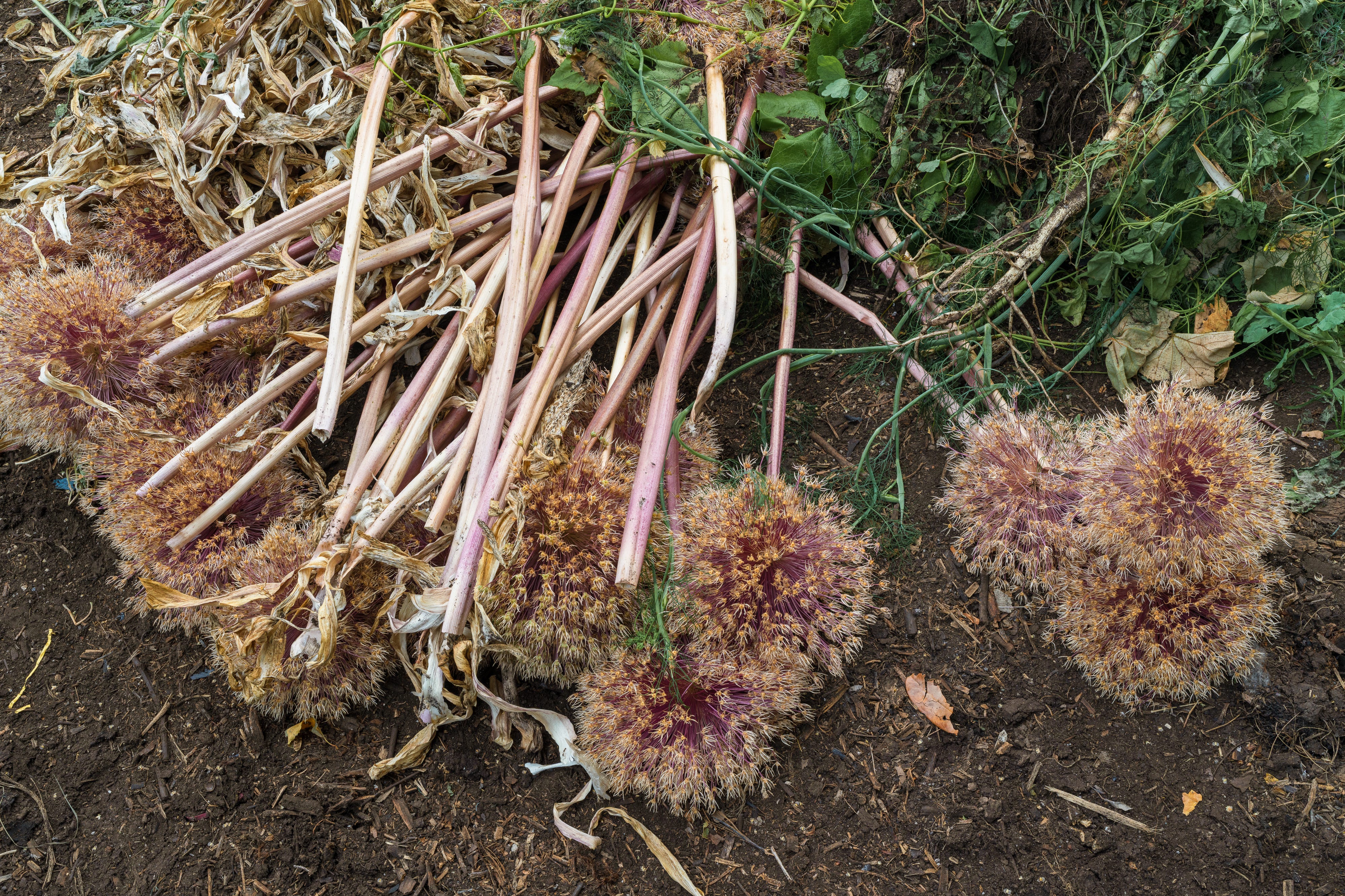
The flowers are the worst. A tomato plant understands, eventually. A dahlia does not. I have seen cut flowers on a pile still opening early in the morning, still doing what they were made to do, while flies and the occasional bee move from one to another. The morning dew sits on them the same way it sits on flowers still in the garden. Sometime’s it’s awful to see. Someone asked me, why are all these flowers here when they just cut them down and toss them? Well, their job wasn’t to be pretty, but to attract bees, butterflies, and other pollinators into the gardens.
One day, you return, and the entire compost pile is covered in tarps and plastic sheeting, weighted at the edges. You can’t really let it rain on a pile in transformation. The water prevents the oxygen exchange that breaks the material down. Under the tarps, in the dark, something is happening that looks like nothing from the outside. A chrysalis works the same way. In just a few weeks, the six-foot pile is two feet high. The gardeners come, pull out hardwood sticks, metal here and there, and plastics that were caught in the culling. With wheelbarrows and shovels, gardeners take the new soil back to the garden beds.
Some of these gardeners save seeds for the following season. I see the jars in their small sheds. I see flowers drying on hooks, seeds collected before the birds and mice have their share. After I visit and take my photos, I can smell the gardens and the piles all day. It gets into my shoes, my clothing, my nose. It stays. The smell of soil, that specific dark, living smell, is the thing that does not ship. It has no shelf life. It costs nothing, but it’s worth everything.
CODA
These images are part of a topography of images, a specific way of taking photos. My next essay will be about topography. Until then, get out to a garden!
PLEASE help by sharing this essay, Restack it, and endorsements are always welcome.

This is such a great series, Jim. The photographs remind me of memento mori paintings. They are beautiful in their own way. I hope to see more of them in the future.
Your writing is excellent as always.
Thank you for sharing.
Loved this Jim! Made me smile. I have been working on a project centred on an allotment just down the road from me for about 18 months. Fascinating. I have photographed a few compost piles during that time but yours are another level! Nice work.