
On Too Much AI on Substack
And What To Do About It

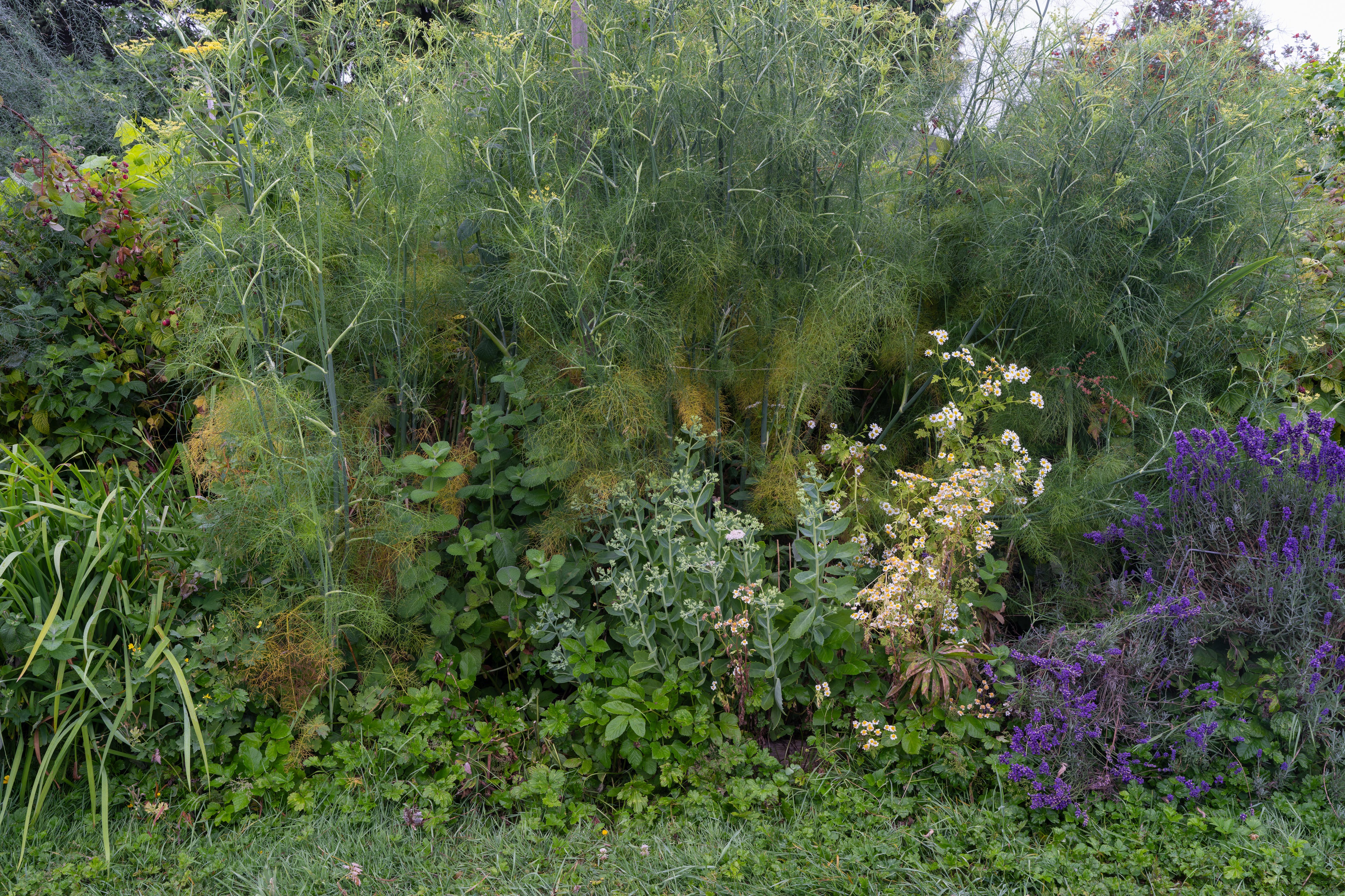
A Photo Taken This Week In A Nearby Garden, At Sunside, In The Rain.
Recently I’ve been writing online with some of you about the overuse of AI on Substack. I just read another piece on photography and attention, on the ways a camera teaches a person to see. I won’t name the author, and I’d ask that no one else name them either, since this isn’t about one writer. It’s about something larger happening to the writing on this platform, and it was strange to read this particular piece, an essay about fifty years of learning to pay attention through a camera, written partly with the help of AI. No one is going to learn to write using AI. You learn to write by writing, and editing, and editing again and again. But this piece was edited with AI.
The author is upfront about this. He describes using AI as a copyeditor to tighten grammar and smooth syntax. That is best learned by reading your work out loud, not by having it rewritten by a copy editor. At any rate, I ran the piece through an AI system to look more closely at what was underneath the sentences, and a few things stood out.
The first is the padding. Twice, a few paragraphs apart, the piece leans on the same device, a long list of nouns standing in for lived experience. First: “cities, airports, deserts, neighborhoods, hotels, cruise ships, restaurants, parking lots, fishing villages, highways, cemeteries, mountains, small towns, and foreign countries.” Then, not long after: “cities, coastlines, rural backroads, cruise ships, foreign cultures, diners, fishing docks, deserts, resorts, roadside motels, family kitchens, backstage hallways, airports, and neighborhoods.” Cruise ships, deserts, diners, airports, repeated across both. Someone recalling fifty years of actual photographs usually reaches for the one photograph, the actual diner, the actual desert. A list like this reaches for categories instead. Running the same trick twice in one piece is the kind of thing that happens when a sentence is filling a slot marked “evocative locations,” rather than describing a real life.
Then there’s a run of four sentences built on a single template. “A diner counter at sunrise no longer looked ordinary. An exhausted businessman sitting alone in an airport no longer looked ordinary. Fog drifting through a small Texas town no longer looked ordinary. Reading these short repetitive sentences alone would have told someone’s ears to make a change. Then theres: An elderly couple holding hands in silence no longer looked ordinary.” Four scenes, none of them dated, placed, or tied to an actual photograph. The piece never names a specific photograph, a specific place, a specific year beyond a decade, or another person besides the author. Compare that to the density of real names, real dates, real citations you find in pieces written more slowly, with the writer’s own hand more visible in each sentence. With corrections, marked in pencil.
The structure is the clearest sign of AI overuse. Count the one-line orphan paragraphs: “Or so I thought.” “That realization arrived slowly.” “And observation changes people.” “That mattered.” “That distinction matters enormously.” “That mattered,” again, almost word for word. This isn’t a flourish used once for effect, it’s the architecture of the whole piece, showing up something like fifteen times. And the essay opens with the line “The camera gave me a reason to wander, but wandering was always the deeper education,” then closes by breaking that same sentence in two and repeating it as the final words. That kind of closing loop, the last line echoing the opening almost exactly, has become close to a convention in AI-assisted essays, a structural move a model executes reliably and a person, reaching the end of a long piece, usually doesn’t bother with.
None of this means the ideas aren’t the author’s own, and I want to take him at his word that they are. But a copyeditor doesn’t generate two near-identical fourteen-item lists, or a four sentence run on a repeated template, or an opening line resurrected as the closing line. Those are structural choices, and on the page, more than light editing seems to have touched this one.
This is just one of many pieces I’ve read that sound like this lately. If we did this with our photographs, I think people would object. But with writing, it seems to have quietly become acceptable, even expected. I don’t know yet what this does to us, as writers or as readers. But I’m scared.
Ten tells of AI-written or AI-heavy prose
(There are many examples of this sort of list online, better than mine. Look them up.)
1. Category lists standing in for memory. Real experience produces one photograph, one diner, one date. AI-leaning prose tends to produce a string of them instead: cities, airports, deserts, cruise ships, reaching for a mood rather than a fact.
2. The same trick, twice. Watch for a writer who runs the identical device, the noun pile, the reversal, more than once in a single piece, often with overlapping items. A person rarely repeats their own move that closely together. AI does.
3. Orphan sentences as architecture. One-line paragraphs, used sparingly, are a real tool. Used every few paragraphs, dozens of times, they stop being emphasis and become the scaffolding holding the piece up. It’s like having someone yell at you, and assume that repetition is as good as fact.
4. The vanishing proper noun. Watch for essays covering decades of a life, or a whole career, that never once name a particular place, date, or person.
5. Generic scenes standing in for real ones. A diner counter at sunrise, an elderly couple holding hands, could belong to any writer describing nothing anyone actually saw. Real memory snags on odd, specific details. That’s what makes photos truthful as well. The truth is in the details, as the saying goes.
6. The closing loop. An essay that opens on a line, then closes by breaking that same line in two and repeating it almost word for word as the final words. Satisfying, and something a “model” executes more reliably than a person does at the tail end of a long piece.
7. Aphorism density. Sentences built to be quoted rather than to argue. (Memes) When a piece is made mostly of lines like that, strung together, there’s often less underneath them than there appears.
8. Parallel structure run past its welcome. One or two repeated sentence stems land. Five or six in a row starts to feel like a template being filled rather than a thought being worked through.
9. Smoothness where a first draft should be rough. Thousands of words with no false starts, no odd tangent, no sentence that trips over itself, can mean a careful writer, or it can mean there was never a rough draft to smooth in the first place.
10. The author’s note that doesn’t match the page. When a writer says AI was used only as a copyeditor, check that claim against what’s actually on the page. A copyeditor fixes commas. A copyeditor doesn’t build your lists, your loops, or your architecture for you.
These problems are in 1/2 of what I read on Substack about art, but read some of the stuff the political “aggregators” write! Often five pages that can be reduced to less than one.
A few writers worth your time, and why:
Joan Didion, Slouching Towards Bethlehem. Her sentences are built from checkable specifics, the exact temperature, the exact intersection, so nothing in them ever floats free of the world. If I have any skill in writing, Didion taught me.
Gerry Badger, The Pleasures of Good Photographs. A critic who writes about pictures the way a good photographer looks at them, slowly, and always toward one actual image rather than a theory of images.
Robert Adams, Beauty in Photography: Essays in Defense of Traditional Values. The same restraint worth defending here, a belief that quiet, exact description earns more trust than drama.
Dave Hickey, Air Guitar: Essays on Art & Democracy. Plain, muscular sentences built out of real things, cars, bars, boxing matches, that make the case against jargon better than any argument against jargon could.
Donald Hall, poet, yes, but also an essayist. He wrote, then rewrote, then edited… and went on for up to 80 rewrites. Mine seldom make sense until the 8th rewrite.
I suggest spending time reading people who write, who form their own sentences, develop a syntax to match their subject, who understand that writing, like photography, is about clear, real, and usually fairly vernacular things. As they say: the truth is in the details.
This is a very strong and uncomfortable piece, in the best sense.
What lands for me is the connection between writing and photography. In both, the real value is not polish. It is contact. A photograph matters because someone stood somewhere, noticed something, waited, chose, failed, tried again. Writing has a similar burden. It should carry the pressure of an actual mind meeting actual experience.
The problem with too much AI-assisted prose is not simply that it sounds “artificial.” It is that it often removes the friction where meaning lives. The odd detail, the clumsy first attempt, the sentence that has to be fought into shape, the specific street, room, weather, person, or year. Those are not decorative details. They are evidence.
Your point about category lists standing in for memory feels especially important. “Airports, diners, deserts, motels” can create the mood of experience while avoiding the risk of naming the actual place. But the truth is usually in the thing that does not generalize neatly: the bad coffee, the green plastic chair, the woman who would not look at the camera, the rain that changed the whole frame.
I also appreciate that you are not only arguing against AI. You are arguing for practice. Reading aloud. Revising. Developing an ear. Letting syntax become part of authorship rather than outsourcing the discomfort of learning it.
For photographers and creatives, this matters because the written frame around the work is increasingly part of the work. Captions, essays, artist statements, newsletters, books: these things shape trust. If the language becomes generic, the pictures are asked to carry not only meaning, but credibility too.
The real recommendation here may be simple and demanding: write closer to the contact sheet.
Well thought out! As a photographer, reader, writer, and copyeditor I'm glad to see your detailed breakdown of some of AI's failings. I suspect the fight against AI slop will be long, though. But count me in for the duration.