
No. 262
A few words about my recent reading.

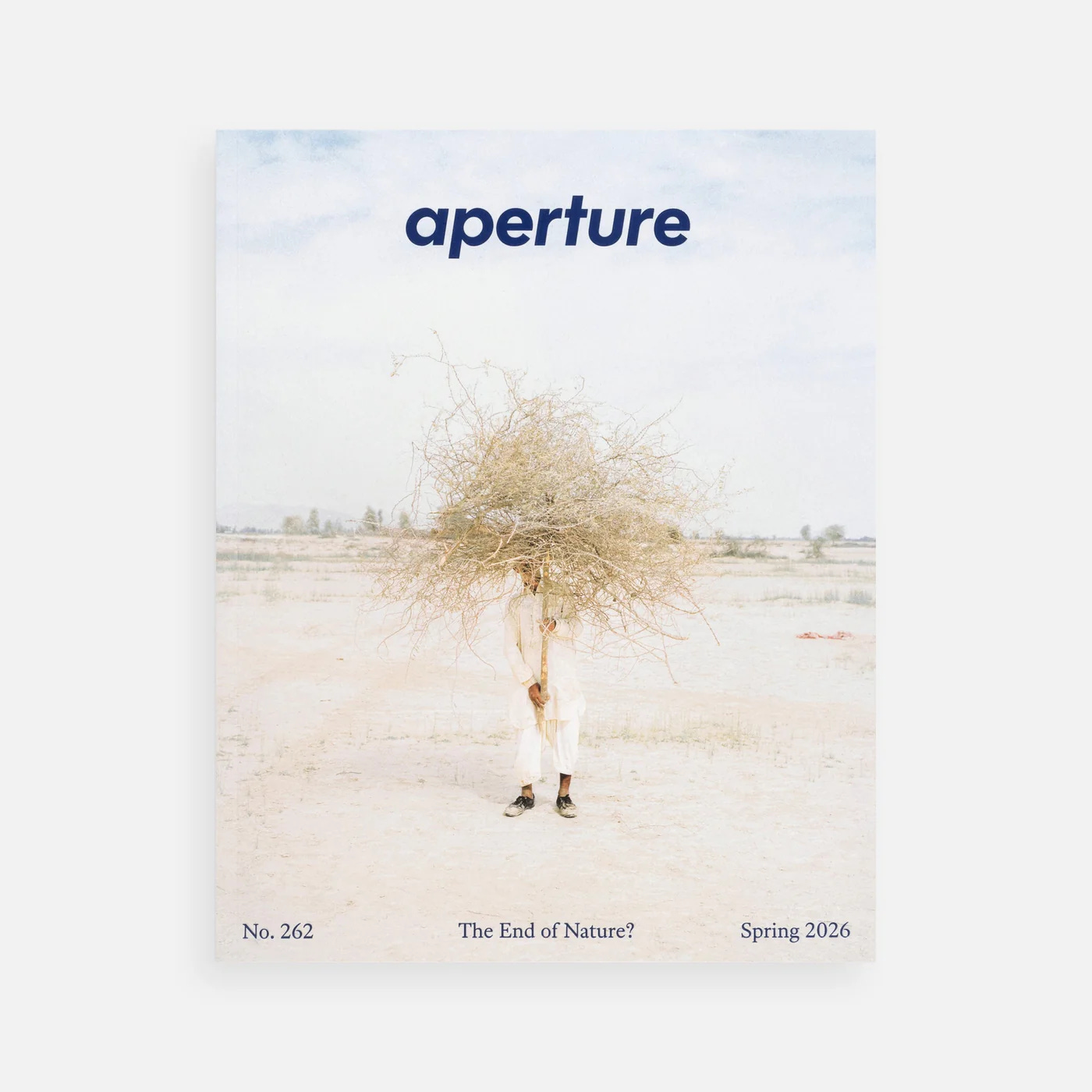
Aperture No. 262
The End of Nature
Spring 2026
I go to the library most Tuesdays. I try to go early and get a seat in the periodical section. Then I spend time looking through journals like Aperture, Art Forum, Art News, and The Atlantic. I also look through photography and art books. With my iPhone, I take photos of photos, paintings, sculpture, and covers of books that seem worth following up on. When a new journal or magazine edition arrives, the previous one becomes available to take home. Last week I took the most recent Aperture home in my bag and opened it that night.
I was really disappointed; I felt defeated. I went through the entire issue and thought, “I don’t think there is a single photograph in this I would want on my wall.” That’s not a small thing to think about a magazine I’ve been reading for years. That used to be my go-to photo read.
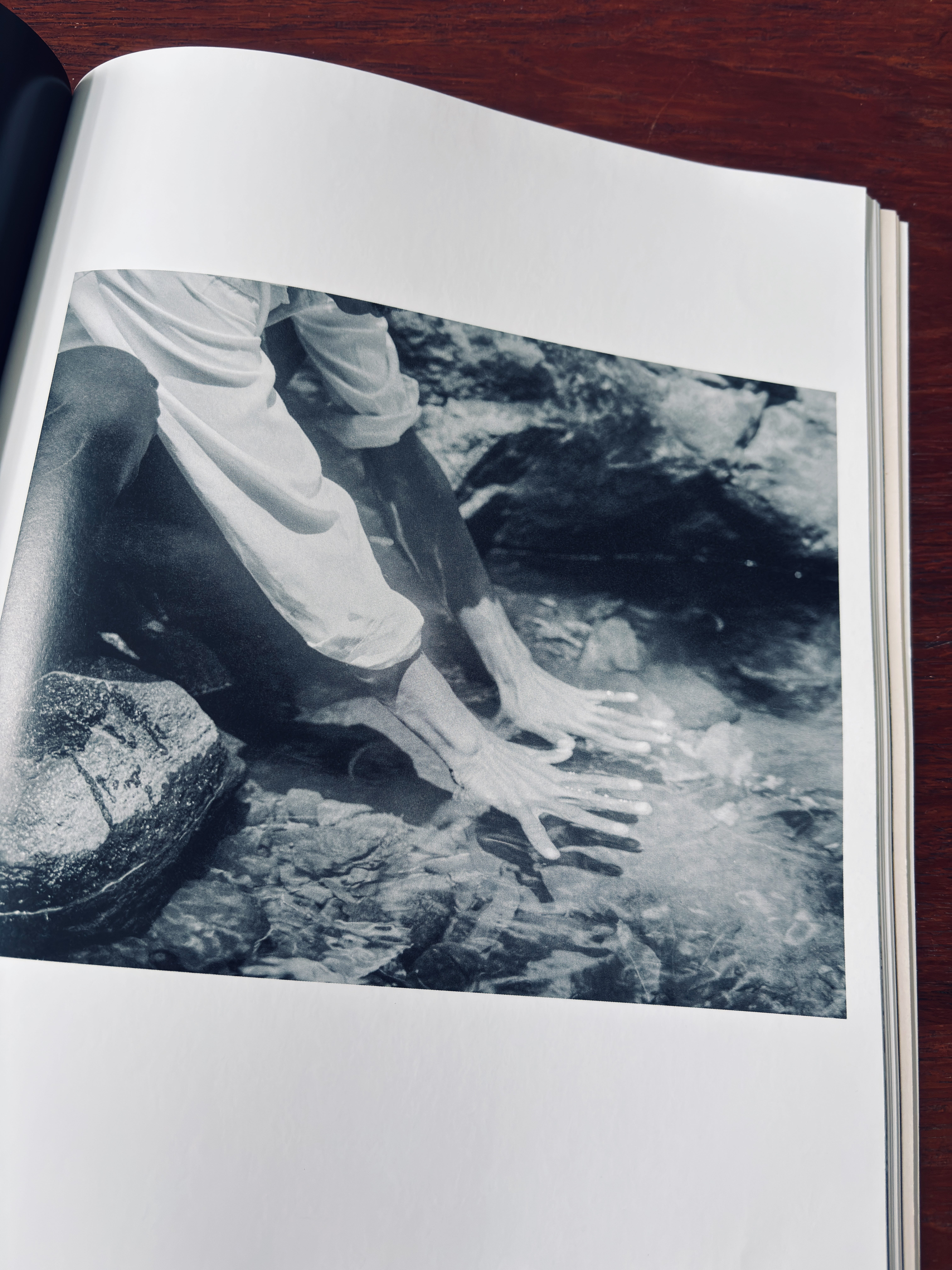
I showed it to my spouse, and we flipped through the pages. “Here,” I said. “And here.” It included deadpan portrait after deadpan portrait, the same flat gaze, the same weird studied neutrality. If an artist the magazine has ever featured lately has taken a deadpan photo of anyone, at any point in their career, it seems they wanted to include it. And then, there were the hands. Photos of hands holding something. Hands holding something else. And then, I’m not making this up, a photo of hands holding hands that were themselves holding something. My partner chimed in here noted, “Like Alec Soth said, I’m not into photos of hands.” That’s simple enough, isn’t it? Hand photos are what you take when you’ve run out of steam. But I think I know why the hands are everywhere in this edition, and in so many other photo magazines. They’re meant to prove the photographer, or the subject, was there. The photograph is evidence of presence rather than an act of seeing.
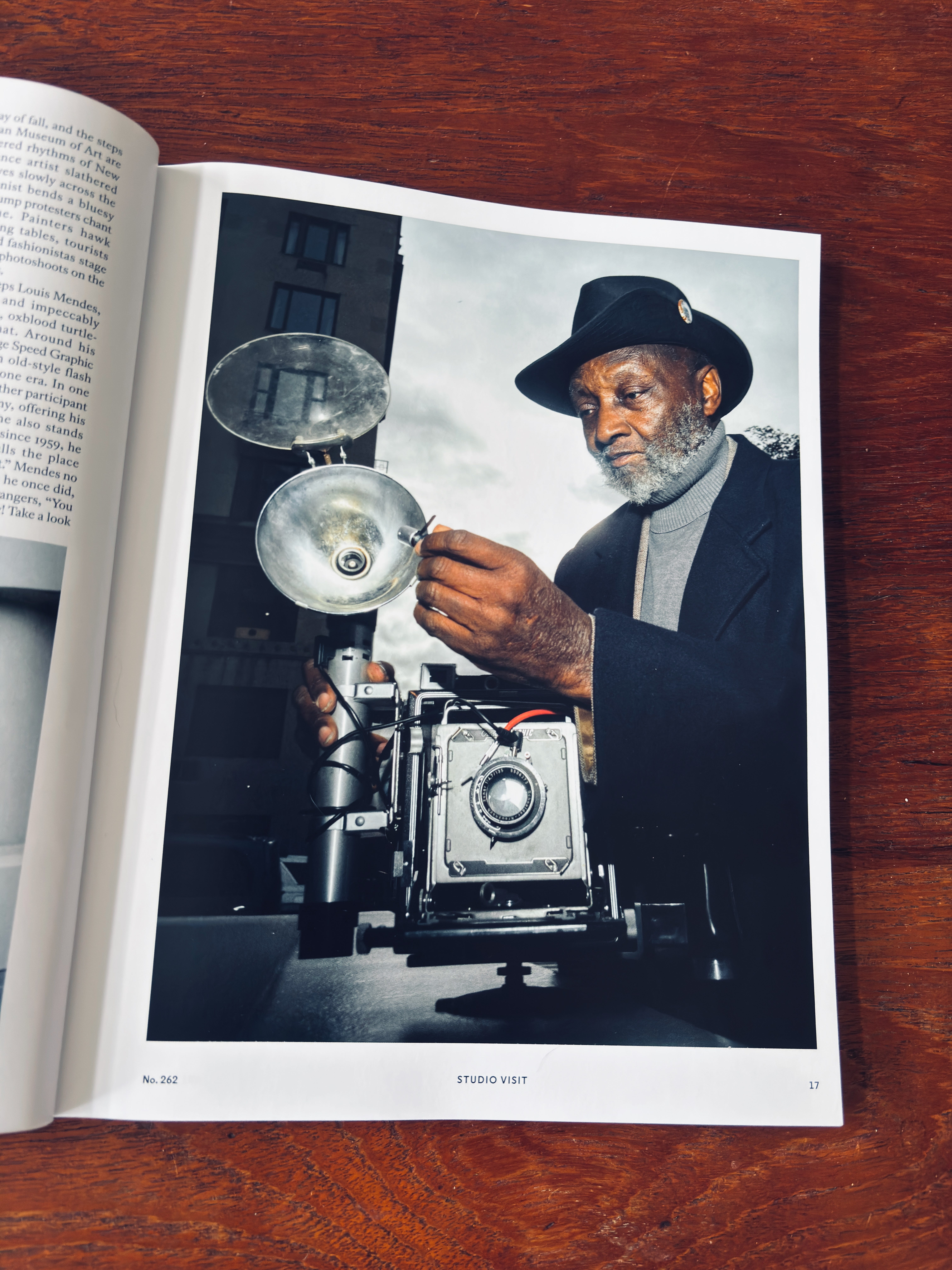
And then I turned to a short article about a photographer, Louis Mendes, who takes photos near the Metropolitan Museum, a man with a Speed Graphic press camera, very retro-looking. There were, strangely, a total of three photographs of him posing with his camera. Posing. Not his work. Two full-page images, and one half-page, dressed up, with his camera. In Aperture. I put the magazine down.
You need to realize, Aperture was founded in 1952 by Minor White, Dorothea Lange, Ansel Adams, and Barbara Morgan, among others. It was conceived as a place for sustained engagement with photography, not photography as lifestyle, not photography as cultural positioning, but photography as a problem of seeing. The early issues asked specific questions: what does this photograph do to perception? The writing slowed down around the image itself. Tone, edge, sequence, the internal logic of the frame. The photograph was the primary object of attention, and everything else, the biography, the context, the cultural moment, came second if it came at all.
That magazine, and the one I brought home last week, just aren’t the same publication. They share a name and a history. They don’t share a philosophy. And after reading the earlier “Craft” issue, and the issue on Korea, with its staged muscle men and military athletes sitting in the cockpits of long, pointed planes, I am ready to surrender. Almost.
What I realize now is that what I brought home last week is a magazine about photographic culture rather than a magazine about photography. That’s a distinction I want to be precise about. This edition of Aperture begins with an issue: climate change. Then there are some related subtopics: migration, extraction, ecological loss, and the aim seems to be to introduce a photographer working inside that issue. The question is no longer what this photograph does to perception. It’s what cultural conversation this photographer is participating in. That’s a different editorial philosophy, and it produces a different reading experience. The photograph becomes one layer within a broader narrative. The implicit invitation is not to look carefully, but to enter a world, to understand a condition, and to imagine going there. The photographer becomes a character. The camera, especially if it’s old and beautifully crafted, becomes a prop that signals seriousness. And the photographs themselves become illustrations of the fact that a practice exists. A lifestyle. The photographic lifestyle. This isn’t a photography journal any more, its a social journal using photography. Photography in service to: fill in the blank.
As i’ve said, this edition’s theme was “the end of nature,” a reference to Bill McKibben’s 1989 book. But look at the cover (if you go to your library, take a look at the whole magazine); if it’s about the end of nature, the end of nature looks pretty damn….pretty.
The essays had something to say, but I don’t know about the photos. It should have been an opportunity for exactly the kind of photography that changes how you see the world. Robert Adams, who to me is the photographer who has addressed in his quiet but powerful way, shows you environmental desecration, and has spent decades doing just that work. His photographs of the American West, of clear-cut forests, of tract housing on the Colorado plains, didn’t ask you to find them beautiful. If he addresses beauty, it’s to warn you we are losing it. His photos ask you to look at what was actually there. What Adams understood, and what the best ecological photography understands, is that the real argument is made at your feet. The ordinary. The damaged. The common, and overlooked. The thing you drive past without stopping. The already compromised. The big dramatic wilderness vista, which this edition is full of, is the easy choice. Everyone already agrees it’s worth saving. The harder, more honest photograph is the one that shows you what you didn’t notice you were losing.
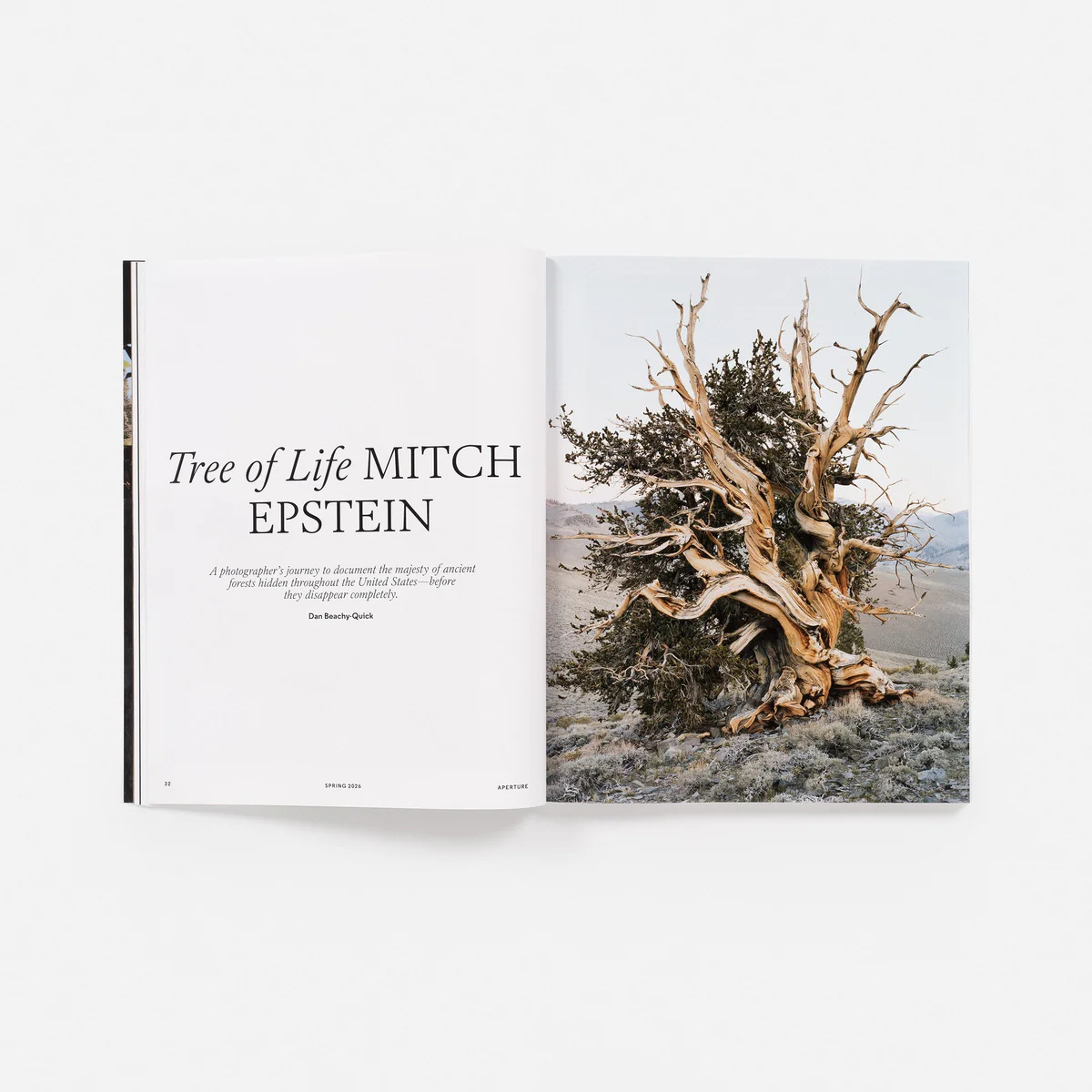
Mitch Epstein knows this. His American Power series, his photographs of the places where energy is extracted and consumed, that work asks exactly the right questions in exactly the right way. It’s not comfortable. It’s not romantic. It doesn’t let you off the hook.
Oddly, the photographs Aperture chose for this edition are something else. They’re majestic. They’re spectacular. They announce, loudly, the value of nature. Old growth forests photographed in a way that makes them look eternal, untouched, even sublime. But they also look like an advertisement for a travel agency. They look, and I mean this as a specific criticism rather than a casual insult, like an Ansel Adams. Which is to say they look like everything contemporary photography spent fifty years moving away from. The showy, the spectacular, the romantic view of the landscape that asks you to feel reverence rather than responsibility. These are not what we call “quiet photographs.” They don’t ask anything difficult of the viewer. They’re the photographs from Epstein’s body of work that are easiest to digest, most likely to end up on your coffee table, and that is precisely why they are the wrong choice for an edition about ecological loss. I’m sure some readers felt frustrated he didn’t include the geo-location information so we could visit each spot.
These are photographs that make you want to go somewhere rather than think about something. That’s the Instagram requirement: immediate legibility, a destination, a feeling you can reproduce. And Aperture, rather than resisting that pressure, seems to have absorbed it. Even in a serious publication, on serious paper, with serious intent, these photographs are doing what photographs on a phone screen do. They’re moving you through rather than stopping you.
What’s missing is a word that used to appear often in serious photography criticism. The word is attention. Not the photographer’s attention, but the viewer’s. The best photographs demand it. They’re constructed in a way that rewards sustained looking, that gives you more the longer you stay. They don’t explain themselves immediately. They’re not easily accessible. They’re something harder and more valuable than accessible. They’re worth the time it takes to actually see them. But the magazine is full of these.
There’s a story on flooding that includes a photo of a flooded-out walkway between buildings, with a glorious light, a composition that earns an A++, it’s just remarkable. How wonderful to portray the end of nature with such skill and beauty.
Looking at the cover again, with its perfect colours and perfect tones, you’d never guess this was the edition called “The End of Nature.” When I was a teenager, some friends and I used to watch The Andy Williams Show, the weekly series and the Christmas specials. We loved him, and we were uncomfortable loving him, and eventually we found the word for why. Over-produced. We probably meant over-controlled, but as a TV show, everything was just over-produced. Every element, every detail, managed, every decision made before you arrived, nothing left to chance and therefore nothing left to you. The art critic Dave Hickey would have understood immediately. Over-produced means the anxiety of imperfection has been completely eliminated, and with it any possibility of surprise. The Christmas special looks exactly like a Christmas special is supposed to look. Snow, ice skating, and his entire family joining him to sing a Christmas song in a key they could all reach. This cover looks exactly like an Aperture cover is supposed to look. The end of nature, on this cover, looks like nothing more than the beginning of a very pleasant travel experience.
After I put the magazine down, we went and found two older issues, one on Seoul, one on craft, and looked through them at the dinner table. They suffered from the same problems. These were magazines using photography in service of an idea rather than asking the questions that photography criticism used to ask. What makes a photograph good? How do we know when something is a good photograph? How do we discuss quality in art at all?
Later I looked at some photographs in other literary magazines we had around. Granta. The Paris Review. A couple of local short story and poetry journals from nearby universities. The photographs in those journals were often printed small, on the wrong stock of paper, almost incidental. And yet they somehow seemed to have more integrity than what I was seeing in Aperture. Something in them asked to be looked at rather than consumed.
That’s something I need to think about.
Copyright Notice: The photographs reproduced herein are included solely for the purposes of criticism, commentary, research, scholarship, education, and review. Their use is believed to qualify as fair use under Section 107 of the United States Copyright Act, fair dealing under the Canadian Copyright Act, and permitted quotation and related exceptions under Article 5 of the European Union InfoSoc Directive (Directive 2001/29/EC), as further reflected in the DSM Copyright Directive (Directive (EU) 2019/790), where applicable. Copyright in all photographs remains with their respective rights holders. If you are the copyright holder and object to their use, please contact me by email, and they will be removed.

I first read Aperture in the 90s in my university library and was smitten. I had favorite issues I went back to over and over again. A few years ago I purchased a subscription and just never felt that same magic. Though I found tiny bits here and there that peaked my interest, most of the photographs were uninteresting and did not leave me with a desire to learn more.
Jim Roche has written a provocative and insightful piece on the once great photography journal: Aperture. While I agree with him that the magazine has become a shadow of its former self, the real problem is with the medium of photography in general. We seem to be hell-bent on making names for ourselves in order to have careers rather than figuring out how best to use cameras to make meaningful images about the world and how we see it.