
Greenhouse Light
A few thoughts and six photos

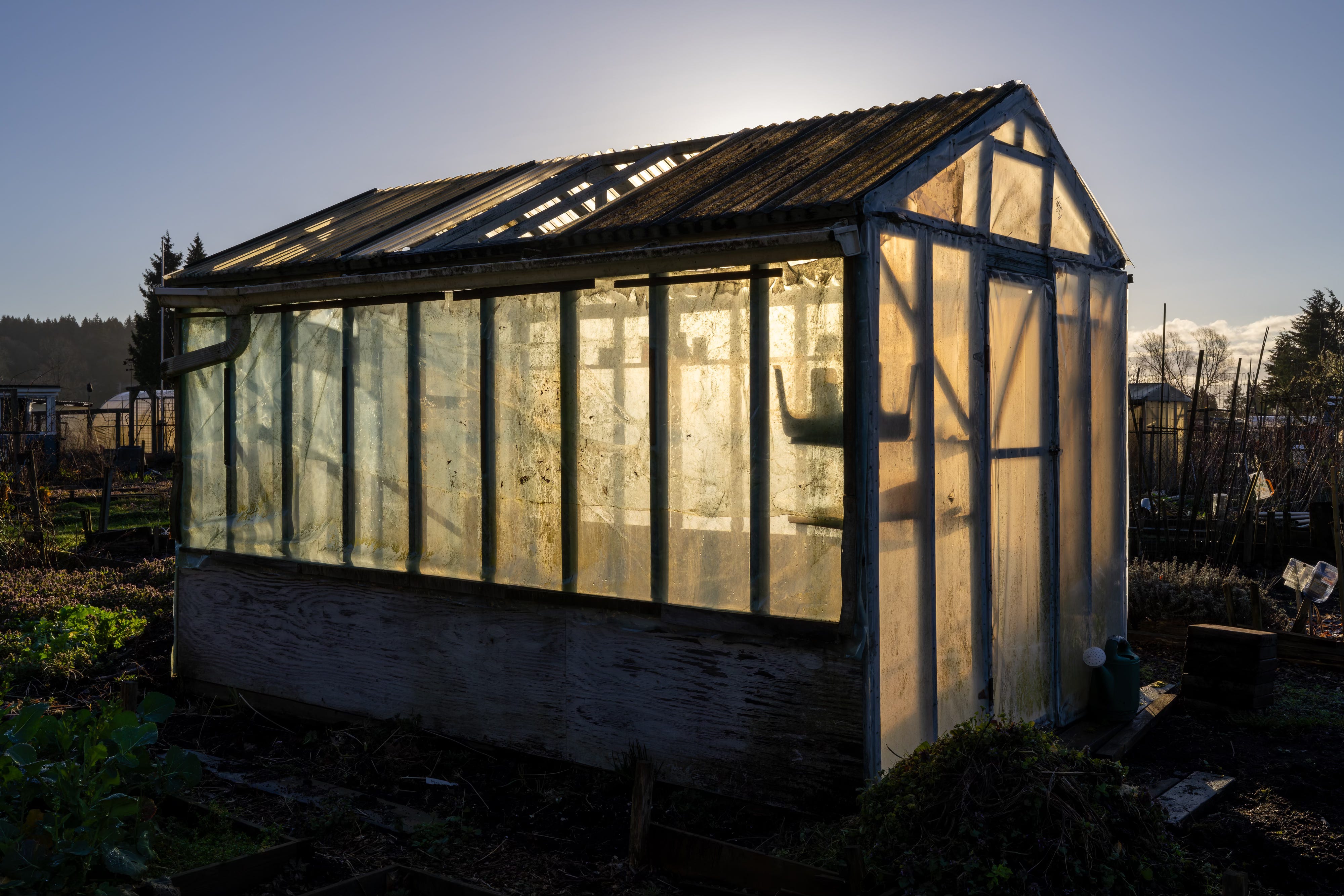
At dawn, the greenhouse glowed softly in the wet field, its plastic walls catching the first light of the morning. One moment, things are dark, then suddenly, the sky begins to light up.
Recently, I returned from Japan, where I had been working on a photography project. While there, I saw an exhibition by the photographer Toshiya Murakoshi. I later wrote a longer essay about the show, trying to understand why his photographs stayed with me. What struck me most was their density. As a printmaker, I really appreciated the quality of the printing.
His prints are small prints, often dark, quiet pictures, but they carry a surprising weight. Nothing feels hurried. Shadow gathers. The surface of the photograph seems to hold time rather than simply describe a place.
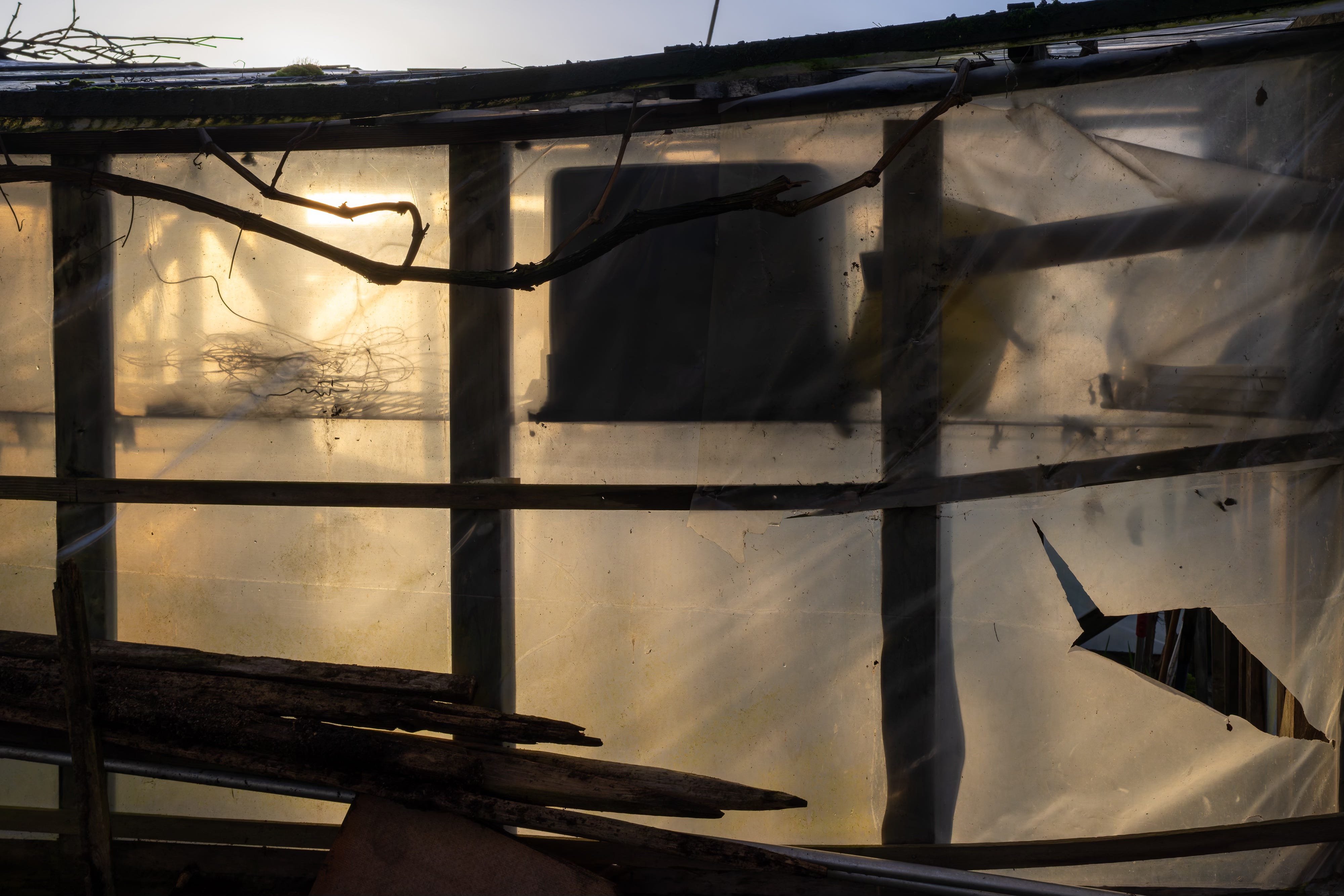
After seeing the exhibition, I began carrying a small Fuji camera set to display the world in monochrome, almost like working with a digital negative. Even after returning home and editing the work from Japan, that way of seeing stayed with me.
For the past week, it has rained continually. I had been indoors working through those photographs. The first clear morning, I went out at dawn to photograph a group of greenhouses. The ground was still oversoaked from days of rain. Even with waterproof boots my feet quickly became wet. The boots were too short. I knew there would only be a short window before the sun rose higher and the place changed into something flatter and more ordinary. I set up my tripod and camera. When the wind stopped, I would take a focus stack, usually twelve images. If it didn’t stop, seemingly to slow me down, I took a single shot.
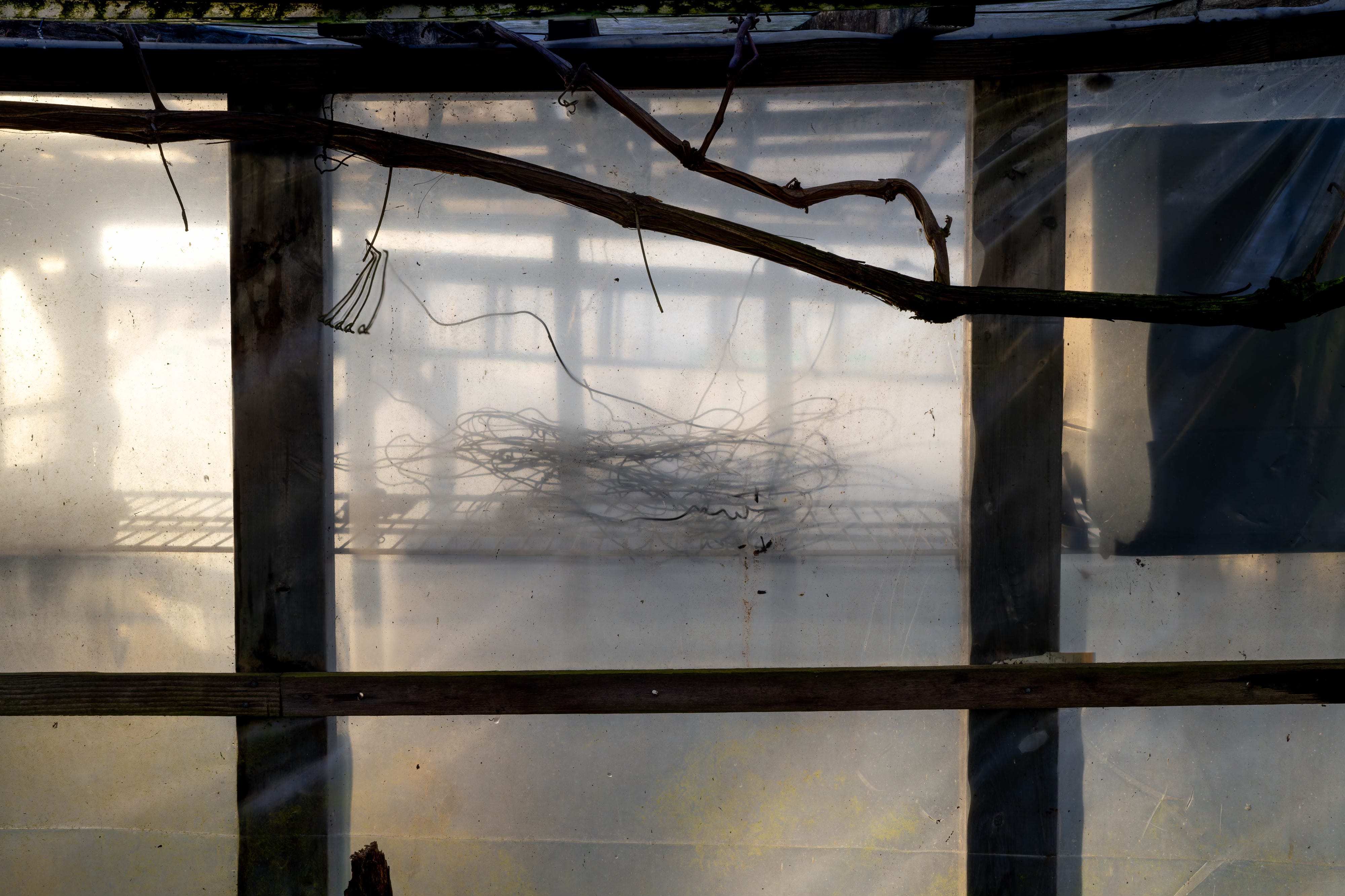
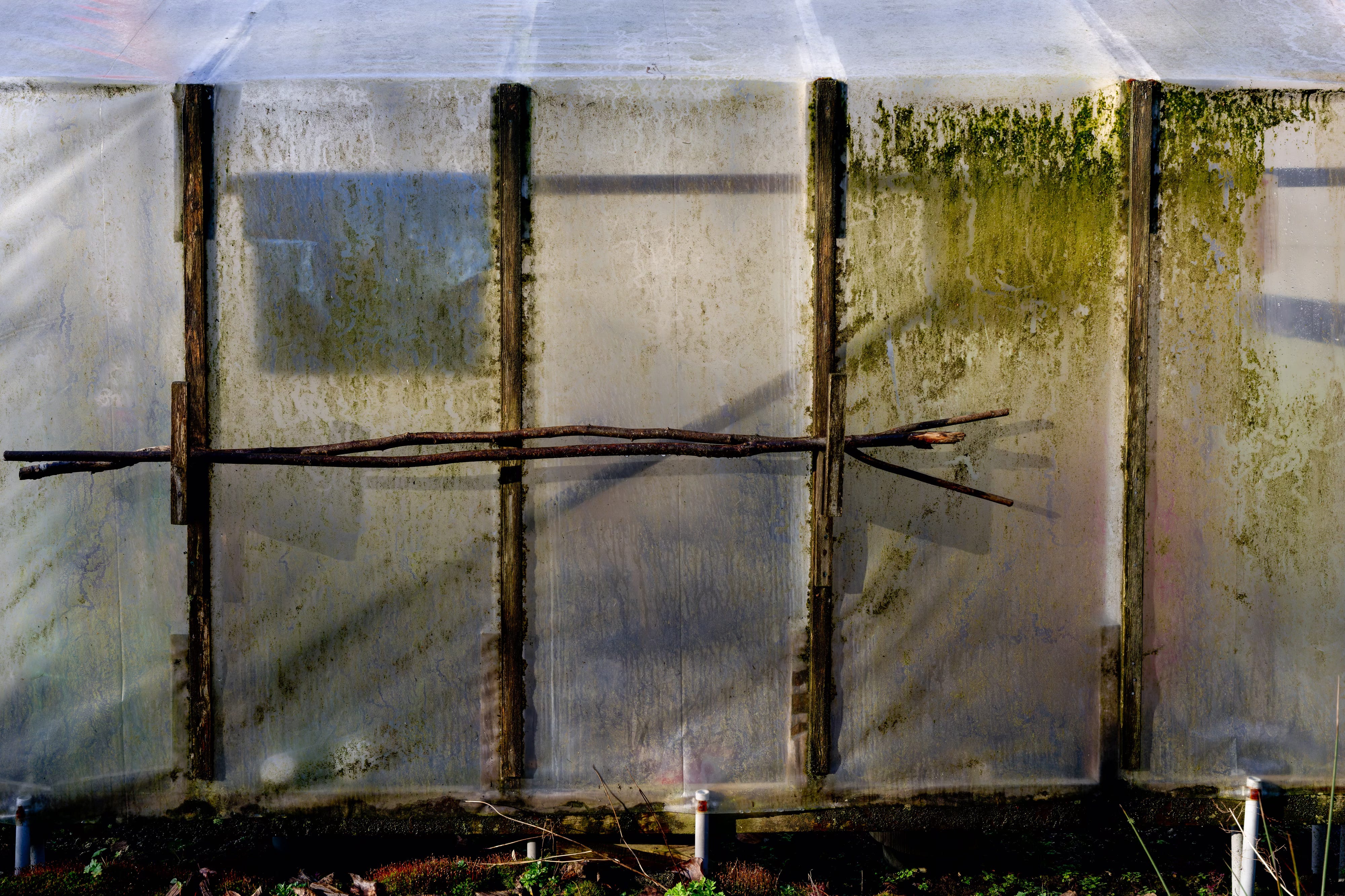
What interested me was the way the early light passed through the greenhouse walls. These buildings are meant to be transparent, but months of rain had changed them. Moss, condensation, and the slow trails of snails and slugs had thickened the plastic. Instead of looking through the walls, I found myself looking at them.
The interiors appeared only in fragments. A bucket. A coil of wire. The faint shadow of a tool. The rest dissolved into the dim surface of the wall. Although the photographs are in colour, they behave almost like monochromes. The palette narrows to muted greens, browns, and dull yellows. Colour does not open the space. It compresses it. The photos become dense.
Walking around the greenhouses, I found myself thinking of Junichiro Tanizaki and his small book In Praise of Shadows. Tanizaki writes about a beauty that emerges not from brightness but from shadow, from the way filtered light allows surfaces to deepen and objects to appear slowly.
These greenhouse walls had begun to behave almost like accidental shoji screens. Light passed through them, but imperfectly. The surfaces withheld as much as they revealed.
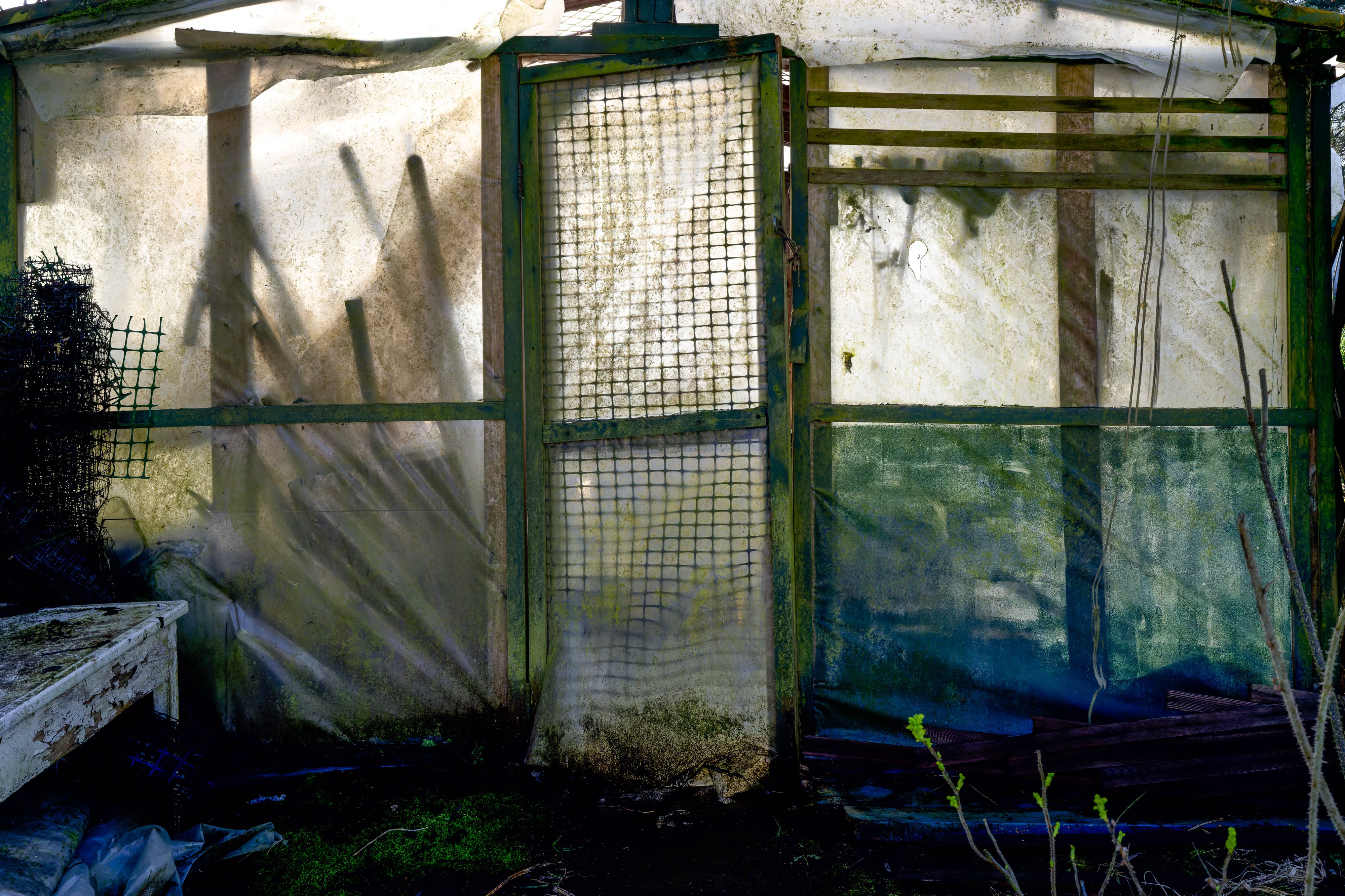
For a brief moment in late winter, the buildings exist in this state. In a few weeks, the walls will be cleaned and the beds prepared for spring planting. Much of the moss will disappear, and the plastic will become transparent again. But that morning, the surfaces were still heavy with the season that had just passed.
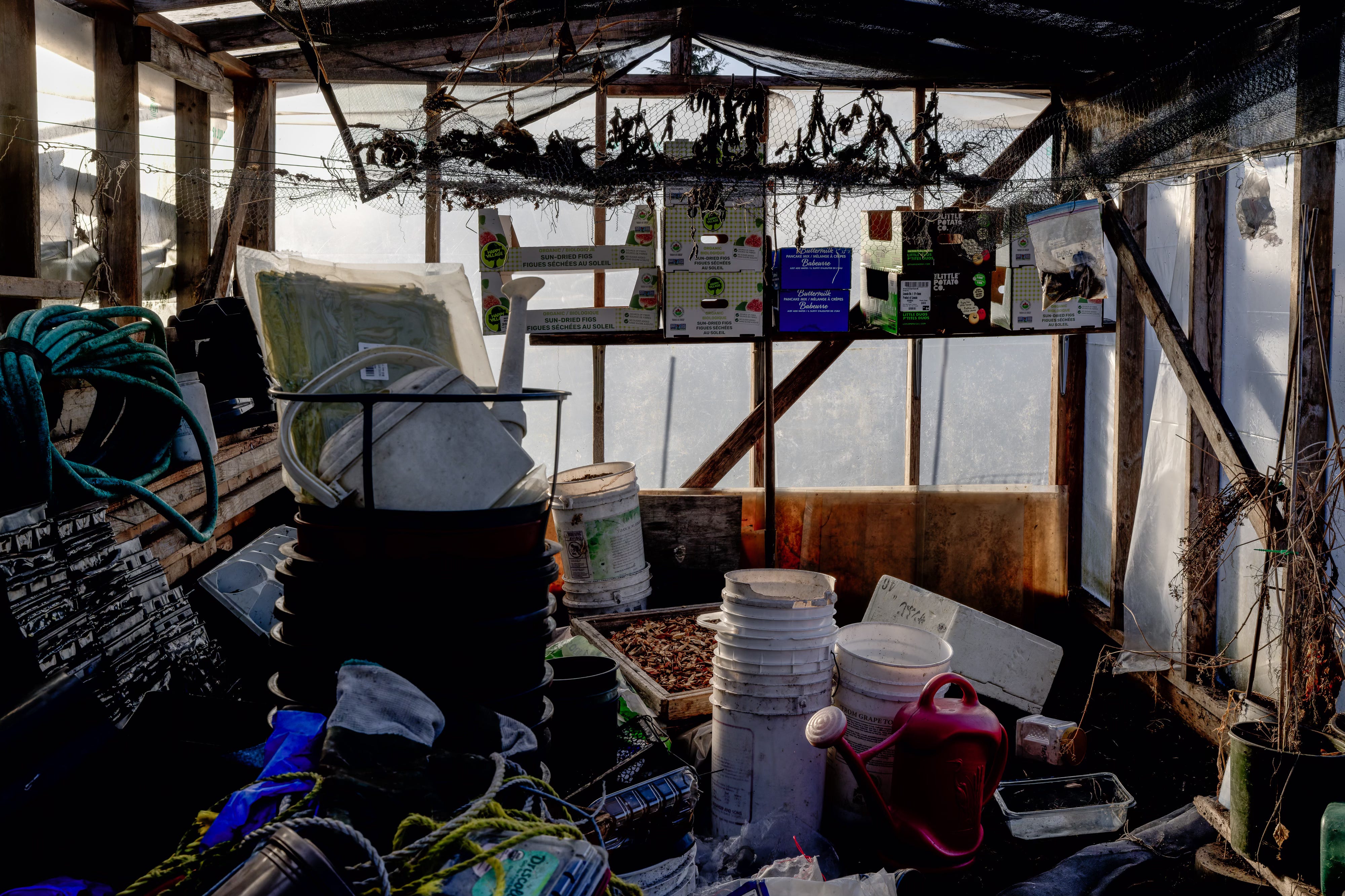
Standing there in wet soil, looking at those dim walls and the faint interior shapes behind them, I realized I was searching for something I had learned from Murakoshi’s photographs. Not spectacle. Density. The kind of density that comes when light, weather, and time are allowed to gather quietly on the surface of things. For that way of seeing, I remain grateful to Toshiya Murakoshi.
Thanks for reading my essays and for giving some of my photos your attention. This process takes a good deal of time, and I would really appreciate it if you could take just a moment to share the essay, re-stack it, or make a recommendation on your site. Also, it’s good to discuss photography, not just look, so please, add your voice to the conversation.
You can view my photos at www.jimroche.ca

Gorgeous images and equally beautiful ideas. In praise of shadows, indeed. Thank you for this post.
This resonated deeply with me: "beauty that emerges not from brightness but from shadow, from the way filtered light allows surfaces to deepen and objects to appear slowly." What a great post and photographs. The way I interpret those traces, mold, and so on is that they are evidence of entropy, the passage of time. Very similar to say a jungle claiming Inca ruins. In that regard those surfaces become recording of life as time passing. A very meaningful and beautiful project. I love it. Many thanks for sharing.