
David Smith in My Head
"he whispers to me to pay attention"

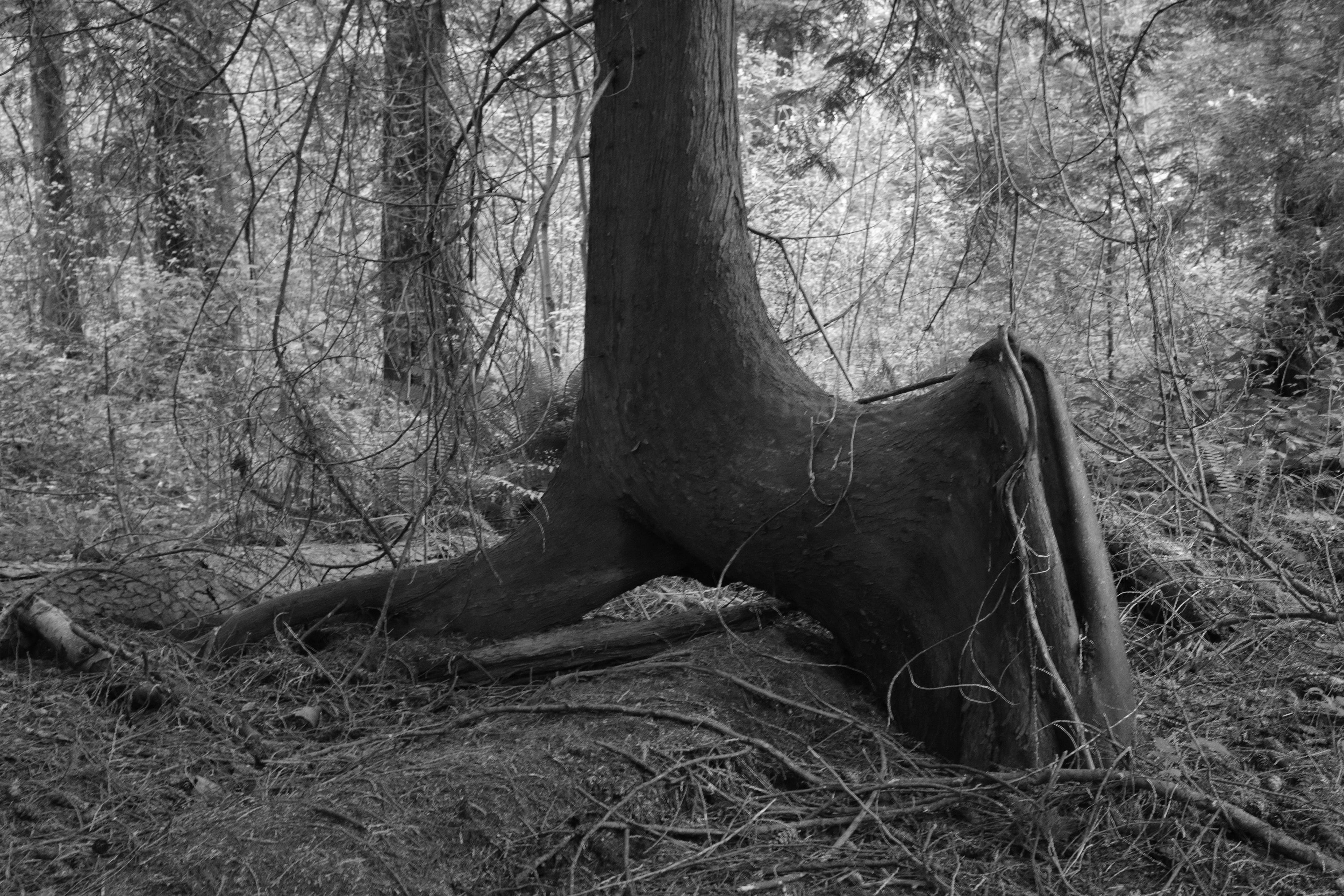
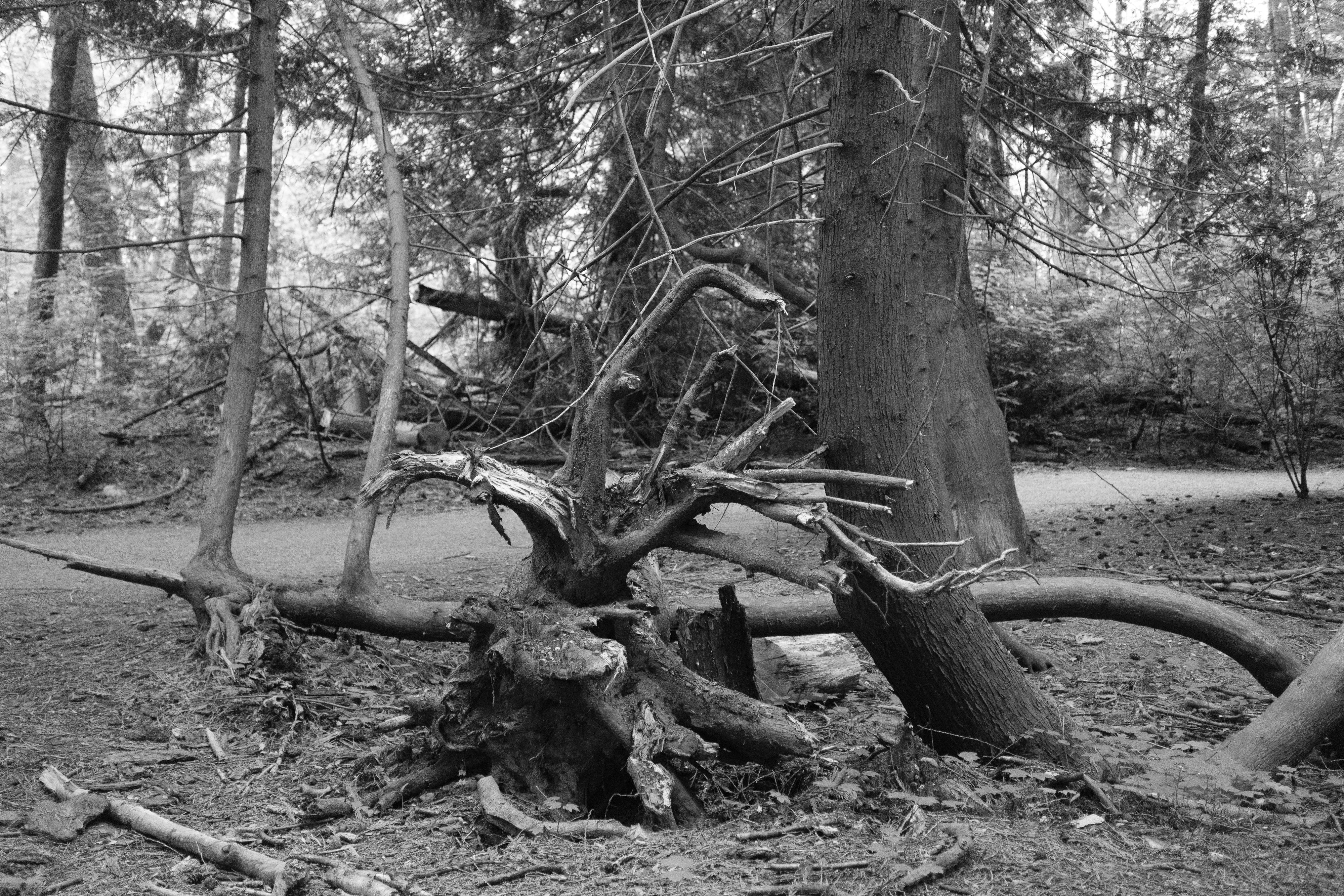
A tree in the forest that keeps me thinking about David Smith
I carry two cameras these days, my Sony for Colour and Fuji for B&W
September 1973. Two friends came by my grandmother’s house, where I was temporarily living on the porch because I was painting 4X4-foot copies of record album covers for the local music store windows. My dreams of attending the University of Manitoba or Rocky Mountain College in Montana were crushed over a few hundred dollars I needed for housing. I had a full scholarship, but no other funds. No money for campus or off campus housing. Not a cent. I had just started a new job as “night manager” at Orange Julius at the mall. That meant I had to mop the floor, close the doors, and lock up all the oranges. My new dream was to get a job at Music City selling records.
These two friends, Mike and Merrideith, went around the porch, gathered drawings and paintings on paper, and drove me, with my “portfolio,” to Holyoke Community College for an interview. This was a dark moment; I was feeling rather hopeless.
The art department was the only department that required an interview. Their thinking was that you should start right at the beginning, learning to explain your work to people. The art department was weird the minute I got there. “Frank Cressotti,” the Painting instructor, started the interview. He invited two students in. They went through my work and made comments and asked me questions I had no idea how to answer. Then the real Frank Cressotti stepped in! “What are you guys doing now!” he asked, and dismissed them. I hadn’t been talking to Frank; these three students had pretended to be the faculty and interviewed me as a gag. I learned later they were always doing this, and soon started joining in on the “interviews.” It was, by far, the best interview I have had in my life, and I felt right at home. When I got back in the car with Mike and Merridith, I said, “I’m in!”
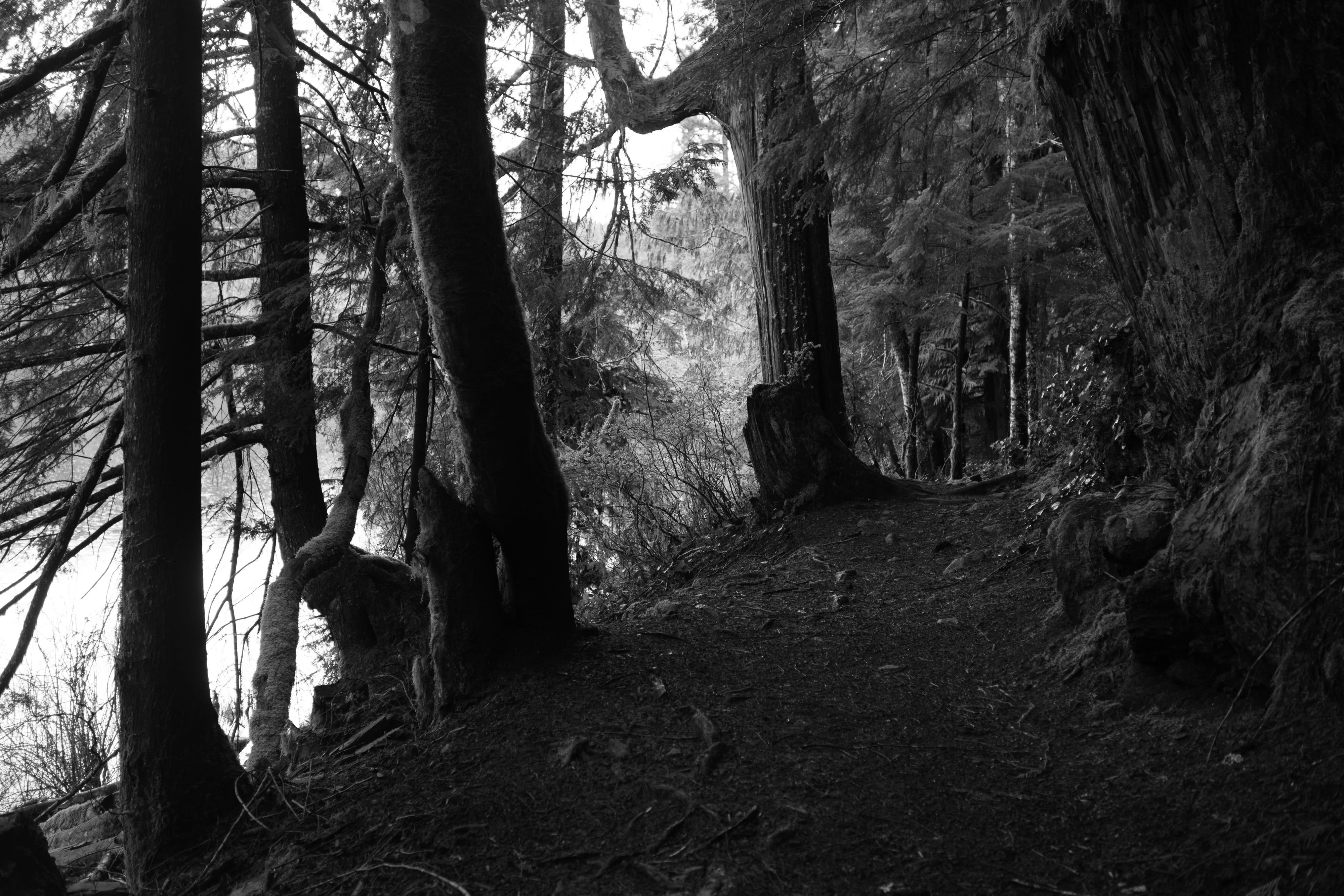
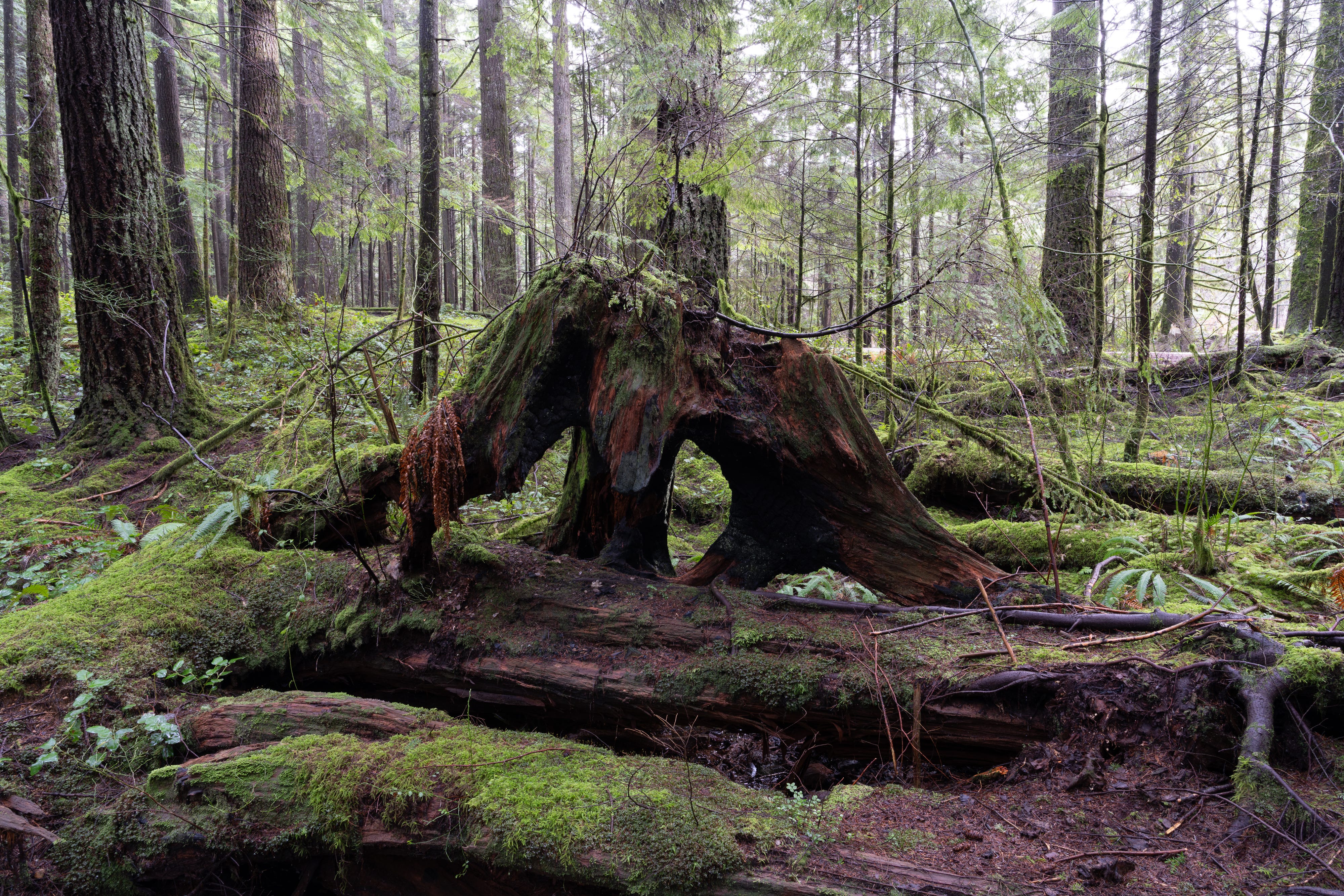
Deep in the forest, it’s hard to explain what the trees are doing, but they are doing something with purpose.
Two weeks later, my first class, art history, was in the basement of the art department building, an old elementary school. The studios down the hall were next to the boiler room, half underground, with windows only at the tops of the walls. Larry Smith, the design and art history teacher, started the first class with a lecture on the sculptor David Smith. I had never heard of David Smith. I had thought, until that day, that Picasso and Matisse were modern art. But it turned out they were not contemporary art, and that distinction was one I had not yet learned to make. Smith’s Tanktotems were on the screen, slide after slide, and I had not seen anything like them. Even Smith, whose work was such a surprise, was making work before I was born.
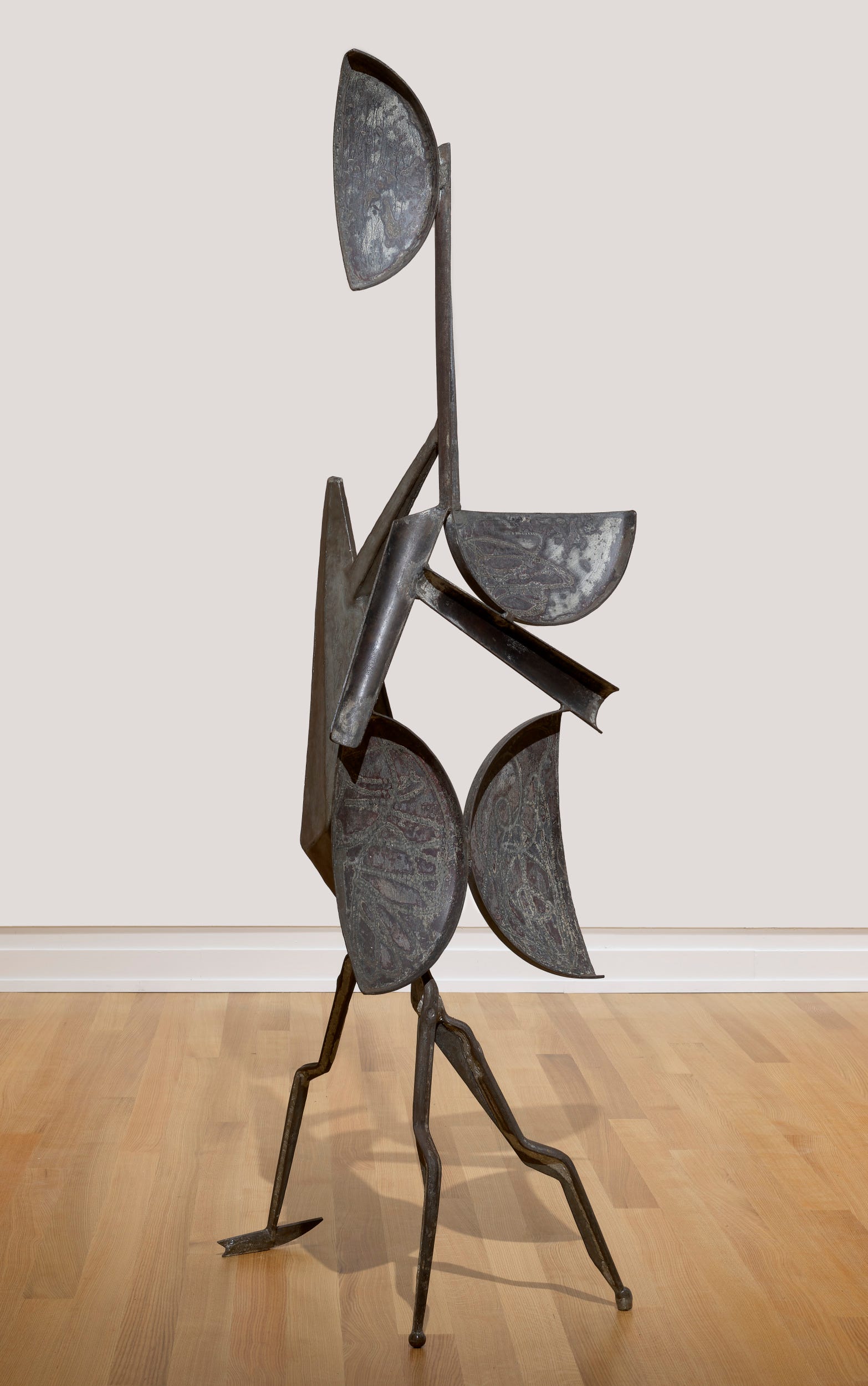
We were introduced to the “Tanktotems.” For some time, I believed the “tank” part of the name meant a military vehicle. I imagined David Smith standing in a scrap yard inside some industrial lot with a cutting torch and around him were the dismantled hulls of decommissioned tanks. Larry Smith corrected me. The “tanks” were industrial tanks, the kind that hold fuel or water or pressurized gas, and Smith had been buying them, or buying their parts, the round concave heads in particular, from scrap yards and from catalogs of industrial supply. He cut these parts and welded them and stacked them and stood them up. He was working “additively.” Such basic stuff, all new to me.
I learned that most of the sculpture I had seen until then had been subtractive, the form taken out of stone or wood, the figure freed from the block. Smith was doing the opposite. He was building. The piece was the assembly of its parts.
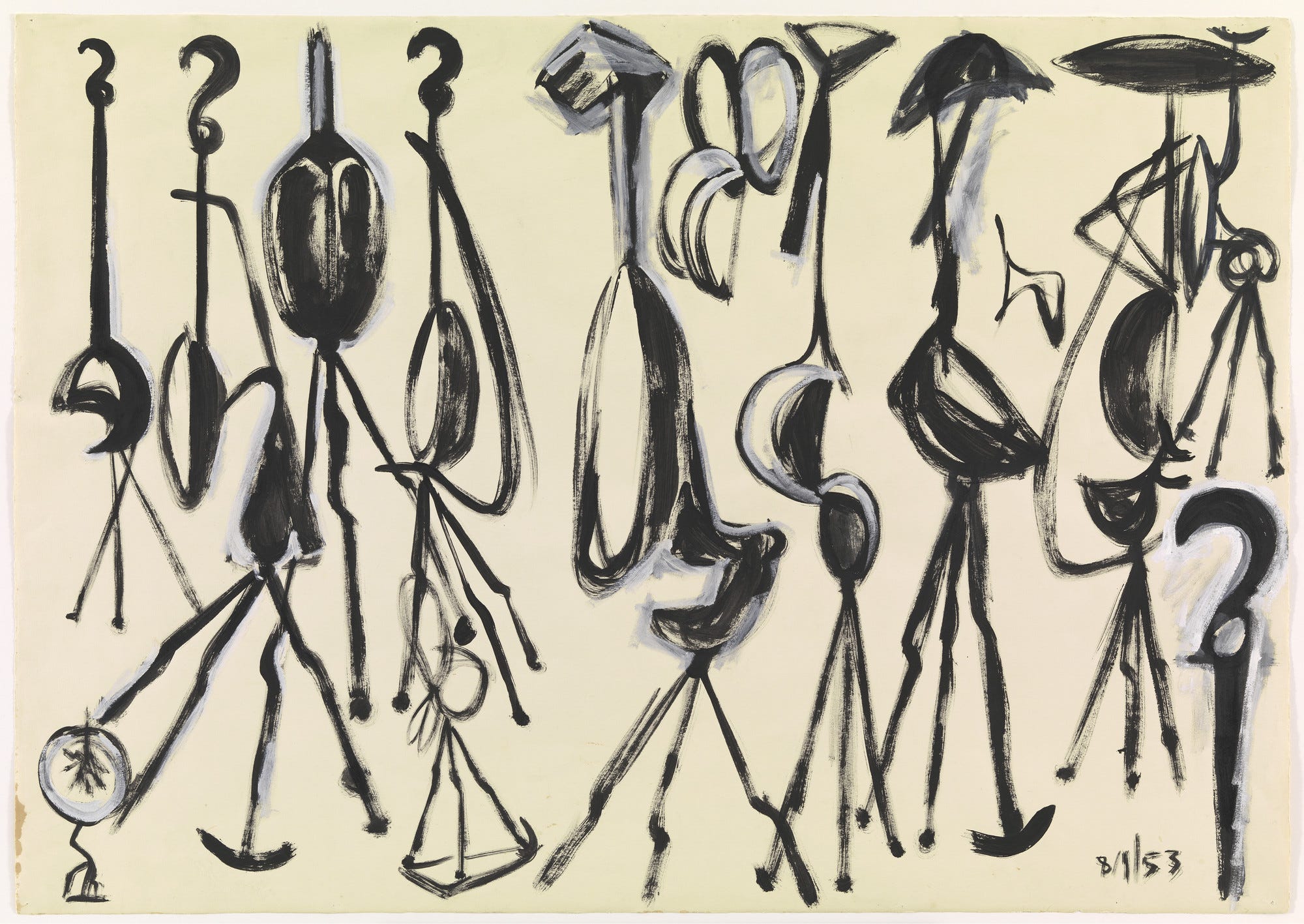
A drawing by David Smith the year I was born!
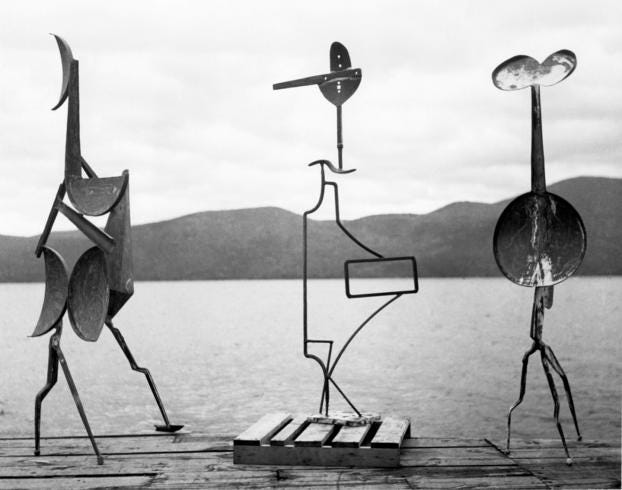
After Holyoke Community College, I went to Clark University and the Worcester Art Museum School, majoring in sculpture, working mostly in wood, leather strips, wire, twine, and small baseball-sized rocks. And by then my taste had begun to move away from the Tanktotems toward something more purely abstract. After a couple years Anthony Caro was my new man. The British steel sculptors of the nineteen sixties. Then I moved on again, this time, Isaac Witkin became my hero. On two occasions, I helped install pieces, first in Worcester and then in Springfield. Witkin had been Caro’s student at Saint Martin’s, and his early sculpture was in that same vocabulary, cut and welded steel, beams and plates and forms balanced against each other on the ground, no pedestal, no base.
But the older artists I learned about didn’t get tossed. They still resided deep in my mind. I still, on occasion, thought about David Smith, Tony Smith, and even Jackson Pollock. Their work resonated. They all seemed to bounce off each other. I wondered sometimes whether they were responding to each other, whether ideas were moving between them. Whatever distance separated a sculptor in a field in Bolton Landing from a painter working on the floor out on Long Island, I wanted to know that thread. What I eventually found was this: all of them had driven hard toward pure abstraction, and all had eventually let the dream, the bits of figurative image, a touch of magic and surrealism, back in. Smith, Witkin, and Pollack never completely let go of the figure.
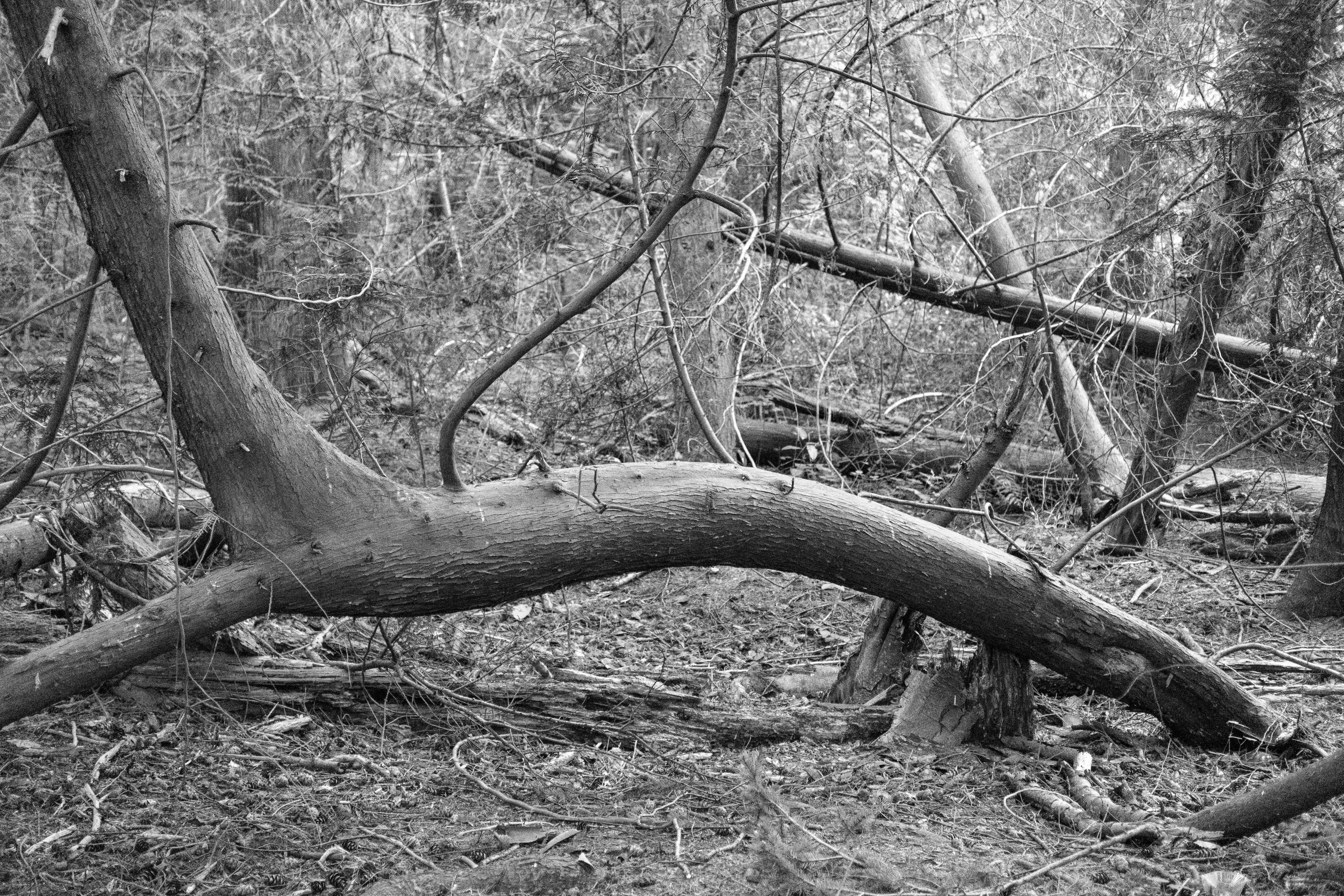
Every time I go to the forest, there he is, David Smith, in the flesh.
The Tanktotems have heads, or shapes that read as heads. They have legs, or shapes that read as legs. He called them totems, and he knew what he was saying. And Pollock, in the years just before he died, had started painting figures again, shapes that carried the weight of the human form even when they would not commit to it. The symbol, the figure half-glimpsed, the unconscious admitted into the work.
Not the surrealism of Dali or Magritte, not the dream as illustration. The surrealism that André Breton had described first. That is where they both ended up. I did not understand any of this the first time I saw the Tanktotems.
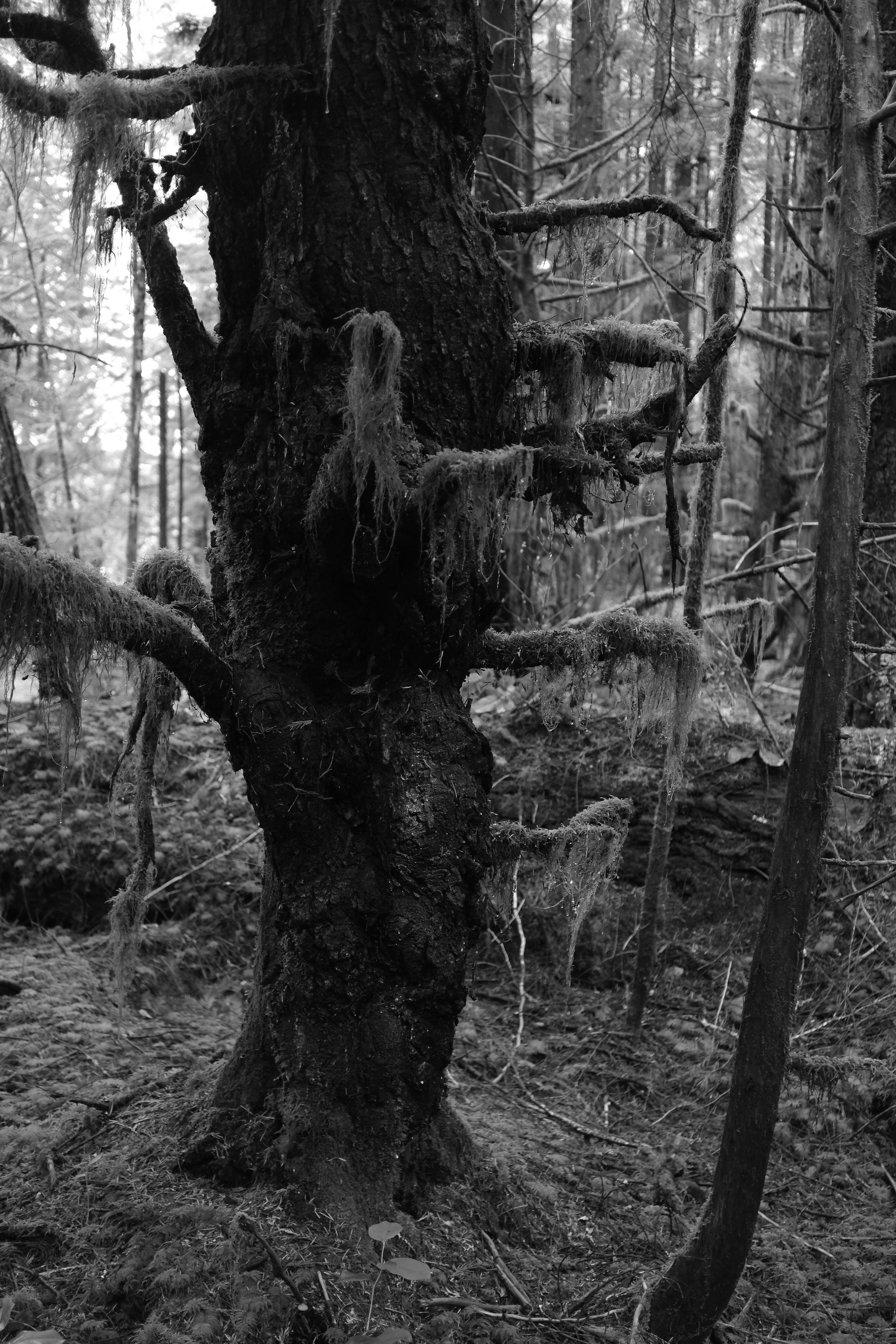
Deep in the forest, trees seem to remember things we don’t want to.
After I finished my BA in Art and Philosophy (very career-minded majors) I moved to New York City, went to Pratt for a while, and worked at the Middle Collegiate Church on Second Avenue in the East Village. On Wednesday mornings, I ran a seniors group, older people from around the neighborhood, some of them with stories of working in Vaudeville along Second Avenue.
I was always doodling during these meetings, drawing on three-by-five cards I kept in my back pocket the way I still do today. I used pencil, pen, whatever was at hand. I used white-out as well, the correction fluid that comes in a small bottle with a brush. The secretary would hide it because it would always end up in my pocket. One Wednesday, I was serving cake to seniors and a tough old woman who came every week looked at my 3x5 cards and said, " You’re just like Jackson.” I asked her what she meant, and she said. “He was always drawing on anything. One napkin after another. He would talk and argue and draw and sometimes get into fights about the drawings.” Jackson, who? I asked. “Oh, she said, I used to run a bar a few blocks from here. Jackson Pollock used to come in. He’d argue and draw, and I’d throw him out. And then next week he’d be back.” I was stunned, not by her story, but that I had been giving her Cake for months and never bothered to really pay attention!
The following Wednesday, I told my daughter to come by and spend some time with this woman I had been half-ignoring, because it had become clear to me that she knew more about life than I did. Things do, somehow, flow together.
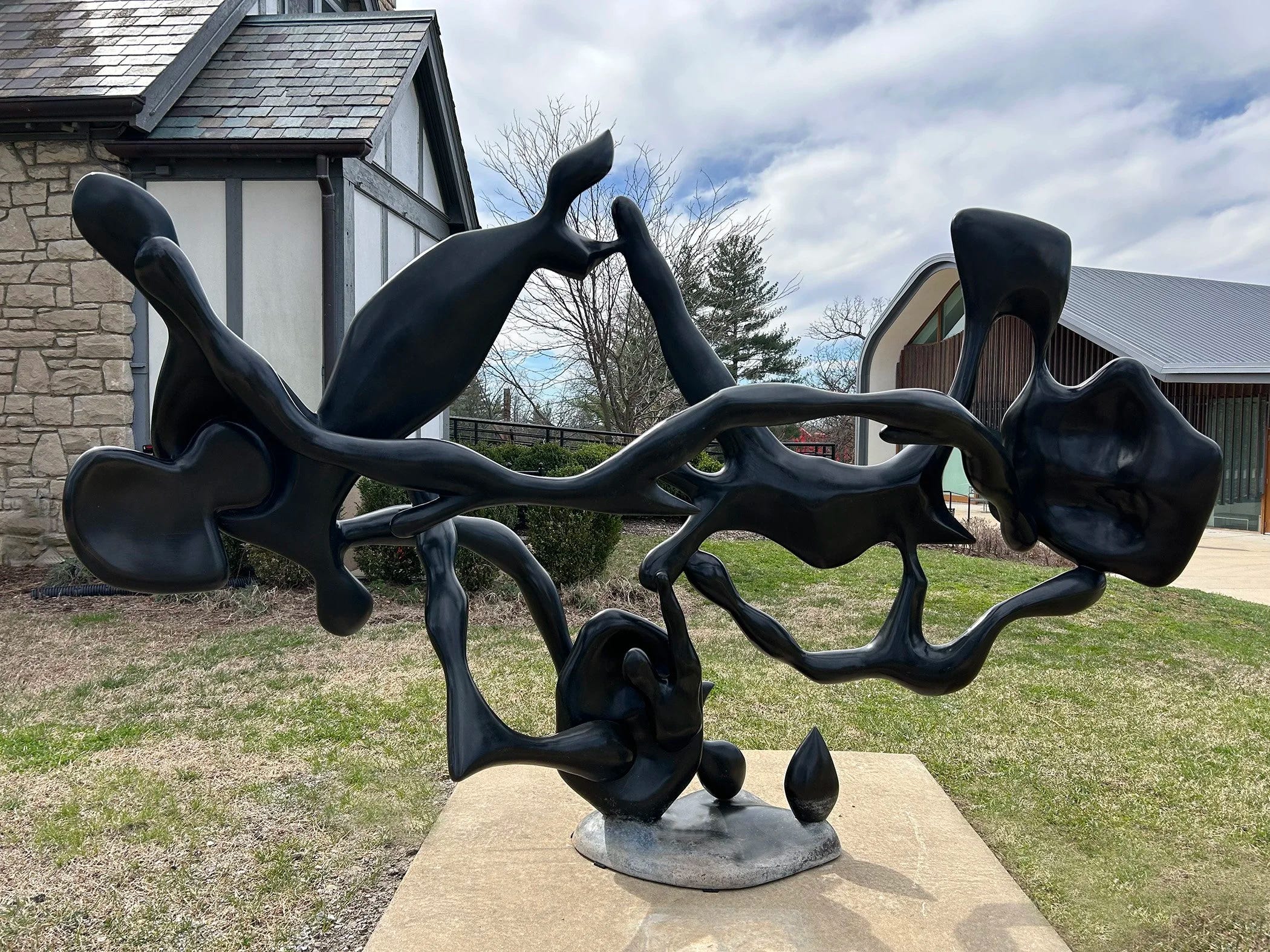
A Piece By Issack Witkin.
I took a couple of days off and went back to my college to visit with my old professors. a visit back to the school, but I found everyone in the museum courtyard. They were installing a piece in the courtyard, and everyone was helping guide it from a large lift. Witkin had been making welded steel sculptures, but he had grown tired of it, making purely additive, constructive work. He wanted to make his own pieces, his own parts, to construct with. He was talking with Bob Cronin, the sculpture teacher, about wanting more control. He did not want to find his shapes in a yard or to assemble them from off-the-shelf industrial parts. He wanted to make the parts himself. So he went to a foundry, and what he saw there were the spills, the puddles of metal that had cooled on the floor, where a pour had overshot the mold, the leftovers, the accidents. The shapes those spills made were not shapes anyone had drawn. They were the shapes that molten metal makes when it is free of any container, the shapes of pure flow, gravity, and surface tension. Witkin started to pour his own parts. He poured them the way the foundry floor had taught him to pour, and then he assembled them. The forms were his. But they kept the look of metal that had moved, the look of liquid that had cooled. I told him about how my family, as part of a New Year’s tradition called Bleigießen in German, literally “lead pouring,” would melt a block of lead over a candle and pour it into cold water. You then had to describe your next year from the shape. We kept these forms in jars, but now, because the lead is poisonous, they often use wax. He liked that. He liked the magic.
What I learned from Witkin was that the form has to record how it came to be. And that is certainly true of my collection of “tanktotem-trees.”
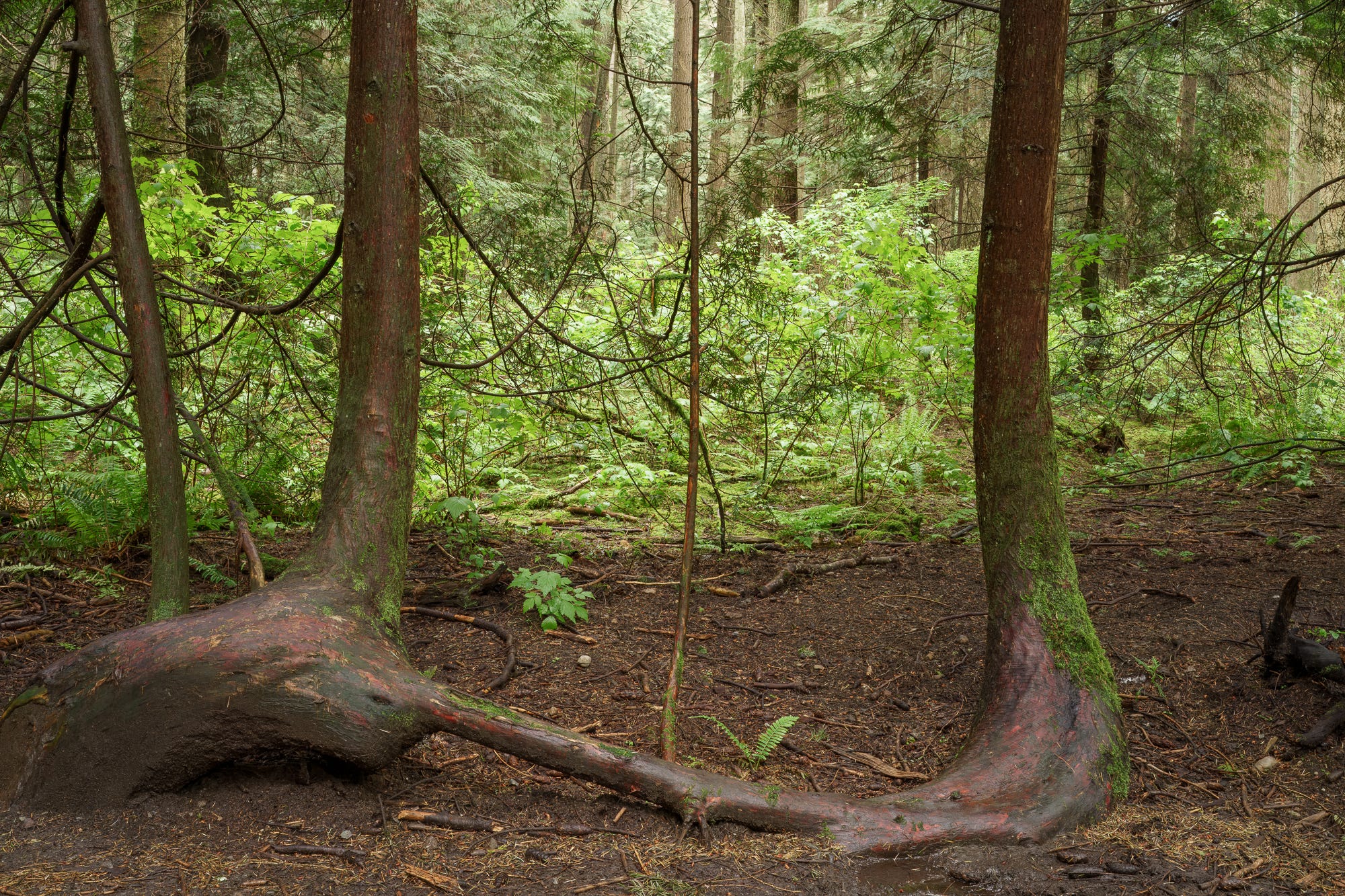
Now, forty years later, I find myself in the forest with my cameras. I am not making sculpture anymore, but I notice, walking through these woods, that I often stop. Every so-often, and look at the trees. Often, there is something about a particular tree. It is different from the rest. It presents itself. And what it most often calls back to, reminds me of, are the Tanktotems I first saw in the art department basement at Holyoke Community College. The shapes I had stopped looking for had not stopped finding me. It’s not that the tree is figurative, that it resembles a human form, though sometimes that is part of it. More often, it is something else, harder to name. The tree may be growing sideways, along the ground, following a path toward light, and then turning upward. Or the base may have spread and split in a way that records years of pressure and accommodation. Or a vine has looped around the trunk, and the trunk has grown around the vine, and neither one is separable from the other anymore. If you stand there for a while and walk around the tree, you begin to understand what stopped you. The form reveals itself through time and movement. It does not give itself up all at once. As Witkin says, the form slowly tells you its history.
The shape of the tree, how it stands, where it seems to be point to, is the record of what the landscape did to it: the snow load, the wind direction, the competition for light, the fall of a neighboring tree, the slow pressure of decades. What looks like a gesture is actually a history.
The word or phrase I use for this interaction between the tree and me is tableau vivant, a living picture, the term for those arrangements where a large group of people compose themselves into a static scene, holding their positions. When I turn and see one of these trees for the first time, that is the feeling. As if just before I looked, all the elements came together. The tree, the ground, the light, the surrounding forest. As if the space composed itself in the moment before I arrived. And the feeling is not only about the tree. It includes me. It is a dialogue between me and the space, without words, just an understanding. Anthropomorphism was the doorway. Tableau vivant is the room. The trees enact their parts. The forest is the stage. I feel this when the photo looks like everything was holding its breath while I pressed the shutter button.
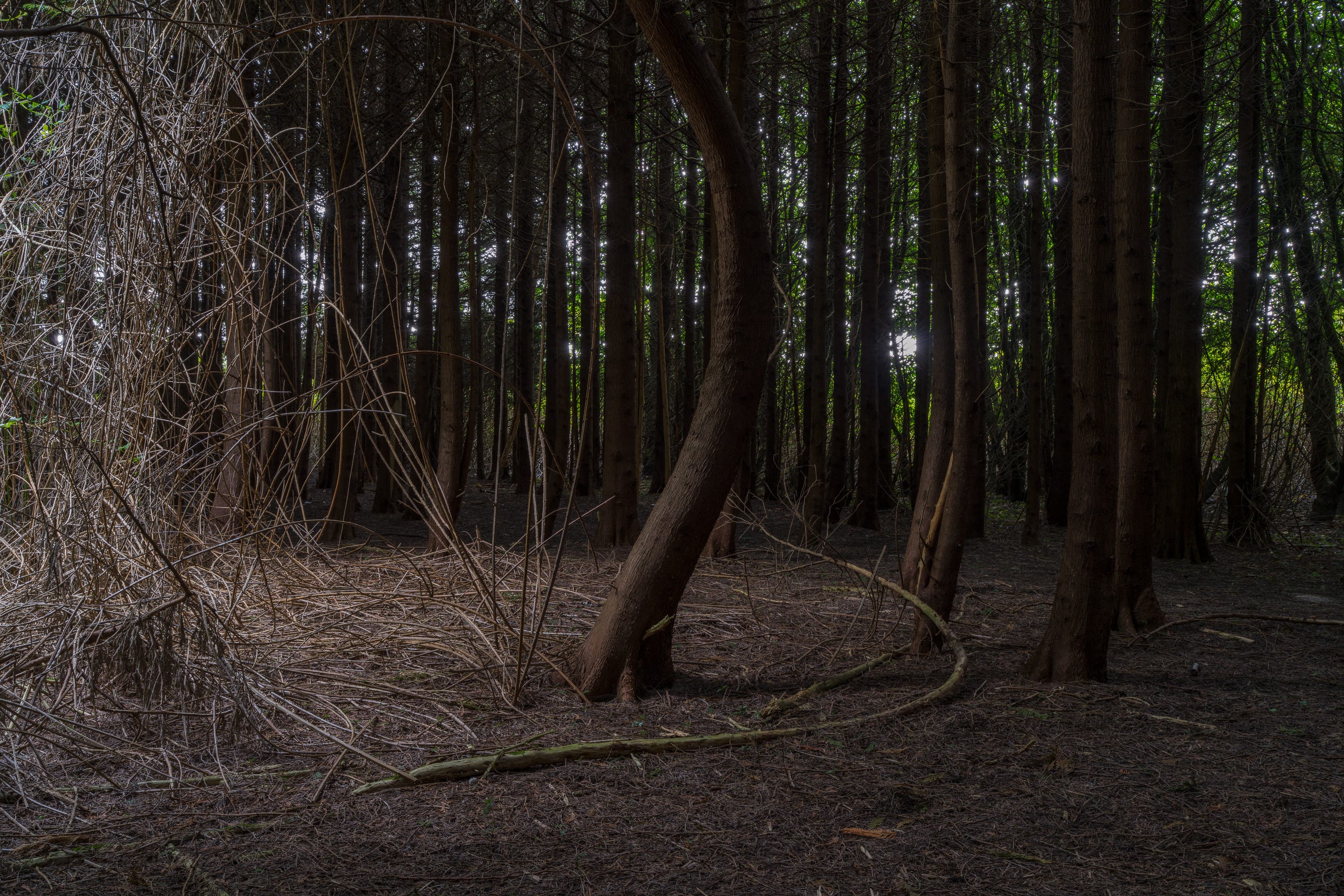
To see this way, I had to give up something. I had to loosen my grip on pure abstraction. The Tanktotems had pulled me toward the abstract, then Caro further, and Witkin further still, until I had become suspicious of any work that referred too plainly to a figure or a feeling or a story. I wanted form alone. I wanted the steel beam to mean nothing but the steel beam. But the trees were not letting me have that. The trees were full of suggestion, full of figure, full of dream. And when I went back and looked at the Tanktotems again, I saw the same thing. They are sentinels. They are figures. They have heads, or shapes that read as heads. They have legs, or shapes that read as legs. Smith never pretended otherwise. He had used the word totem.
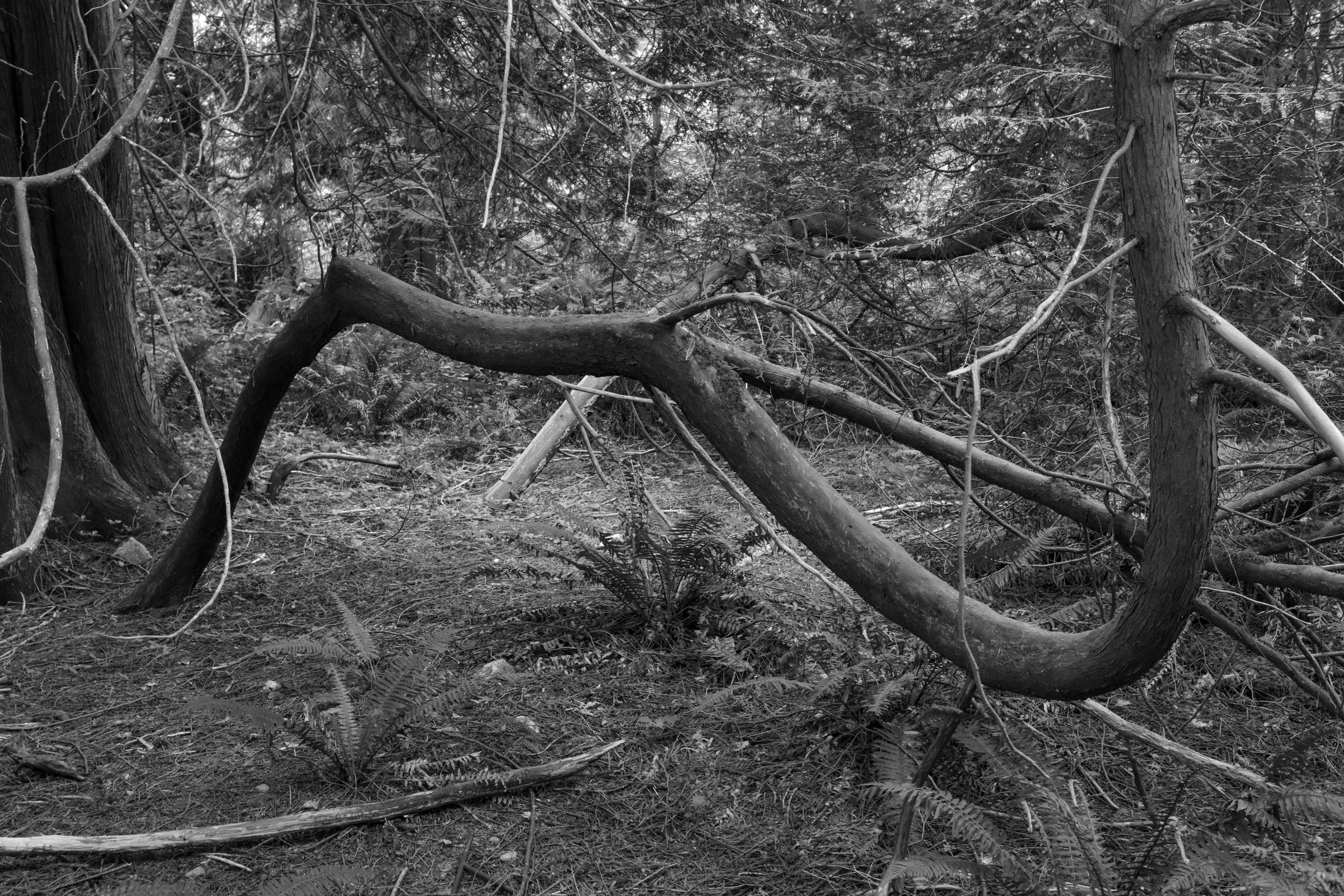
And that is where the trees are taking me. The form alone will not do. The form has to remember something. It has to remember where it came from.
References
Hickey, Dave. The Invisible Dragon: Essays on Beauty. University of Chicago Press, 2009.
Krauss, Rosalind E. Terminal Iron Works: The Sculpture of David Smith. MIT Press, 1971.
Marter, Joan, ed. David Smith: A Centennial. Guggenheim Museum, 2006.
“Tanktotem I.” The Art Institute of Chicago. https://www.artic.edu/artworks/79379/tanktotem-i
“David Smith: Tanktotem II.” The Metropolitan Museum of Art. https://www.metmuseum.org/art/collection/search/488759
…………
Thanks for reading my essays. You can help by re-stacking them, subscribing, sharing with friends, and making recommendations. You can also visit my website at:
www.jimroche.ca
Loved this journey