
Was Taking Up Photography a Total Mistake?
Looking for ideas that can stand up to the art market

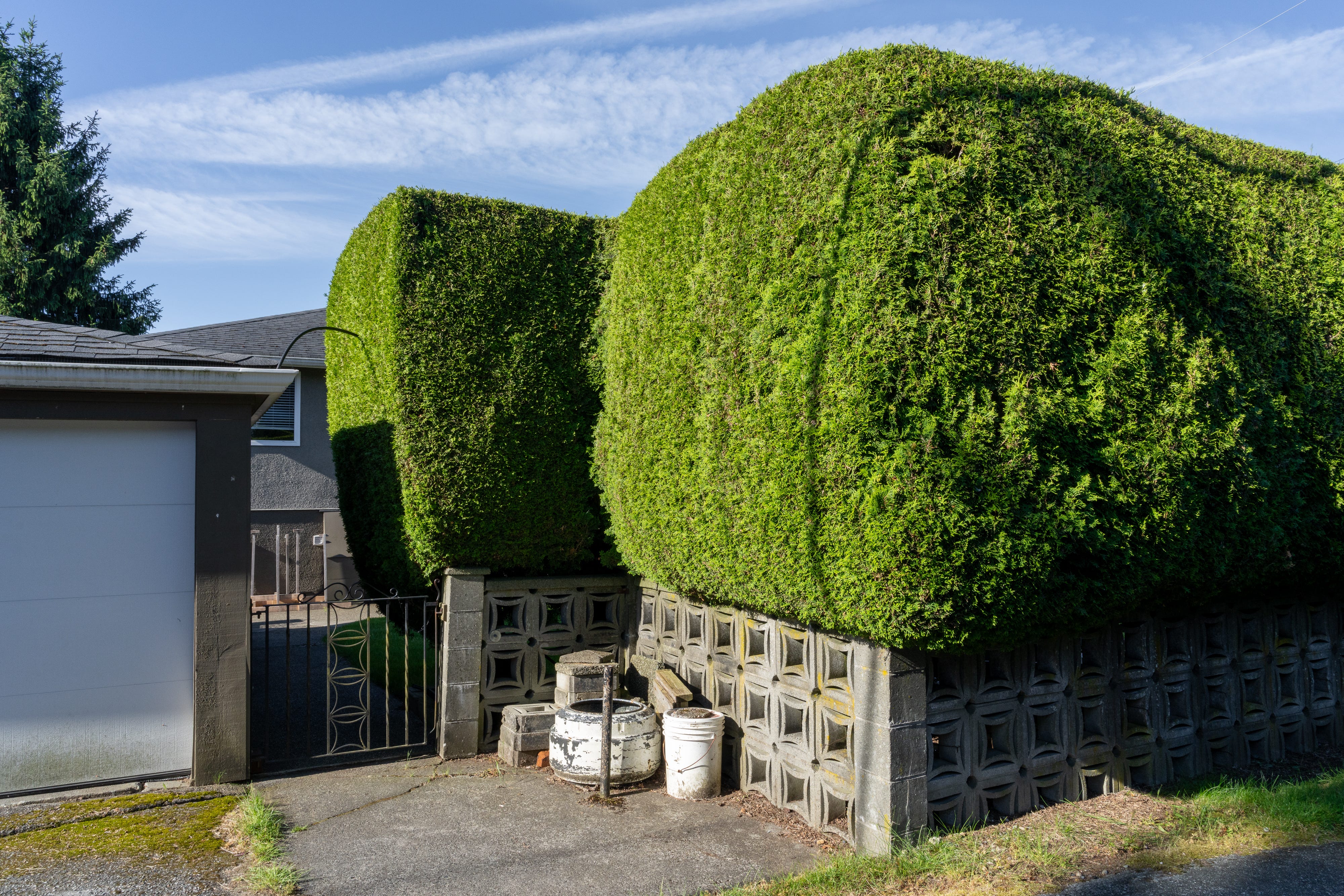
“If that were my garage, I’d show art in it.” Jim Roche, 2025
The last time I was able to exhibit any photos was several years ago in a group show in the US and one here in Canada. Before that, there was a one-person show at a university in Georgia. Since then, I haven’t shown an image to anyone outside of my immediate friends and family.
Before making art with a camera, I had a gallery, private dealers, and even at the worst point in my career, on occasion, sold something for enough money to cover my costs. Those days are gone, and I’m feeling defeated. I’m still, on occasion, invited to submit to group shows, but they don’t want photos. They want a print or a painting, not a photo. On occasion, I donate works to local organizations having an art auction. They are more than happy to take a print, even happier to take a painting…but, no thank you is what I get when I offer a photo. Last year, I submitted works to the local museum’s rental gallery and got rejected. I thought, “Well, that’s hitting bottom.” I’m considering giving up this gig as an artist-photographer. I go to art supply stores and cost out replacing my dried-out paints. I talk to friends who are artists about new types of paint and my painting ideas. So here I am, at this moment. Very, very worn out by photography.
This Essay is about Action
This essay is a little different than most I’ve written, because I’m going to talk directly about my own experience working in the arts, but I’m going to ask something in return. I want you to read this and respond, with ideas, examples, resources, things that actually work, because what I’ve seen over the last few decades is that the structure of the art world, and especially photography, has changed in ways that make it harder to continue, even for people who have had some success.
When Art Was Working For Me
For about 15 years, I worked as a printmaker, making etchings, silkscreens, pochoir prints, and lithographs. For a time, it worked well, prints of landscapes selling in editions of thirty or forty, and selling my own small paintings. These works were sold through galleries in New York, New Jersey, and through a network of private dealers in Los Angeles, Chicago, and a few other cities. These sales often moved through designers, print houses, and most of all, hotel chains and corporate art collections. Then the corporate world reorganized. Companies like Johnson and Johnson and IBM, which had been serious collectors, moved people out of private offices and into open rooms and shared workspaces, and they didn’t just stop buying art, they deaccessioned what they already owned. The calls I started getting weren’t from collectors wanting to know what was available; they were from companies asking what a piece was worth so they could destroy it or sell it cheaply in bulk, and take a tax credit on their loss. That’s the ups and downs of my experience.
Making Money
I want to talk about the money for a few minutes, because people misunderstand it, thinking a gallery is either the answer to everything, or, if they can’t get one, a gallery is the devil’s business. My prints sold for a minimum of $1,200, and I usually printed in editions of thirty or forty. That was at the “request” of the gallery and dealers, who usually sold about 20-25 of any particular print and left me with the rest (still in a six foot pile in storage). Larger prints sold at about $2,200. Neither I, nor anyone I printed with, were well known. We had work that fit a particular market. Offices, and the homes of pretty wealthy people who hired designers. The framing usually cost more than the print, and the cost of framing was always high as it was pure profit for them. I also painted, a small painting, around 30 by 45 inches, sold for about $3,200. Everything I did was on paper, so a gallerist , designer or dealer could roll up ten pieces and bring it to a potential client and unroll them on the floor, move them around, and make the sale. Yes, galleries and dealers often asked: Do you have anything with blue? Yellow?
Those numbers sound reasonable until you understand what sits behind them. Materials alone could run $25,000 a year, including paint, ink, paper, shipping, insurance, and studio rent. Then, health insurance, dental, and medications. Then taxes: New York City, New York State, Federal, and because you are self-employed, you pay both sides of Social Security. So you could easily sell work worth $150,000 or more in a year, and come away with … $40,000.
The gallery/artist split is fifty-fifty while the work is selling, but if a collector buys more than one piece, that collector often receives a discount, ten, sometimes twenty percent. That discount comes out of your half. When an edition of prints stops selling, the gallery returns half of the prints to you and keeps the other half. If they sell one later, the gallery keeps one hundred percent, and you often don’t know it happened. And there are two expiration dates you need to be aware of: If a print from a 2-year-old edition hasn’t sold, the dealer and the client know it’s not worth the full price. Discounts arise from that date. Those dates next to your signature are a use-by date. There is also a quiet understanding among working artists that most careers also have an expiration date: ten-year careers, maybe fifteen, because you saturate your market. The bigger you are, the bigger your market and the longer your career will last. After 10 years the collectors in your market who wanted your work already have it. Many people have 3-4 of your pieces, and are moving on to something new, and the gallery moves on. That’s the system. After ten or fifteen years, it moves on without you.
This may sound like a horrible deal, but believe me, it’s not. The choice is a small gallery, where you get attention, sales and exposure, or setting up a table at the Saturday Farmer’s Market. The gallery is actually providing services you can’t get elsewhere, and spending more money than you know promoting you.
Sometimes, I would go into our main gallery in New York, Orion Editions, now gone, a prospective buyer would come in and the gallerist would tell me to stay in the office. I would hear him talking to the client, telling them that this or that piece was a great value right now, and that it would only increase in value. I knew this wasn’t true. I understood that as a second or third line artist, my work was worth, well, nothing, and would likely go down in value from there. And those were hand-made prints and paintings. I still think about the buyers sometimes. I worry I owe them money.
Art as Investment
The gallerist was not lying exactly, because he believed the market rewarded quality and quality should be recognized, and sometimes it is, but what he was always selling, as much as the work itself, was the idea that art is an investment. For the last fifteen years, this idea has reshaped the entire market. As Ben Davis, the national art critic for Artnet News and the author of “9.5 Theses on Art and Class” (Haymarket, 2013) and “Art in the After-Culture: Capitalist Crisis and Cultural Strategy” (Haymarket, 2022), has written, art has been forced into the framework of collateral against private credit, treated as a yield-bearing alternative asset, flipped within months of acquisition, and that what looks like a market correction now is simply the market shedding the part of itself that should never have been there. Davis has also written the simpler version of this: almost all new art is worth zero, even most art that has its moment will be worth nothing a few years later, and the main reason to collect art is that you actually like it, or want to support the person who made it. That’s why I like Ben Davis, and read him and listen to his podcast. But remember, the big galleries are just a tiny percentage of the art market. Regretfully, small and mid-sized galleries that would usually serve us, as artist-photographers, are being squeezed out of the market. The number of medium and small galleries going out of business these days is staggering. Main reason: The work they sell is unlikely to appreciate, plus the costs of competing.
So art is now often associated with investment portfolios. But photography was never going to be part of an investment portfolio, and the reason is structural. A few years ago, I purchased a print by Alec Soth for $15,000. It has appreciated to around $25,000, which sounds like a reasonable return until you understand that it is unlikely to go significantly higher, because Soth’s prints are sold in editions, meaning there are twenty or so others at the same price, and the edition structure puts a ceiling on appreciation that painting and unique works on paper do not have. Photography is not a bad investment because photographers are less serious than painters. It is a different kind of object, one that was designed from the beginning to be reproducible, and the market has never fully reconciled itself to that fact. What this means in practice is that photography sits outside the speculative economy that has driven the broader art market for the past two decades, and while that exclusion has real costs, it also carries a kind of integrity. Photography has to be bought because someone wants to live with it. That is not a bad place to start.
The problem is that the structures built to sell it were borrowed from a market organized around different assumptions, and those structures are now failing. I still find it surprising how little photographers are paid for their work, but even in painting, where the prices sound higher, the numbers don’t work the way people imagine, and photography compounds the problem. A gallery might once hang a painting for $3,000 or $4,000, which adjusted now might be $5,000 to $9,000, but almost no one I know is selling photographs at those prices, except the top 1% or so.. Photography is sold in editions, which lowers the price per piece, and galleries think in terms of profit per linear foot, meaning what a given wall produces in a given year. For most photographers, the answer is not much, and the gallery has other walls to fill.
My Photo Disappeared!
There is also a problem with large-scale photos; they fade. There was a real crisis a few years ago when so many large-scale photos in museum collections were found to be fading, and some, enough to be troubling, were peeling off their backing, and while the museum may have paid a huge amount, the images were now worth nothing. I frequent art auctions, and there are often large prints by well-known photographers up for bid, worth nothing as they have been destroyed by being displayed. This crisis continues to be a problem for the field.
Pay-toPlay
There is also something else going on in photography that is harder to talk about. In painting or sculpture, you are not usually asked to pay to be considered. Galleries look for work. Gallerists visit certain schools, Yale, RISD, etc., and walk through the studios….they go out and find people. They attend university shows. But in photography, there is a constant stream of open calls, competitions, portfolio reviews, and submission fees, and you pay to be seen, often repeatedly, in a way that would once have been called a scam but is now considered normal. There is extraction at every level. Small prints sold under tight licensing restrictions mean you buy the work but cannot reproduce it, cannot display it in many contexts, and it begins to feel less like collecting an artwork and more like buying a page out of a book. Those modest works also occupy the few places where photographers might otherwise sell something, so that what should be an entry point is already taken, and it is not only that there is less money, but that more people are trying to take a piece of it.
Art Shows and Apartment Galleries
None of this is without precedent, and the gallery model itself is now failing in ways that are no longer possible to describe as a correction or a slowdown. Part of what is driving the collapse is the cost of participating in the international fair circuit, which has become the primary sales mechanism for galleries at every level. A booth in the main Galleries sector at Art Basel costs between $85,000 and $125,000. Art Basel Miami Beach runs from $11,000 for a small position to $199,040 for a large booth in the main sector. These costs forced galleries to chase sales at the top of the market and to reduce or abandon everything below it, and the galleries that could not sustain that chase are closing. In the eighteen months between mid-2023 and late 2024, at least ten galleries closed or went on indefinite hiatus in Los Angeles alone, including UTA Fine Arts, Praz-Delavallade, Lorin Gallery, and the New York-based Harper’s, which had expanded to Los Angeles during the pandemic and then quietly retreated. In the summer of 2025, CLEARING, which had operated for fourteen years, beginning in Brooklyn in 2011 and expanding to Los Angeles in 2020, closed both its Manhattan and Los Angeles locations. Its founder, Olivier Babin, said the gallery had been crushed by overheads, specifically rising costs for rent, shipping, and art fairs alongside declining revenues. That same summer, Venus Over Manhattan and Kasmin announced their closures within two days of each other. These are not marginal operations. These are galleries with serious programs, serious artists, and serious track records, and they could not make the economics work.
What is also true, and this matters for the argument being built here, is that some of the most interesting spaces to emerge in Los Angeles in the same period began not in commercial storefronts but in homes. Castle, which is now a recognized gallery with a location near Jeffrey Deitch in Hollywood, began in 2022 in the living room of Harley Wertheimer. Sea View, founded by Sara Lee Hantman in 2023, operates out of an artist’s family home and studio complex, a space that the Museum of Contemporary Art had already used as an off-site exhibition venue in 1998. These are not temporary arrangements or modest compromises. They are a new structure forming inside the wreckage of the old one, and they are being written about and taken seriously as part of the art world rather than outside it.
A Small Revolution
Artists have always created alternative structures when existing ones stopped working. In Boston in 1971, a group of artists staged a show in the men’s room of the Museum of Fine Arts and called it “Flush with the Walls.” In Germany, apartment galleries have been used for years as serious exhibition spaces, carefully installed and attended, and written about as part of the art world. In Vancouver, the Will Aballe Art Project, known as WAP, began in a kitchen, with work on the cabinets, the walls, the refrigerator, sometimes simply handed to you, and over time became a serious gallery showing conceptually based work. Just one little mention: Black Mountain College, which ran from 1933 to 1957 in North Carolina, and Goddard College in Vermont operated on the principle that making, showing, and discussing work were not separate activities but a single one. The exhibition was not separate from the work but part of it. Getting your photos in front of eyes is essential, not just to sales, but to your self-image.
Japan and Photography
Japan understood this earliest and most thoroughly. In 1968, a group of photographers in Tokyo began publishing a magazine called “Provoke,” deliberately rough, deliberately urgent, and it became the context through which some of the most important photobooks of the twentieth century were made. Daido Moriyama’s “Farewell Photography” was published in 1972. Nobuyoshi Araki self-published “Sentimental Journey,” a record of his relationship with his wife Yoko, in 1971, and it is now considered one of the essential works of postwar Japanese photography. Eikoh Hosoe’s “Kamaitachi,” a collaboration with the butoh dancer Tatsumi Hijikata, was published in 1969 in a limited edition of one thousand copies. By the 1970s, the photobook had overtaken the print as the primary mode of artistic dissemination in Japan, to the point where any serious discussion of Japanese photography now has to include the book. This did not happen because the gallery system failed in Japan. It happened because Japanese photographers built a parallel system, one based on publishing, on collectivity, on the book as an object worth owning, and that system proved more durable than the gallery walls it worked alongside. The Tokyo Art Book Fair, which began in 2009, draws tens of thousands of visitors and treats the photobook and the artist publication as primary forms, not supplements to a gallery show. In Japan, it is still possible to sell a small black and white print for around two hundred dollars as a normal exchange, not a discount, not an apology, but a transaction both parties consider fair. The context makes that possible. The context was built deliberately, over decades, by photographers working together.
It is worth noting that Araki’s decision to self-publish “Sentimental Journey” in 1971 is not remembered as a compromise or a workaround. It is remembered as the work. The stigma attached to self-publishing is a North American problem, not a universal one, and Japan is the evidence. What changes when a book is published under a named imprint rather than through a print-on-demand service is not the paper or the photographs. What changes is the frame, and in the art world, the frame changes the meaning.
This is the structural answer, and it is the one that seems most honest: not one gallery, not one show, not one collector, but a network of people making work together, publishing together, showing together, and building an audience through continuity rather than through institutional affiliation.
Alternative Publishing
Several friends and I have been producing zines, high quality photographic publications made through print-on-demand services like Blurb, and they are good. The problem is not the quality. The problem is the label. I have suggested that we take one further step: form a small collective publishing imprint, continue using print-on-demand production, but operate under a shared name, and include a limited edition print with each book to offset the cost and make the object worth collecting. The imprint would publish photographers and writers together. A writer who contributes an essay to one of these books receives a publishing credit under a real imprint name, a line on their resume, and a connection to the photographers they are writing about. The photographers receive a text that does the work a gallery wall card never quite manages to do. The books can travel, showing in homes, apartments, and studios across two or three cities, building an audience through return visits rather than through a single opening night. Resume lines for photographers come from those shows, lines that are real, that name a venue and a date, and that function in the larger system in the same way a group show at a recognized gallery would, because the credential is what it says it is: the work was shown, people came, and they came back.
Vancouver’s WAP, described above, built a version of it starting in a kitchen. Castle built a version of it, starting in a living room, and is now showing next to Jeffrey Deitch. The mechanism is not complicated. What it requires is people willing to work together rather than separately, and to understand that the collective infrastructure, the imprint, the shared shows, the writers and photographers in the same room, is not a substitute for a career but the conditions under which a career can continue.
What I would like to know is who is already doing versions of this? What has worked even in small ways, what has failed, what should be tried, and who wants to do this together, because the gallery model, as most of us inherited it, is not in difficulty. It is over. What comes next depends on whether photographers, and the writers and collectors who care about the work, are willing to build it. Davis wrote that the main reason to collect art is that you actually like it, or want to support the person who made it. That is where photography has always lived. The question is what structure we build around that fact.
An Outline of My Proposals (I have two)
A Small Publishing Collective
I’d like 3-4 dedicated people to join me in forming a publishing collective, focused on small editions of landscape photography books. That means editing a book, publishing it through, if necessary, a print-on-demand provider, and packaging it with a signed editioned print. Instead of a publication party, in Vncouver my small group had a weekend opening in a gallery space, showing the publication, and full prints on the walls.
A Travelling Collective Gallery
I’d like to join with 3-4 others in designing and establishing a small collective gallery. It would have an online presence, and quarterly shows that would basically travel in a box to 2-3 locations to be shown in home-based or studio-based spaces. You can read about home-based galleries in the NYT and art magazines. This idea has been with me since before covid, when I read about a group that turned photos into postcards and basically sold a deck to people who would have a home gallery on their fridge, and hold an “opening.”
Got any ideas?
Maybe in the comments you can find the 3 people you need to get it going. Let me tell you one more short story: During the AIDS crisis, at the NYC ACT-UP meetings, we would have a period where people got up and spoke for 1 minute: “I’m Nancy, and we are thinking about approaching high school students after school in front of their schools with AIDS and Sex Education information. We are going to meet over in that corner.” 15-20 people might get up. They would throw their ideas out, and invite people to join them, and point where. We would have a 15-minute period of people moving to things that interested them, and then everyone got back up, again for 1 minute, and said, “We’ve decided to go to Jefferson High School next Wednesday. Tomorrow night we are meeting here to review the material and agree on how we will proceed. We meet at 7 tomorrow.” From that little period of sharing, a group of high school students formed an organization that monitored AIDS and sex education issues. They saved many lives.
I think we could at least do some sharing and get a few photos in front of eyeballs. And not get suckered into pay-to-play schemes. Your comments are a place to start.
---
## References
Ben Davis, *9.5 Theses on Art and Class* (Haymarket Books, 2013).
Ben Davis, *Art in the After-Culture: Capitalist Crisis and Cultural Strategy* (Haymarket Books, 2022).
Ben Davis, “NFT Artists Are Not Selling ‘Digital Art Objects,’” Artnet News, 2022.
Annie Armstrong, “Just How Expensive Have Art Fairs Become?”, Artnet News, August 2025.
Katya Kazakina, “The L.A. Art Scene Was Booming. Why Are Galleries Suddenly Closing?”, Artnet News, November 2024.
Maxwell Rabb, “CLEARING to Close Its New York and Los Angeles Galleries After 14 Years,” Artsy, August 2025.
“Los Angeles Galleries Are Finding a New Rhythm,” Artnet News, November 2025.
“A Thrilling Crop of New Galleries Is Popping Up in LA,” Cultured, February 2025.
“7 Essential Japanese Photobooks,” Aperture.
“Japan’s Unparalleled History of Photography in Print,” Aperture.